Analysis of Key Points of the New Technology of Bag Cultivation with Soil Casing for King Oyster Mushroom
King oyster mushroom, also known as Pleurotus eryngii, is one of the rare edible fungi. Its flesh is thick and plump, crisp and tender, milky white in color, delicious in taste, and rich in nutrients, and it is hailed as "the meat among vegetables." By adopting the following new technology of indoor fruiting and outdoor soil casing cultivation, the biological conversion rate can reach 100%-120%, and the mushroom bodies have good commercial quality. Compared with cultivation without soil casing...
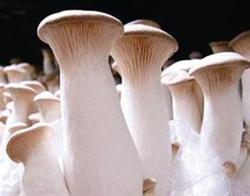
King oyster mushroom, also known as Pleurotus eryngii, is one of the rare edible fungi. Its flesh is thick and plump, crisp and tender, milky white in color, delicious in taste, and rich in nutrients, and it is hailed as "the meat among vegetables." By adopting the following new technology of indoor fruiting and outdoor soil casing cultivation, the biological conversion rate can reach 100%-120%, and the mushroom bodies have good commercial quality. Compared with cultivation without soil casing, the benefit can be increased by 15%-20%.
I. Biological characteristics (1) The mycelial growth temperature is 6-30°C, with the optimum temperature being 18-25°C; the primordium and fruiting body formation temperature is 10-20°C, with the optimum temperature being 15-18°C. (2) During the mycelial growth stage, the moisture content of the culture medium should preferably be 60%-65%, and the relative air humidity should be 60%-70%; when the humidity exceeds 80%, mycelial growth is slow. However, during the fruiting body formation and development stage, the relative humidity should be 90%-95%. (3) Both the mycelial growth stage and the fruiting body growth and development stage require fresh air; in particular, primordium formation and fruiting body differentiation require sufficient oxygen. (4) Mycelial growth does not require light, while fruiting body formation and differentiation require a certain amount of scattered light. (5) The suitable pH range of the culture material is 6-8.
II. Culture material formulas Cottonseed hulls, mixed wood sawdust, corncobs, bagasse, waste cotton, etc. can all be used as cultivation raw materials, and the effect is better when used in combination. Reference formulas: (1) mixed wood sawdust 50%, cottonseed hulls 30%, wheat bran 15%, corn flour 3%, sucrose 1%, lime 1%; (2) mixed wood sawdust 40%, cottonseed hulls 38%, wheat bran 20%, sugar 1%, lime 1%; (3) mixed wood sawdust 24%, cottonseed hulls 30%, wheat bran 25%, corncobs 20%, lime 1%. The mixed material prepared according to the above formulas has a moisture content of 60%.
III. Bagging, sterilization, and inoculation Mix the culture material evenly; after dissolving the sugar and lime in water, mix them into the material. A bagging machine can be used for bagging. For the bag specifications, choose 15 cm x 30 cm x 0.05 cm or 17 cm x 30 cm x 0.05 cm polyethylene or polypropylene plastic bags. When bagging, the material should be neither too loose nor too tight. Use collar rings to close the bags, and sterilize according to conventional methods. Wait until the bag temperature drops below 30°C before inoculating. Use a pointed wooden stick to make a hole in the middle of the bag, with a depth of 2/3 to 4/5, which is beneficial for mycelial germination.
IV. Management during the mycelial growth period After inoculation, move the bags into the culture room for mycelial growth. The culture room should be a dry, ventilated, heat-retaining, moisture-retaining, and clean room, with the room temperature maintained at about 25°C and the relative air humidity at 60%. Ventilate for 1-2 hours every day; when the temperature is low, ventilate at noon. Shelves can be set up in the culture room, divided into 4 layers, with a height of 2 m-2.5 m, a length of 2 m-4 m, each layer 0.5 m-0.8 m high, and 0.6 m wide. Heating should be provided during low-temperature seasons. If any bags are infected, remove them promptly and burn them.
V. Fruiting management After 20-25 days, when the mycelia have colonized more than 4/5 of the material, they can be moved into the cultivation room.
Maintain the temperature in the cultivation room at 10-18°C. Remove the collar ring caps from the bags and strengthen ventilation to promote mycelial maturation. After 5-10 days, when the primordia are about to form, remove the collar neck rings and dig out the old spawn at the hole opening. After 7 days, when the fruiting body primordia have formed, fold back the bag opening or use a small knife to cut off the bag-opening film, leaving 1 cm. When the fruiting bodies gradually expand, maintain the temperature at about 16°C and the relative air humidity at 85%-95%. Too low or too high humidity will affect the quality of the fruiting bodies. According to conditions each day, use a sprayer to spray water in the air 2-3 times; do not spray water directly onto the mushroom bodies (otherwise the mushroom bodies tend to turn yellow). Strengthen ventilation and air exchange; poor ventilation easily causes deformed mushrooms.
VI. Bud thinning Many king oyster mushrooms have mushroom buds covering the entire surface of the material, and most of the buds cannot be supplied with enough nutrients, resulting in smaller fruiting bodies and affecting quality. At this time, buds should be thinned in a timely manner. The method is to use a sterilized blade to select those small, poorly nourished, deformed small mushrooms and cut them off evenly at the lower part of the swollen stipe, then close doors and windows and stop spraying water for 1 day.
VII. Harvesting Select mushroom bodies that are large, with round and smooth caps, and whose caps have changed from convex-round to flat for harvesting. When harvesting, use a sterilized small knife, hold the mushroom with the left hand, and cut out between the base of the stipe and the mycelium, taking care to avoid damaging the small mushrooms nearby. If there are many mushrooms and it is inconvenient to cut them out, they can be twisted and picked out by hand (do not forcefully pull them off, so as to avoid the mycelium detaching from the culture material in a whole block). Store the harvested mushrooms separately by grade.
VIII. Soil casing management Choose soil rich in humus, slightly fertile, and loose, and build a shed covered with agricultural film combined with shade netting. Dig beds 10-15 cm deep and 130-150 cm wide, with no restriction on length. Mix 2% lime water and 80% dichlorvos 500-fold solution into the soil.
After the first flush of mushrooms is harvested, clean the bags and move them into the beds, either placed horizontally or vertically. Fill fine soil around them, cover the bag surface with soil 2-3 cm thick, and spread rice straw and stalks on the bed surface to retain moisture. Then spray water on the bed surface until the bed is moist. Cover with a small arched shed for 2-3 days, and in combination with uncovering the film, ventilate 1-2 times daily and spray a small amount of water. After soil casing, buds appear in 10-15 days, and the fruiting bodies can be harvested after 20 days.
IX. Pest and disease control King oyster mushroom has few diseases but is prone to insect pests, mainly small fungus gnats, fungus gall midges, and golden-winged sciarid gnats. During the fruiting body growth process, due to high humidity or poor ventilation, mushroom bodies are prone to rot, and rotten fungus bags, manure, weeds, garbage, etc. near the cultivation site easily spread insect pests. In the early stage, granular or thread-like viscous transparent substances form on the surface of the fruiting bodies, similar to glue; this is caused by fungus gnats laying eggs on the fruiting bodies. After a few days, the larvae (difficult to observe with the naked eye) first damage the fruiting body primordia, then suck and feed on the fruiting bodies. The damaged parts are sunken and yellow-brown; in severe cases they are purplish-brown, with a foul odor, and the surface has a layer of viscous liquid. Some deformed mushrooms are hollowed out inside by the borers. If not killed in time, this causes serious losses, or even total crop failure.
Control methods: 1. Focus on prevention; the cultivation site should be chosen as a clean place with good ventilation, and there should be no livestock, poultry, weeds, or manure around the mushroom house. 2. If conditions permit, install insect-proof netting or gauze on the doors and windows of the mushroom house to prevent adult insects from flying in to lay eggs. 3. Before use, disinfect and kill insects in the cultivation room with 5% lime water and trichlorfon. 4. After the mushrooms are picked, spray with cypermethrin 1000-fold solution or trichlorfon emulsifiable concentrate to kill insects. 5. Promptly remove infected bags and bury them deeply in a centralized place or burn them.