-
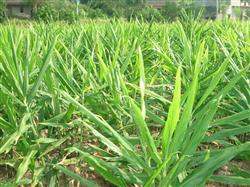
Key Techniques for High-Yield Cultivation of Ginger Intercropped with Watermelon
When planting ginger, apply heavy base fertilizer and increase phosphorus and potassium fertilizer; avoid applying too much nitrogen fertilizer. Apply sufficient base fertilizer, mainly organic fertilizer, with a combination of slow-release and quick-release chemical fertilizers. Base fertilizer generally accounts for 40% of the total fertilizer application. Before sowing, apply 15 kg of imported compound fertilizer plus 50 kg of calcium magnesium phosphate fertilizer per mu as deep-layer base fertilizer. After sowing, use high-quality farmyard manure...
-
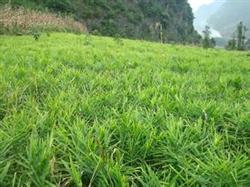
Intercropping and Relay Cropping Technique for Lettuce, Ginger, Watermelon and Bok Choy
1. Topdressing: generally 2 to 3 times. The first is in early to mid-June, applying 1000 kg of barnyard manure plus 15 kg of urea per mu between the rows, covered with a thin layer of soil. The second is in early to mid-July after the mother ginger is dug, applying 150 kg of decomposed rapeseed cake or 30 kg of compound fertilizer per mu; the third is in early September after the frame is removed, applying another dose of human excrement and urine to prevent nutrient deficiency...
-
Detailed Explanation of Key Cultivation Techniques for Watermelon in Early Spring Greenhouses
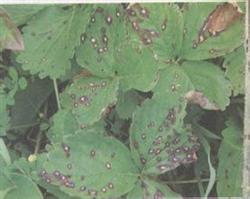
Strawberry snake-eye disease, also known as leaf spot disease, is a common disease of strawberries and occurs widely. When the disease is mild, it has no obvious effect on production; when severe, the incidence rate reaches 60%, and some leaves become necrotic and dry, significantly affecting strawberry yield. Symptom identification: it mainly damages leaves, petioles, fruit stalks, tender stems and seeds. On the leaves it forms small dark purple spots...
-
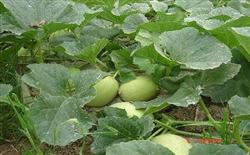
What are the common physiological disorders of watermelons and melons?
I. Causes of gourd-shaped fruit: 1. The fruit is set too far out, water and fertilizer conditions are poor, nutrients cannot be supplied and the fruit cannot swell; 2. The plant's vegetative growth is too vigorous, nutrients all go to the vines, and the small fruits that set are all gourd-shaped; 3. Pollination quality is low, the amount of pollen is insufficient and uneven, the front end of the fruit has many seeds while the base has...
-
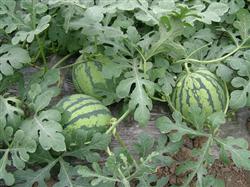
Five scientific measures for spring cultivation of mini watermelons
Cultivating mini watermelons in early spring has become a planting project favored by many melon growers, but due to climate and other reasons, the cultivation of mini watermelons still requires very scientific methods. Below, we explain 5 measures for scientifically cultivating mini watermelons: 1. Temperature management. Because the natural temperature in early spring is low, after transplanting the focus should be on keeping warm, keeping the greenhouse film tightly closed...
-
Key Technical Points for High-Yield Open-Field Watermelon Cultivation in Spring
It is currently the season for sowing and raising seedlings of open-field watermelons. To do a good job of watermelon cultivation and increase farmers' income, the key technical points for spring open-field watermelon cultivation are introduced as follows: 1. Variety selection. Varieties should be chosen according to market demand, selecting those that are well-suited to the market, with good quality, high yield and strong disease resistance, such as Qinghong...
-
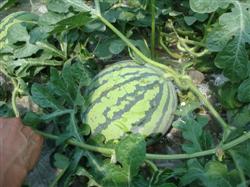
How can spring open-field watermelons be grown for high yields?
Currently it is the season for sowing and raising seedlings of open-field watermelons. In order to do a good job of watermelon cultivation and increase farmers' income, the key points of spring open-field watermelon cultivation techniques are introduced as follows: 1. Choosing varieties. Varieties should be selected according to market demand, choosing varieties with good quality, high yield and strong disease resistance, such as Qinghongbao...
-
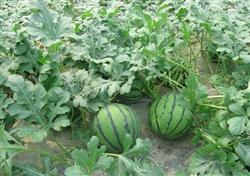
Detailed Explanation of Key Techniques for High-Yield Spring Watermelon Cultivation
1. Select disease-resistant, high-yield, high-quality improved varieties: For medium-to-large fruit watermelons, you can choose Xinong No. 8, Japanese Jubao Wang, Qingbao Wang, Heiju Guan, Gannong No. 8; for small watermelons, you can choose Heimeiren small watermelon; for seedless watermelons, Heimi No. 1 and No. 2. 2. Choose a good planting site: It is advisable to choose a site with a certain slope, convenient drainage and irrigation...
-
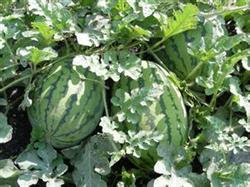
How to Grow Spring Watermelons for High Yields? Key Cultivation Techniques Explained
1. Choose disease-resistant, high-yielding, high-quality varieties: For medium-to-large fruited watermelons, choose Xinong No. 8, Japanese Jubao Wang, Qingbao Wang, Hei Juguan, Gannong No. 8; for small watermelons, choose Black Beauty mini watermelon; for seedless watermelons, choose Heimi No. 1 and No. 2. 2. Choose a good planting site: It is best to choose land with a certain slope, convenient drainage and irrigation...
-
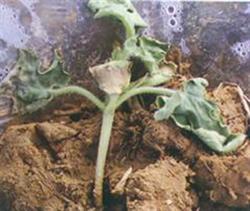
What to Do About Abnormal Watermelon and Melon Seedlings in Spring? A Full Breakdown of Solutions
1. Uneven emergence is mainly caused by uneven ground temperature and humidity in the seedbed. When laying heating wires, a spacing of 3-4 cm at the front edge of the greenhouse and 7-8 cm at the rear edge is advisable, so that the bed temperature is uniform; when large and small seedlings appear, move the large seedlings to the lower-temperature area at the front edge of the greenhouse, so that the young...
条件筛选