-
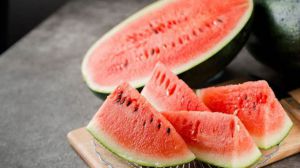
What watermelon varieties are there? An introduction to common watermelon varieties
Black Beauty: The flesh of this watermelon variety is denser than that of other varieties, and its sweetness is higher too. Jingxin watermelon: The fruit is nearly spherical, so it is also called the landmine melon; the flesh is very high in sweetness and the taste is excellent as well. Texiaofeng watermelon: Its place of origin is Taiwan, China; this watermelon has thin rind, light green stripes, and crystal-yellow flesh.
-

How to Grow Watermelon Peel Peperomia: You Must Do These Things
Watermelon Peel Peperomia, also known as Roundleaf Peperomia, is affectionately called Watermelon Peel Peperomia because its leaf pattern resembles a watermelon. Watermelon Peel Peperomia prefers a high-temperature, humid, semi-shaded environment with high air humidity. If you want it to maintain its beautiful leaf...
-
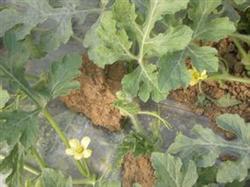
Five observations to tell whether a watermelon has set fruit
First, look at the female flower's morphological features. In early-maturing watermelon varieties, the ovary is generally round (a few are oblong); female flowers with few hairs, a thick and long fruit stalk, and larger petals set fruit easily. For oval-fruited melons (mostly mid- to late-maturing varieties), the ovary is oblong, and female flowers with many hairs, a thick and long fruit stalk, and large petals set fruit easily; otherwise they set fruit with difficulty...
-
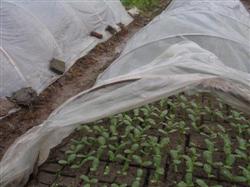
What are the key measures for raising watermelon seedlings in winter?
Improve the heat preservation and heating measures of the seedling shed. Replace polyethylene film with polyvinyl cyanide drip-free film. Heat preservation and drip-free performance are greatly improved, and the shed temperature can be increased by 1-2 degrees. Temporary heating equipment such as a fire wall or heating stove should be installed in the shed. Carry out artificial heating when necessary. 1. Subject watermelon and rootstock seeds to low-temperature treatment, ...
-
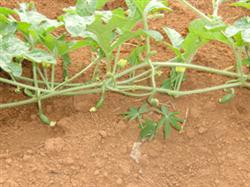
Three key points for protecting flowers and fruit of watermelon in hot and rainy seasons
Hot and rainy seasons are a test for most crops, and watermelons and melons are no exception. In this kind of weather, what we mainly do is protect their flowers and fruit to increase the fruit-setting rate and watermelon yield. Protection is mainly carried out from three aspects: Element one, cultivation management inside greenhouses. 1. In the hot summer...
-
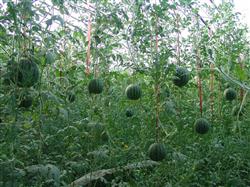
Detailed Explanation of Current Field Management Techniques for Watermelon
The following measures should be taken for current watermelon field management: 1. Dig drainage and irrigation ditches properly: For those where the ditches dug before planting do not meet the requirements, the main ditch, surrounding ditch, middle ditch and bed ditch should be opened in a timely manner. The depths of the ditches are respectively: main ditch 1.5m, middle ditch 1.0m, middle ditch 0.8m, bed ditch 0.4m. The ditches must be unobstructed between each other...
-
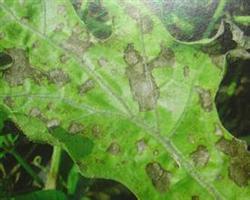
What are the simple techniques for watermelon disease control?
Before sowing, choose a greenhouse that has not grown cucurbit crops, or one that has been subjected to high-temperature sealed treatment during the summer fallow period, to prevent soil-borne diseases such as Fusarium wilt, damping-off, Rhizoctonia rot, and anthracnose from invading during the seedling stage. For seed treatment, soak the seeds in warm water at 55°C for 10 minutes, stirring constantly, then after cooling soak for another 6 hours, then...
-
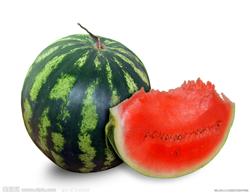
What are the methods for judging whether a watermelon is ripe?
1. Accumulated temperature method. Watermelons need a certain amount of accumulated temperature from flowering to ripening. Generally, early and mid-season varieties need 700--800°C from flowering to ripening, while late varieties need about 1000°C. Therefore, under conditions of timely sowing in spring and normal climate, the fruit development days of each variety are basically fixed. Early varieties need 28--3...
-
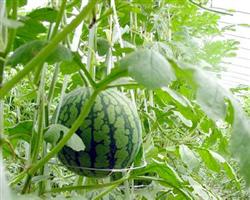
Detailed Explanation of Hanging Vine Cultivation Techniques for Watermelon in Solar Greenhouses
Cultivation seasons: Early spring cultivation. Sow and raise seedlings in mid-to-late February, seedling age 35-40 days, use heated seedling raising, transplant into the greenhouse in early-to-mid April, go to market in early June. Autumn delayed cultivation. Sow in late July, seedling age about 20 days. Cover the greenhouse film in early September, add heat-preserving straw curtains in late September, go to market around October. Winter-spring cultivation...
-
How to keep watermelon fresh for two months? Practical methods you can learn
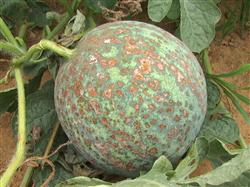
Chemical control: start spraying at the early stage of disease onset, every 7-10 days, for 2-3 consecutive treatments. Fungicides can be chosen from 68.75% DuPont Equation 1000x solution, 25% Shibogong emulsifiable concentrate 1000-1500x solution, 80% Sande Sheng wettable powder 600-800x solution, 50% Thiophanate wettable powder 1000x solution, 40% Dako...
条件筛选