What to Do About Abnormal Watermelon and Melon Seedlings in Spring? A Full Breakdown of Solutions
1. Uneven emergence is mainly caused by uneven ground temperature and humidity in the seedbed. When laying heating wires, a spacing of 3-4 cm at the front edge of the greenhouse and 7-8 cm at the rear edge is advisable, so that the bed temperature is uniform; when large and small seedlings appear, move the large seedlings to the lower-temperature area at the front edge of the greenhouse, so that the young...
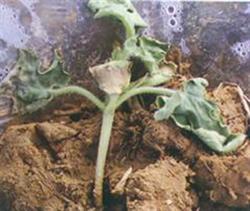
1. Uneven emergence is mainly caused by uneven ground temperature and humidity in the seedbed.
When laying heating wires, a spacing of 3-4 cm at the front edge of the greenhouse and 7-8 cm at the rear edge is advisable, so that the bed temperature is uniform; when large and small seedlings appear, move the large seedlings to the lower-temperature area at the front edge of the greenhouse, so that the seedlings grow uniformly; when humidity is uneven, emergence is better on both sides and seedlings tend to be missing in the middle of the bed, so after sowing cover with plastic film to keep surface humidity uniform. Uneven thickness of the soil cover can also cause uneven emergence, so cover the soil evenly.
2. Seedlings emerging with shells still attached is caused by insufficient bottom watering and too thin a soil cover.
The main measures are to water the bottom thoroughly and keep the soil cover thickness at 1.5 cm; if seedlings are found emerging with shells attached, gently remove the melon shells by hand in the morning when the seedbed is moist.
3. Spindly seedlings: high humidity and temperature in the seedbed (especially high night temperature), excessive use of quick-acting nitrogen fertilizer, insufficient light, or small spacing between melon seedlings are the main causes of spindly seedlings.
To prevent melon seedlings from becoming spindly, prepare nutrient soil as required; strengthen temperature and humidity management of the seedbed, keeping the night temperature no higher than 15°C after emergence; water reasonably, strengthen ventilation, and reduce humidity; increase light in the seedbed and widen the spacing between seedlings.
4. Stunted seedlings: these show small leaves, dark color, thin stems, short internodes, slow growth, and few fine roots. They are mainly caused by long-term low seedbed temperature, long-term dryness of the seedbed, insufficient fertilization, lack of nitrogen fertilizer, or excessive fertilization.
To prevent stunted seedlings, use nutrient soil for raising seedlings, avoid nutrient deficiency and root burn, maintain suitable temperature and humidity in the seedbed, and harden the seedlings appropriately according to seedling condition and weather.
5. Melon seedlings with no growing point: this is caused by old seeds, fertilizer damage, or pesticide damage. Watermelon seeds stored for more than 3 years produce many seedlings with no growing point; newly emerged melon seedlings have relatively tender growing points and weak tolerance to fertilizer and pesticides, so if the concentration of foliar spray or topdressing is too high or the spray volume is too large, the growing point can easily be damaged.