What are the precautions for pruning pomegranate trees?
Pomegranate is sensitive to pruning; improper pruning can cause excessive vegetative growth or weaken the tree. The following points should be noted when pruning: 1. Train the tree shape. Because the pomegranate's trunk is not distinct, when planted in courtyards an open umbrella shape should be used, with branches kept only above 1.2 m on the trunk. For field cultivation, a flat-topped vertical-branch shape should predominate...
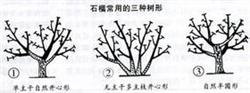
Pomegranate is sensitive to pruning; improper pruning can cause excessive vegetative growth or weaken the tree. The following points should be noted when pruning:
1. Train the tree shape. Because the pomegranate's trunk is not distinct, when planted in courtyards an open umbrella shape should be used, with branches kept only above 1.2 m on the trunk. For field cultivation, a flat-topped vertical-branch shape should predominate, to facilitate management and obtain early high yields.
2. Combine winter and summer pruning. Winter pruning often causes excessively vigorous tree growth, which is not conducive to flower bud formation; therefore, during the growing period, measures such as bud rubbing, branch twisting, pinching, and shoot thinning should also be used to regulate tree vigor.
3. Pruning amount should be moderate. Pomegranate is sensitive to pruning and has poor tolerance for it. A large amount of winter pruning produces vigorous spring growth, increasing the number of vegetative branches and affecting the fruit set rate; a large amount of summer pruning weakens the tree. Therefore, for weak pomegranate trees, the amount of winter pruning should be appropriately increased, and for vigorous trees, the amount of summer pruning should be appropriately increased.
4. Few heading cuts. Pomegranate pruning mainly consists of thinning branches and leaving them unpruned to grow freely, thinning out aged and dead branches, excessively vigorous and dense branches, and upright water sprouts, and leaving horizontal and slanting branches and diseased and pest-damaged branches unpruned, with heading cuts only on a very few extension branches. Too many heading cuts easily cause excessively vigorous tree growth, which is not conducive to flower formation and affects the yield per tree.