How to Graft Crabapple onto Old Apple Trees
In recent years, as landscaping projects have increased demand for large-sized crabapples, large-sized crabapples in landscaping nurseries have become noticeably insufficient, such as the widely used Malus micromalus and the colorful-leaf species Malus 'Royalty'. The apple tree, which belongs to the same family and genus as crabapple, has therefore been used as rootstock for grafting crabapple. In orchards, apple trees past their peak fruiting period...
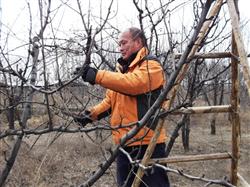
In recent years, as landscaping projects have increased demand for large-sized crabapples, large-sized crabapples in landscaping nurseries have become noticeably insufficient, such as the widely used Malus micromalus and the colorful-leaf species Malus 'Royalty'. The apple tree, which belongs to the same family and genus as crabapple, has therefore been used as rootstock for grafting crabapple. Apple trees in orchards that are past their peak fruiting period, although their fruiting capacity has already become weaker, can still play a role in landscaping thanks to their tall tree form and thick, sturdy branches.
Selection of Raw Materials
Apple trees do not live particularly long; generally, standard rootstocks can reach 40 years, while dwarfing rootstocks last around 20 years. When selecting apple trees, buy middle-aged to older trees around 10 years old, and no more than 15 years old at most. In addition, do not choose apple trees with severe pests or diseases.
Different apple tree cultivars have different compatibility with crabapple. Common apple tree cultivars include the Red Delicious series and the Fuji series; these two have a broad compatibility range, and it is best to use standard rootstocks. Before grafting, conduct compatibility trials between the apple and the crabapple; since each cultivar has different compatibility, try to use those with good compatibility for grafting. One year before grafting the apple tree, root pruning is needed to promote the sprouting of new roots. At the same time, dig a ring-shaped nutrient trench about 70 cm wide and 30 cm deep at the root-pruning site, and apply a mixed soil of well-fermented organic fertilizer, NPK compound fertilizer and fertile soil.
Grafting Operation
One year before using apple to graft crabapple, the large canopy needs to be reduced, leaving the main framework, and grafting is carried out after one-year-old branches have grown. Grafting is divided into spring grafting and summer grafting. Spring grafting mainly uses bark grafting and cleft grafting, while summer grafting uses T-shaped budding or budding with wood. Before spring grafting, open a trench beneath the apple canopy and apply nitrogen-phosphorus-potassium compound fertilizer to ensure vigorous growth; after grafting, urea and other nitrogen fertilizers can be added. During summer grafting, the apple tree is in its peak growth period, so basically no additional fertilizer is needed. After grafting, water according to the dryness or moisture of the soil, and be careful not to let water accumulate excessively. Summer-grafted branches are numerous and large, so it is best to set up supports. At the same time, observe frequently and promptly remove sprouted branches from the apple tree.