What are the winter management techniques for loquat trees?
First, apply winter fertilizer well, control excessive shoot growth, and strengthen the flower-forming genes and flower organs and ovaries. Promote and control, promote flowering, disinfect, and activate all in one go. This enables the fruit tree to bloom more and set more fruit year after year, protect and plump the fruit, and achieve stable yields and high quality. Second, carefully do the work of thinning and retaining flowers. For young loquat trees, growth should be allowed to expand the canopy, and the terminal flowers and...
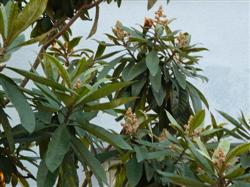
First, apply winter fertilizer well, control excessive shoot growth, and strengthen the flower-forming genes and flower organs and ovaries. Promote and control, promote flowering, disinfect, and activate all in one go. This enables the fruit tree to bloom more and set more fruit year after year, protect and plump the fruit, and achieve stable yields and high quality. Second, carefully do the work of thinning and retaining flowers. For young loquat trees, growth should be allowed to expand the canopy, and all terminal flowers and outer flower clusters should be thinned out. For weak trees, preserve the tree and retain no flowers. For strong, healthy loquat trees, a moderate number of flowers can be retained on the inner canopy and the middle-lower parts as the first fruit set. Third, if there are insect pests, chemical control can be used. For the chemicals, 800-fold diluted Xin Gaozhi Mo (New High Lipid Film) can be used together with 2000-fold diluted imidacloprid. A small number of longhorn beetle larvae still remain, and they must be carefully caught and killed to prevent future trouble. Fourth, do the shaping and pruning work to ensure the central trunk maintains its leading upward-growing posture. Keep side branches about 30-50 cm apart per tier, and retain about three per tier. For the clustered new shoots growing at the top, likewise keep about three evenly directed branches at 30-50 cm spacing, and remove the excess, so as to achieve a high-yield canopy with sufficient light between side-branch tiers and an even, reasonable distribution.