-
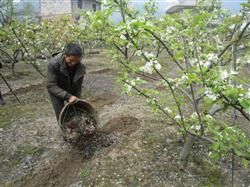
How to fertilize pear trees for good growth? A detailed guide to fertilization methods
How to fertilize pear trees for good growth? Please give an introduction. The life of a pear tree goes through several main growth stages: the young tree first-fruiting stage, the full-fruiting stage and the aging stage. At different growth stages, the fertilizer required differs. 1. Young tree first-fruiting stage: In early spring, a nitrogen-based fertilizer should be applied as a top dressing. After early summer, when new shoots stop growing, flower buds begin to differentiate and the fruit begins to swell, a phosphorus- and potassium-based fertilizer should be applied as a top dressing. After harvesting the fruit in autumn, a base fertilizer should be applied once more. 2. Full-fruiting stage: After bud break and before flowering, apply a nitrogen-based fertilizer once as a top dressing. From late June, when the fruit begins to swell, until just before harvest, root-zone top dressing (foliar spraying) should be carried out, and nitrogen, phosphorus and potassium fertilizers should be applied together during top dressing. After the pear fruit is harvested, the tree enters a recovery stage, and during this period the base fertilizer should be applied early. 3. Aging stage: After decades of growth and fruiting, the pear tree enters the aging stage, and four top dressings and one base fertilizer are applied throughout the year (an average of 250-500 kg of barnyard manure per tree each year).
-
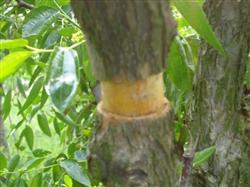
How to Preserve Flowers and Fruits on Jujube Trees? A Detailed Guide to Practical Management Techniques
How to preserve flowers and fruits on jujube trees? Please provide guidance on methods. Jujube trees generally have a high self-fruitfulness rate and do not need pollinator trees, but they suffer from severe flower and fruit drop and low yields, so management should be strengthened during the flowering and fruiting period. For detailed methods, refer to the following list: 1. Trunk girdling. At a distance of 10-20 cm from the ground on the trunk...
-
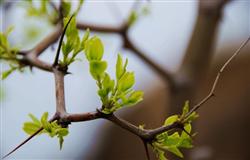
What are the key points of jujube tree pruning and pinching technology?
How do you pinch jujube trees? How many rounds should jujube tree pinching be divided into? Please explain in detail. Pinching jujube trees can mainly effectively reduce unnecessary vegetative growth of jujube trees, save nutrients, ease the contradiction in nutrient allocation between growth and fruiting, and promote reproductive growth. Second, it can effectively improve the light conditions within the canopy and increase the photosynthetic...
-
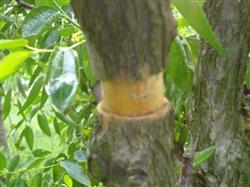
Why Doesn't the Jujube Tree Bear Fruit? An Analysis of Causes and Management Methods
Why doesn't the jujube tree bear fruit? Please explain the causes. The main reasons a jujube tree fails to bear fruit are the following three: Reason one why a jujube tree fails to bear fruit: excessive tree vigor. Solution: During the full flowering period of the jujube tree, perform ring barking (girdling) at the base of the main branches, cutting deep to the xylem, with a width of about 0.5 cm - roughly, however thick the bark is, that is how wide to cut....
-
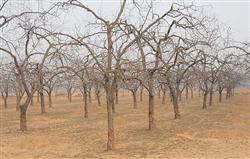
What are the methods for preventing and controlling pests and diseases of jujube trees in autumn and winter?
Please introduce the methods for preventing and controlling pests and diseases of jujube trees in autumn and winter? Detailed operation methods would be best. For the methods for preventing and controlling pests and diseases of jujube trees in autumn and winter, you can refer to the following methods: 1. Clean the orchard: Pests and diseases such as jujube rust, green plant bug, and jujube slug moth overwinter in fallen branches, leaves, or weeds under the trees. Therefore, after the jujube trees shed their leaves...
-
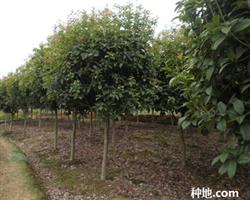
What are the propagation methods for potted osmanthus trees?
What pests and diseases affect osmanthus trees? How should they be controlled? Please advise. Common pests and diseases of osmanthus trees include the following: 1. Leaf spot disease. It mainly harms the leaves, initially appearing as small brown spots; the lesions are round or irregular, later with gray to grayish-white centers and reddish-brown edges, and blackish-gray mold-like growth on the lesions. High temperature and high humidity...
-
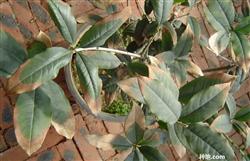
What are the control methods for leaf blight of osmanthus trees?
How to control leaf blight in osmanthus trees? Please introduce and guide. Leaf blight is a common disease in osmanthus cultivation. Its symptoms: it occurs at the leaf margins and leaf tips. It starts as small light brown spots, then gradually expands into irregular large patches. If several lesions connect, the entire leaf dries up by 1/3-1/2. The lesions are grayish brown to reddish brown,...
-
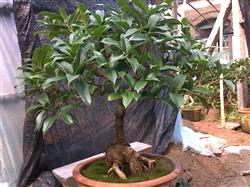
How to care for a potted osmanthus tree in winter so it overwinters safely
How to care for a potted osmanthus tree in winter? Please give guidance. In winter, when the absolute temperature is low and lasts a long time, household potted osmanthus often suffers frost damage. Based on years of experience, the author shares some views on the care of potted osmanthus in winter in northern China. "No bringing in during autumn" means it is better to bring it indoors late rather than early. Generally, in autumn...
-
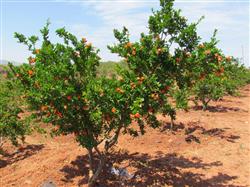
How do you winter-prune a pomegranate tree when planting? Detailed explanation of winter pruning methods
How do you winter-prune an ordinary pomegranate? Is there a reader who can introduce the method to me? To ensure the yield for the coming year, pomegranate trees must undergo winter pruning when winter arrives; the method can follow the operations below. 1. Train the pomegranate tree shape: because the pomegranate's trunk is not obvious, when planting in a courtyard, to prevent harm from livestock and poultry...
-
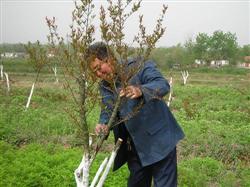
Pomegranate tree cultivation: What is the purpose of autumn pruning of pomegranate trees?
I hear pomegranate trees need autumn pruning. What is the purpose of autumn pruning pomegranate trees? What pruning methods are there? Is there anyone who can explain to me the role of autumn pruning of pomegranate trees: In autumn, pomegranate trees often sprout many secondary and tertiary new shoots, which makes the canopy branches dense, causing poor ventilation and light penetration, and leading to slow fruit enlargement...
条件筛选