-
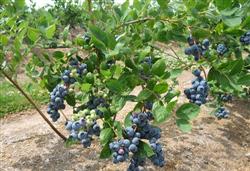
How should young blueberry trees be pruned to be scientific and reasonable?
How should young blueberry trees be pruned? Please give guidance. After planting, young trees develop flower buds in the first and second years, and flowering and fruiting will inhibit vegetative growth. The main purpose of the young tree stage is to promote root development, expand the canopy and increase branches, therefore pruning at the young tree stage focuses mainly on removing flower buds. In the spring of the second and third years after planting...
-
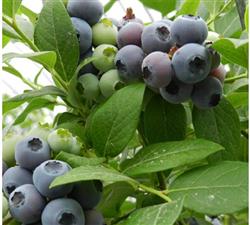
How does blueberry fertilization differ from that of ordinary fruit trees?
What is the difference between the fertilization methods for growing blueberries and ordinary fruit trees? Please explain. The differences between the fertilization methods for growing blueberries and ordinary fruit trees are as follows: First, in terms of nutritional characteristics, blueberries are a typical calcifuge plant, with a strong ability to rapidly absorb and accumulate calcium. Analyzed from the overall nutritional level of the tree, blueberries...
-
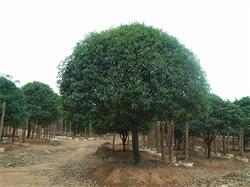
In what ways is the value of the osmanthus tree reflected?
Question: What is the planting value of the osmanthus tree? Answer: Landscape use. The osmanthus is evergreen all year round, with luxuriant branches and leaves, blooming in autumn and filling the air with fragrance, so it can be described as "dominating the three autumn months and outshining all other flowers." It is widely used in landscaping, often as a garden feature tree, planted singly, in pairs, or in clumps and groves. In Chinese classical gardens...
-
Detailed Explanation of Osmanthus Tree Cutting Propagation Methods and Techniques
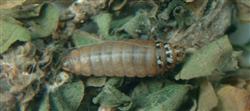
The larvae spin silk to bind leaves and bark fragments together to build a protective case, feed on the leaf mesophyll, and leave the veins behind. Damaged leaves become perforated; in severe cases, all the leaves on the entire tree are eaten bare, and the bark can also be gnawed. This severely affects the growth vigor of the osmanthus tree. Control methods: remove the protective cases to reduce the pest source and eliminate overwintering larvae. Protect natural enemies such as the umbrella-skirt tachinid fly...
-
Detailed Explanation of Seed Sowing and Seedling Raising Methods and Technical Points for Osmanthus Trees
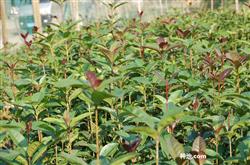
How to sow seeds and raise seedlings of osmanthus trees? Please advise. Osmanthus is generally propagated by cuttings, while single-trunk osmanthus is mostly propagated by sowing. The following is an introduction: 1. Seed collection. Osmanthus flowers from September to October, and the fruit matures from late March to late April of the following year. When the fruit enters the maturity stage and the peel gradually changes from green to purple-black, it can be collected...
-
What should be noted when transplanting an osmanthus tree?
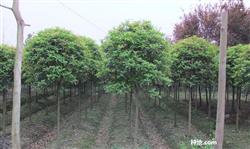
What common pests and diseases affect osmanthus trees, and how are they controlled? The common pests and diseases of osmanthus trees are: 1. Leaf spot disease: it mainly damages the leaves, initially appearing as small brown spots, with the lesions round or irregular in shape, later gray to grayish-white in the center with reddish-brown edges, and blackish-gray mold-like growth on the lesions. High temperature and high humidity are often...
-
What are the differences between peony (herbaceous peony) and tree peony? A quick guide to telling them apart
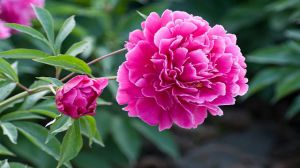
The herbaceous peony is an herbaceous plant, while the tree peony is a deciduous shrub. The stem of the herbaceous peony is herbaceous, while that of the latter is woody. Their leaves also differ: the former's leaves are relatively narrow, while the latter's are relatively broad. The flower shape also differs: the former's flowers are smaller. Their flowering periods also differ: the herbaceous peony blooms in late spring and early summer, while the tree peony blooms around March.
-
Money Tree vs Fortune Tree: Which Is Better? A Comparative Analysis of Their Differences
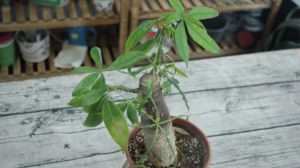
In terms of cultivation, the Money Tree (Pachira aquatica) is easier to grow than the Fortune Tree (Schefflera actinophylla). The former has no major issues as long as it is fertilized at the right times, while the latter requires careful water control, so the former is recommended. In terms of symbolism, if you are a merchant, growing the Money Tree is recommended, while if you are a developer or work in financing, growing the Fortune Tree is recommended.
-

What to Do When Osmanthus Trees Get Leaf Blight? Detailed Guide to Prevention and Control Methods
What propagation methods are there for osmanthus trees? Please advise, thank you. Osmanthus trees have the following propagation methods: 1. Grafting propagation. The rootstock for grafting osmanthus is generally privet (Ligustrum) or Ligustrum obtusifolium; side grafting or approach grafting is mostly used, and in recent years some have experimented with the tear grafting method. Tear grafting is simple to perform, and the survival rate can reach about 93%. The specific method is: on the spring buds...
-
What are the common pests and diseases during the cultivation of osmanthus trees?
How to grow osmanthus trees? Please guide the cultivation of osmanthus as an evergreen small tree, with varieties such as Jingu (orange-yellow flowers), Yingui (yellow-white flowers), Dangui (orange-red flowers), and Sijigui (pale yellow-white flowers). Osmanthus is not only an important landscaping tree species, but also a famous aromatic plant with high edible value. I. Prop...
条件筛选