-
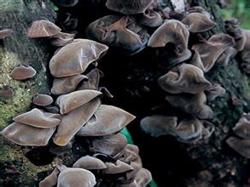
Detailed Explanation of Purple Wood Ear Cultivation Technology on Rice Straw and Sand Beds
Fungus mites, commonly known as "fungus lice," belong to the phylum Arthropoda, class Arachnida, order Acari. They are the most harmful fungal pest in the spawn production and cultivation of edible fungi, and they are also harmful to people. Their harm occurs in three aspects: first, fungus mites directly feed on mycelium, causing failure to grow after inoculation or the appearance of "mycelium regression" after growth, leading to culture...
-
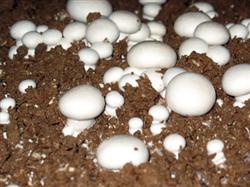
Detailed Explanation of the New Technology for Two Crops of Button Mushrooms in One Year
1. Mushroom shed treatment. In the past, most mushroom sheds used were simple greenhouses with a single-slope design, or simple semi-underground sheds. During low-temperature seasons, it was difficult to use sunlight to raise the temperature, so after cultivation entered November, the shed temperature dropped along with the air temperature. When the lowest shed temperature reached 8°C, mushrooms stopped fruiting, and it was only after the air temperature rose again in March of the following year...
-
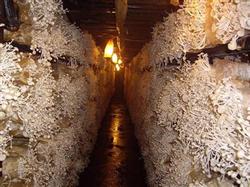
Detailed Explanation of New Technology for Raw Material Cultivation of Enoki Mushroom in Greenhouses
I. Morphological Characteristics The fruiting bodies grow in clusters. The cap diameter is 2-15 cm, hemispherical, with the margin incurved, later gradually expanding to flat. The stipe is straight, 2-13 cm long, 2-8 cm in diameter, roughly equal in thickness from top to bottom. The stipe is solid in the early stage and hollow in the later stage. There are 2 types of varieties, white and yellow. The white type is suitable for processing...
-
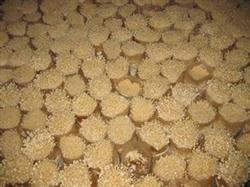
Detailed Explanation of Pure White Enoki Mushroom Bag Cultivation Technology
1. Process flow: cutting bags → mixing substrate → filling bags → sterilization → inoculation → mycelial growth → primordia induction → fruiting. 2. Production technology. 1. Cutting bags: Cut plastic tube bags used for cultivating mushrooms into small sections 30-35 cm long, tie one end with string to form a bag. Each ton of substrate requires 12-13 kg of bags. 2. Mixing substrate: Raw material formula...
-
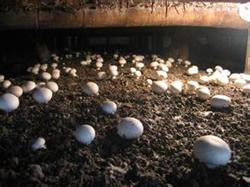
Detailed Explanation of Key Points of Mushroom Casing Soil Improvement Technology
Casing soil is an important step in the mushroom cultivation process. The properties of the casing soil material directly affect the timing of mushroom emergence and the yield. In particular, the water-holding rate and water-retention capacity of the casing soil have a relatively large impact on yield. In recent years, various regions have continuously carried out the selection and improvement of casing soil materials. From simply using vegetable field soil and river mud soil to...
-
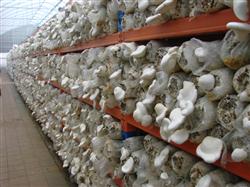
Detailed Explanation of New Technology for Bag Cultivation of White King Oyster Mushroom
1. Post-ripening cultivation: After the mycelium of the white king oyster mushroom has fully colonized the bag, it cannot be induced to fruit immediately; it needs 50-60 days of physiological maturation before fruiting. During this stage, the temperature should be controlled at 20-25°C. If the temperature is low, the time must be extended further. The relative air humidity should be raised to 75%, and a certain amount of light should be increased. 2. Scratch fruiting: When the mycelium of the white king oyster mushroom is about to reach...
-
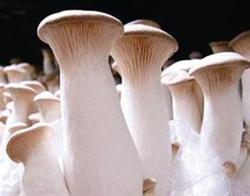
Analysis of Key Points of the New Technology of Bag Cultivation with Soil Casing for King Oyster Mushroom
King oyster mushroom, also known as Pleurotus eryngii, is one of the rare edible fungi. Its flesh is thick and plump, crisp and tender, milky white in color, delicious in taste, and rich in nutrients, and it is hailed as "the meat among vegetables." By adopting the following new technology of indoor fruiting and outdoor soil casing cultivation, the biological conversion rate can reach 100%-120%, and the mushroom bodies have good commercial quality. Compared with cultivation without soil casing...
-
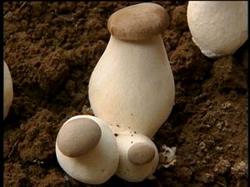
Detailed Explanation of the New Technology of Soil-Covered Cultivation of King Oyster Mushroom
1. Strain selection. For export products, strains with round and neat fruit body shape, uniform thickness from top to bottom of the stipe, white color, relatively dense tissue and good taste should be selected. Through trials, "Xingbao No. 1" introduced from the Fujian Provincial Edible Fungi Strain Station has the characteristics of thick flesh, crisp and tender texture, beautiful appearance and high export qualification rate, and is suitable for...
-

Detailed Guide to Bag-Cultivated Casing Soil Cultivation Technology for the Tiger Milk Mushroom
The tiger milk mushroom, also known as Poria-sided oyster mushroom and called South Seas Poria by the Japanese, is a mushroom used both as medicine and food. The tiger milk mushroom is mainly used medicinally for its sclerotium, and its fruiting body contains 16%-45% protein and is edible. The sclerotium contains glucose, fructose, galactose, maltose, cellobiose, palmitic acid, inositol, oleic acid, and others. Some countries and regions in Africa have a very early tradition of eating and using the tiger milk mushroom medicinally. They cut the fruiting bodies of the tiger milk mushroom into small pieces, or remove the outer skin of the sclerotium, boil it in salt water, then slice it or grind it into powder, add other seasonings, and cook it into soup to eat.
-
Detailed Explanation of New Technology for Indoor Shelf-Style Sterilized Substrate Cultivation of Tricholoma lobayense
Tricholoma lobayense is a rare mushroom species newly developed in recent years. It fruits at relatively high temperatures and is suitable for cultivation from late spring to mid-autumn. It solves the problems of variety matching for year-round cultivation in mushroom houses and the limited area and few varieties for edible mushroom cultivation in summer that cannot meet market demand, and it has broad development prospects. At present, cultivation methods and management practices vary from place to place, so fruiting and yields are also very unstable, and mushroom death is especially likely to occur at the primordium stage. Because the indoor temperature difference between day and night is small (cultivation and fruiting are even better in houses with earthen walls), mushroom death caused by sudden high-temperature weather outdoors will not occur;
条件筛选