Detailed Explanation of the New Technology of Soil-Covered Cultivation of King Oyster Mushroom
1. Strain selection. For export products, strains with round and neat fruit body shape, uniform thickness from top to bottom of the stipe, white color, relatively dense tissue and good taste should be selected. Through trials, "Xingbao No. 1" introduced from the Fujian Provincial Edible Fungi Strain Station has the characteristics of thick flesh, crisp and tender texture, beautiful appearance and high export qualification rate, and is suitable for...
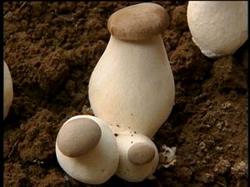
1. Strain selection. For export products, strains with round and neat fruit body shape, uniform thickness from top to bottom of the stipe, white color, relatively dense tissue and good taste should be selected. Through trials, "Xingbao No. 1" introduced from the Fujian Provincial Edible Fungi Strain Station has the characteristics of thick flesh, crisp and tender texture, beautiful appearance and high export qualification rate, and is suitable for soil-covered cultivation.
2. Seasonal arrangement. The suitable growth temperature for king oyster mushroom cultivation is 12-18°C. From bag making and inoculation to fruiting takes about 40-50 days. Generally, bag making in mid-to-late September is more suitable. The growth of king oyster mushroom is sensitive to temperature. When the temperature remains above 20°C, the fruit body is prone to shriveling, yellowing and rotting. Therefore, in areas of different altitudes, it is particularly important to arrange the local cultivation season according to the suitable fruiting temperature.
3. Spawn production. For mother spawn, PDA with 3 grams of peptone added can promote mycelial growth. Mother spawn cultured at 26°C for 10-13 days can fill the test tube. For stock spawn and cultivation spawn, some cottonseed hulls can be added to a sawdust and bran medium. Generally, stock spawn and cultivation spawn cultured at 25°C can fill the bottle (bag) in 35-40 days.
4. Mushroom bag production.
1. Raw materials and formulas. There are many suitable growth substrates for king oyster mushroom. Various agricultural and forestry by-product residues, such as hardwood sawdust, cottonseed hulls, bagasse, wheat straw, waste cotton, rice straw, grass powder, etc., can all be used as the main cultivation raw materials. Bran, rice bran, corn flour, sugar, calcium carbonate, gypsum powder, etc. are auxiliary materials for cultivating king oyster mushroom.
Formula 1: cottonseed hulls 40%, mixed wood sawdust 35%, bran 20%, corn flour 3%,
sugar 1%, light calcium carbonate 1%, water content 60%-65%, pH 6.0-6.5.
Formula 2: cottonseed hulls 68%, mixed wood sawdust 20%, bran 10%, sugar 1%, gyp-
sum powder 1%.
2. Mixing materials and bagging. When mixing materials, operations can be carried out according to the conventional method and the formula proportions. After stirring evenly, bag the material. Change the conventional 17 cm x 34 cm specification polyethylene short-bag mushroom package cultivation to 12 cm x 55 cm x 0.004 cm specification low-pressure polyethylene plastic long-bag cultivation. For large-scale production in rural areas, long-bag cultivation is more suitable, and a bagging machine can be used for bagging, the same as for shiitake mushroom production.
5. Sterilization and inoculation. Place the filled mushroom bags promptly in the atmospheric pressure stove used for shiitake mushroom production for sterilization, striving to reach a stove temperature of 100°C within 4-5 hours. Maintain for 10-12 hours. Generally, one stove can process 6000-8000 bags. After cooling, inoculate in an inoculation box or sterile room. Use a 2 cm diameter punch to make 4 holes on one side of the bag, use an inoculator to take block spawn and insert it into the holes, then put on a 15 cm x 55 cm x 0.002 cm specification plastic bag. The double-bag method can effectively reduce the contamination rate. After inoculation, place at 23-25°C for dark culture. Generally, the bags can be fully colonized in 40-50 days.|
6. Site selection, shed building and bed preparation. The mushroom yard should be selected in fields with flat terrain, clean environment, convenient drainage and irrigation, good water quality and convenient transportation. Sites with ants are not suitable. The outer shed is 2.5 m high, with reeds, thatch or Dicranopteris dichotoma placed on the frame, and surrounded by rice straw, reeds, etc., creating an ecological environment with little light, coolness and good ventilation. The inner shed beds are 1.1-1.3 m wide, with unlimited length, leaving a 0.5 m wide walkway, 0.3 m deep. Every two beds are inserted with arched bamboo, 1.8 m high, tightly covered with plastic film, fumigated with sulfur or sprayed with quicklime to prevent damage from ground pests and miscellaneous fungi. Use after disinfection.
7. Transferring to the field and covering with soil. After the mycelium fully colonizes the bags, cultivate for about another 10 days, then move the mushroom bags to the pre-prepared mushroom shed. Remove the bags immediately, with the inoculation holes facing up, placing one bag close against another flat on the bed surface, and cover with a 1-1.5 cm thick layer of soil. The required soil quality should be loose, not easily compacted, and peat soil with good moisture retention. Seal the edges of the mushroom bag beds tightly with mud to prevent fruiting from the bottom surface.
8. Fruiting management. After the mushroom bags are transferred to the field, first irrigate water into the bed furrows, and drain the water immediately after it floods the bed surface. Normally, keep the bed surface moist. Do not spray water directly onto the fruit bodies, otherwise the fruit bodies will turn yellow and quality will decline, and in severe cases the fruit bodies will rot. When the mushroom yard temperature is below 10°C, take heat preservation measures, add covering materials to the mushroom shed, and at the same time close the north-facing doors and windows at night to prevent the north wind from attacking the mushroom yard, and open the doors and windows at noon when the temperature is high, using light regulation to raise the temperature in the mushroom yard. When the mushroom yard temperature is above 20°C, take cooling measures, open the doors and windows in the morning and evening, close all doors and windows at noon, and if necessary spray water on the top of the shade shed to cool down. As the fruit bodies grow, appropriately increase the ventilation volume and ventilation frequency to ensure fresh air in the mushroom yard. If ventilation is poor, deformed mushrooms are easily produced, especially under high temperature and high humidity conditions, when the fruit bodies are susceptible to bacterial infection and rot. Fruit body growth requires a certain amount of scattered light, and light regulation and control are generally carried out in combination with the level of air temperature.
9. Harvesting and processing. Harvest when the edge of the mushroom cap is slightly incurved, the color becomes lighter, and the spores have not been discharged. Harvesting appropriately earlier gives the fruit body good flavor and a long shelf life. Export mushrooms require a cap diameter of 2.5-4 cm, a stipe length of 6-10 cm, and a stipe thickness of 2-4 cm. When harvesting, wear gloves, twist off the fruit body, and use a small knife to trim off impurities at the base. After the first harvest, clean the material surface, promptly replenish water and nutrients to the mushroom bags, and adjust the temperature and humidity of the mushroom shed well. After about 10 days, the second flush of mushrooms can grow. Generally, 2-3 flushes can grow, but the yield is mainly concentrated in the first flush. After harvesting, king oyster mushrooms can be sold after low-temperature refrigeration at 2-4°C for fresh-keeping, which keeps longer than general mushrooms. They can also be sliced and dried, or processed into salted products and canned goods.