Detailed Explanation of the New Technology for Two Crops of Button Mushrooms in One Year
1. Mushroom shed treatment. In the past, most mushroom sheds used were simple greenhouses with a single-slope design, or simple semi-underground sheds. During low-temperature seasons, it was difficult to use sunlight to raise the temperature, so after cultivation entered November, the shed temperature dropped along with the air temperature. When the lowest shed temperature reached 8°C, mushrooms stopped fruiting, and it was only after the air temperature rose again in March of the following year...
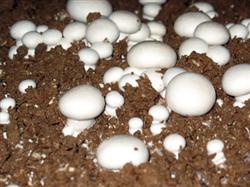 The traditional button mushroom cultivation model is generally one crop per year. Taking Shandong as an example, sowing is usually done in early to mid-September, and the shed is cleared at the end of May the following year, taking as long as 9 months. Considering the occupation of the mushroom shed and labor, this is not cost-effective. Breaking convention and achieving two crops in one year in the same mushroom shed, with 2 batches of material input within one production year, can greatly improve production efficiency while increasing the multiple cropping index of the mushroom shed.
1. Mushroom shed treatment: Rebuild the mushroom shed into a sunlight-heated (winter-warm) shed. Those with investment capacity can build a standard mushroom shed and equip it with a water-temperature air conditioner, which can achieve normal mushroom fruiting during both the low-temperature period after November and the relatively high-temperature period after March. After thoroughly disinfecting the mushroom shed with drugs such as Baibing Quwuzong, about 5 days before material input and sowing, irrigate the shed and let it seep naturally so that it is fully soaked through. This first increases shed humidity and second lowers shed temperature.
2. Spawn-running management: Generally, sowing can be arranged for mid-August. Turn on the water-temperature air conditioner to control the temperature at around 25°C, which allows normal spawn running. For the second batch, sowing in January to February requires turning on the water-temperature air conditioner for heating.
3. Fruiting management: Regulate suitable temperature to ensure fruiting requirements: generally, the temperature can be regulated within the range of 14°C to 20°C, and in low-temperature seasons it can trend near the lower limit.
Strengthen ventilation management and reduce pest and disease damage: Change the previous extensive management model of no ventilation during heat-preservation periods, which led to severe disease, and heavy ventilation during high-temperature periods, which caused substrate dehydration. Maintain oxygen supply in the shed, and frequently spray Saibai 09 and similar products to prevent or kill various invading pathogens.
Coordinate flush control and flush reduction to achieve no reduction in total yield: Through technical means such as post-ripening cultivation, ensure that the first flush has high and stable yield. After harvest, water should be replenished, and some quick-acting nutrients should also be added so that the mycelium quickly recovers to its initial robust state, and maintain a post-ripening period. When fruiting again, the yield is almost the same as before. Harvesting three consecutive flushes is equivalent to five or six flushes with traditional methods.
By the end of December, the first batch of material input can be cleared from the shed. After sterilizing the mushroom shed with Baibing Quwuzong combined with drugs such as Baibingsha, the second batch of material input is carried out in January of the following year, fruiting management begins in late February, and it ends at the end of May. At this point, two crops per year cultivation can be achieved. All other management is the same as conventional methods.