Detailed Explanation of New Technology for Bag Cultivation of White King Oyster Mushroom
1. Post-ripening cultivation: After the mycelium of the white king oyster mushroom has fully colonized the bag, it cannot be induced to fruit immediately; it needs 50-60 days of physiological maturation before fruiting. During this stage, the temperature should be controlled at 20-25°C. If the temperature is low, the time must be extended further. The relative air humidity should be raised to 75%, and a certain amount of light should be increased. 2. Scratch fruiting: When the mycelium of the white king oyster mushroom is about to reach...
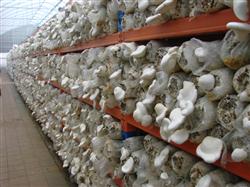 The white king oyster mushroom, also known as the white Ferula mushroom, originates from ** and is also called the Tianshan divine mushroom. It is an edible fungus with strong adaptability, a short cycle, and easy cultivation. Its flesh is thick and tender, its color is pure white, it is rich in nutrients, and its taste is delicious. It is very popular when put on the market. The artificial cultivation techniques for the white king oyster mushroom are introduced as follows
(I) Cultivation season: The white king oyster mushroom is a medium-temperature mushroom type. The optimum temperature for mycelial growth is 24-27°C, and the optimum temperature for mushroom growth is 12-22°C. Therefore, the cultivation season should be arranged with inoculation in early September and entry into mushroom growth in mid-October; in spring, inoculation should preferably be in early February and harvesting completed in early May.
(II) Medium preparation: The mycelium of the white king oyster mushroom has strong penetrating ability and can fully utilize and decompose substrate nutrients. A high-nitrogen formula is most suitable. Commonly used medium formulas: (1) cottonseed hulls 40%, mixed broadleaf sawdust 40%, wheat bran 10%, cornmeal 8%; (2) mixed broadleaf sawdust 38%, sugarcane bagasse 40%, wheat bran 12%, cornmeal 8%; (3) corncobs 50%, cottonseed hulls 28%, wheat bran 12%, cornmeal 8%. Each formula is additionally supplemented with 1% sucrose and 1% gypsum powder, with moisture content controlled at 60%-65%, and pH 6-7 before sterilization. In autumn, when temperatures are high, 0.5% lime may be added to the medium to prevent souring. The preparation method follows conventional practice.
(III) Inoculation and mycelial growth: For cultivation bags, use low-pressure polyethylene film bags of 15 cm × 32 cm × 0.05 cm or 17 cm × 34 cm × 0.05 cm specifications. The amount of substrate filled should account for 3/4 of the entire bag, with the remaining 1/4 used for tying the opening or inserting a ring and cotton plug. Sterilize under normal pressure at 100°C for 16 hours. After cooling to 25°C, inoculate with spawn under sterile conditions. The incubation temperature for mycelial growth is 25-28°C, the indoor relative air humidity should be below 70%, and ventilation should be frequent. During the mycelial culture stage, prevent exposure to strong light.
(IV) Fruiting management: After 30-45 days of culture, when primordia appear on the surface of the bag or beside the bag, it indicates physiological maturity, and the bags can be moved into the fruiting shed for mushroom growth. The cultivation method may be indoor shelf-style upright placement, or outdoor upright placement under a shade shed in the open field with a film cover. Outdoor ecological conditions are good and favorable for mushroom growth. After the bags are moved into the fruiting shed (room), remove the ring and cotton plug and open the bag mouth. Control the temperature at 10-23°C. After about 7 days, primordia appear and differentiate into young buds. When the stipe grows to 2 cm, increase the amount of spraying water and strengthen ventilation. In the early stage, spatial misting to maintain 80% relative humidity is sufficient. In the later stage, 85%-90% relative humidity is more suitable. During the mushroom growth period, a ratio of "two parts light to eight parts shade" is preferable. Prevent exposure to strong light.
(V) Harvesting and processing: When the fruiting body grows to 8-12 cm, it can be harvested. The method: hold the stipe with the hand and pull up the entire mushroom. After harvesting, stop spraying water, clean up the residual material at the bag mouth and around it, and let the mycelium rest. After 5 days, continue spraying water and control the temperature to promote a second flush of mushrooms. Fresh products can be sold directly on the market or salted, and can also be sliced, processed, and dried for export.