Detailed Explanation of Purple Wood Ear Cultivation Technology on Rice Straw and Sand Beds
Fungus mites, commonly known as "fungus lice," belong to the phylum Arthropoda, class Arachnida, order Acari. They are the most harmful fungal pest in the spawn production and cultivation of edible fungi, and they are also harmful to people. Their harm occurs in three aspects: first, fungus mites directly feed on mycelium, causing failure to grow after inoculation or the appearance of "mycelium regression" after growth, leading to culture...
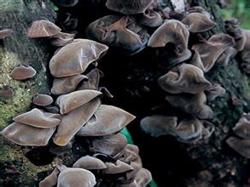 Wood ear is one of the edible fungi people love to eat. Cultivating purple wood ear on rice straw and sand beds gives a relatively high biological conversion rate and good economic returns.
① Seasonal arrangement. The purple wood ear strain has excellent characteristics such as wide adaptability, strong stress resistance, and high yield. It can be cultivated indoors on sand beds in all four seasons, with summer and autumn being especially best;
② Sand bed preparation. Select clean, sterile river sand, sun-dry it, and spread it indoors to a thickness of 10 cm. At 80 cm from both sides of the wall, use bricks to lay two rows of walking aisles for harvesting wood ear;
③ Substrate preparation. Turn and sun-dry golden yellow, mold-free rice straw for two days, crush it into straw powder. For every 100 kg of straw powder, add 2 kg of compound fertilizer and 1 kg each of gypsum powder and sucrose. Stir evenly, then pour in 140 kg of 0.5% lime water and turn and mix evenly. Adjust the moisture content to about 65%. After mixing, pile it into a trapezoidal heap 1 m high, 1.2 m wide at the base, and unlimited in length, cover with film, press firmly, and ferment; when the heap temperature rises to 60°C, turn the pile, cover with film, press firmly, and continue fermenting. When the material temperature reaches above 65°C, remove the film and bag the material;
④ Bagging and inoculation. Use polypropylene tube film 17-20 cm in diameter for bagging, put rings on both ends and seal them, sterilize for 4-5 hours, then inoculate, with 40 g inoculated at each end, for a total of 80 g at both ends; after inoculation, place in a clean room at 20-28°C and culture in the dark. After the mycelium fills the bags, remove the bag tubes;
⑤ Sand bed cultivation. Plant the bag-removed wood ear logs on the river sand bed at a spacing of 10 cm, spray water to moisten the river sand, and use methods such as covering with film during the day, removing the film at night, and opening doors and windows to increase the temperature difference and induce wood ear formation. After the ear buds grow, remove the covering film, spray with cool boiled water, and gradually bring the relative air humidity to 85-95%, keeping the temperature between 20-25°C; as the ear buds differentiate and the ear pieces expand, open doors and windows as much as possible, or use exhaust fans to ventilate 2-3 times a day to increase air circulation; harvest when the ear pieces are 80% mature, thick and plump, and bright purplish red; after harvesting, pull the wood ear logs out of the river sand bed and change their direction (that is, the end that has already produced wood ear facing downward), replant them on the sand bed at a spacing of 10 cm, spray water to moisten the river sand, and manage ear induction as before; after the second flush of wood ear is harvested, remove the top 3 cm thick layer of river sand from the bed surface, cut the wood ear logs open from the middle, and lay them on a 7 cm thick sand bed with no gap left at the cut surface. Cover the surface of the wood ear logs with 3 cm thick river sand, spray water until the moisture is saturated, and cover the bed surface with a layer of newspaper to induce ear formation; after the ear buds extend out of the sand bed, remove the newspaper, and manage after ear formation as before.