-
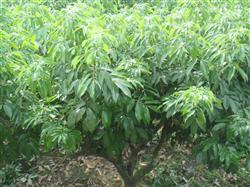
A Complete Guide to Key Lychee Spring Management Techniques
1. Thoroughly clean the orchard. First, cut down overly dense weeds and shrubs around and inside the orchard and clear them outside the orchard; second, thin out overly dense branches and diseased or pest-infested branches inside and outside the tree canopy and clear them outside the orchard; third, spray the whole orchard once with trichlorfon 600x solution + Yunsheng 600x solution to eliminate overwintering insect eggs and pathogens. Orchards with a water source should be irrigated as much as possible...
-
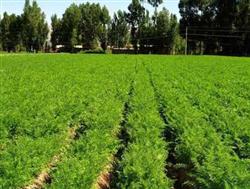
Detailed Explanation of Key Techniques for Early Spring Cultivation of Carrots
Selecting Suitable Varieties Choose spring-sowing varieties with resistance to bolting, a short growing period, relatively good heat tolerance in the later stage, excellent appearance and internal quality, uniform root shape, few deformed roots, and relatively high yield, such as the introduced Kuroda Gosun and Spring Gold, and domestic varieties such as Red Heart No. 5 and Spring Red No. 1. Use new seeds. Carrot seeds belong to...
-
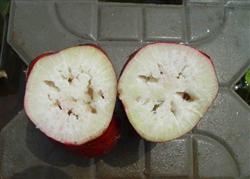
What to Do About Hollow Heart in Radishes? Causes and Control Measures in Early Spring
Hollow heart in radishes, also called pithiness, is the phenomenon in which cavities form in the central part of the xylem of the fleshy root. 1. Causes: (1) It is related to the variety. Varieties with large parenchyma cells in the fleshy root have poor density in the fleshy root and are prone to hollow heart. (2) It is related to soil texture. Radishes grown in soil that is too sandy will develop hollow heart earlier than radishes grown in loam or clay...
-
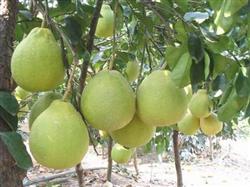
Detailed Guide to Spring Fertilization Methods After Pomelo Trees Bear Fruit
I. Fertilization for 1-3 year old young trees: To accelerate the growth of young trees and bring forward high yields, fertilization should be carried out multiple times in line with the pomelo tree's characteristic of sending out new shoots several times. Fertilizing before shoot emergence can promote shoot emergence and make the shoots grow robustly. Topdressing should mainly use quick-acting fertilizers. Fertilization method: apply frequently and in small amounts, with more fertilizer applied for spring shoots. The fertilization times are February, May and July respectively....
-
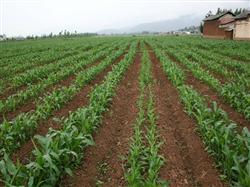
Spring-Sown Corn Planting Management Measures and Key Points
1. Suit measures to local conditions and select improved varieties. In plain and hilly areas, promote Yedan 13 and Xiyu No. 3, paired with Huayu No. 4, Zhongdan 32, Chenghai No. 1, and Yuanzheng 808; for interplanting in cotton fields, select the short-stalked, short-growth-period Yedan 22, Yedan 51, and 9362; in suburban areas, focus on fresh-eating types, and plant Zhongnuo 1...
-
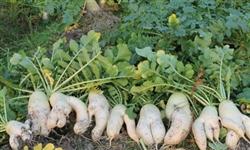
How to prevent forking and pithiness in winter-spring radishes? Reasonable fertilization is key
Right now is the sowing season for winter-spring radishes, and phenomena such as radish forking and pithiness are fairly common in radish production in our province. Agricultural experts point out that mastering fertilizer measures during cultivation can improve radish quality. There are many causes of radish forking, and the main problem is soil quality and cultivation aspects such as soil plowing...
-
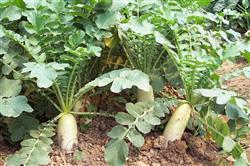
Key Technical Points for Spring Sowing and Cultivation Management of Carrots
The growing temperature range for radishes is 6 to 25°C. Among the winter-spring radish varieties currently in wider use are Korean New White Jade Spring, White Light Spring White Jade, and others. For the soil, choose a sandy loam that is loose in texture, fertile, and well aerated. Before sowing, apply sufficient fully decomposed organic fertilizer and compound fertilizer; generally apply 45,000 to... of organic fertilizer per hectare.
-
Detailed Explanation of Key Technical Points for Spring Management of Ma Walnut Trees
I. Planting of Ma Walnut Trees 1. The suitable time for planting is from March to mid-April, after the soil thaws and before the buds sprout. Early planting makes it easy to survive, with deep rooting. When choosing a site, the specific environmental requirements for walnut growth and development should be considered. The orchard site is best chosen on sunny flat land or gentle slopes, with sandy loam soil being ideal, and requires a soil layer of more than 1 m, with the groundwater level more than 2 m below the surface. The planting area should be leveled, aged, and measures taken to prevent alkalinity and waterlogging. For mountainous areas, fish-scale pits can be built first, then the tree discs gradually expanded. Before planting, large pits must be dug and sufficient base fertilizer applied. The correct method of digging pits is: dig pits 80-100 cm square, keep topsoil and subsoil separate, and apply one small cartload (50-100 kg) of barnyard manure organic fertilizer per tree. When backfilling the pit, first fill with topsoil mixed with base fertilizer, then fill with subsoil, tamping while filling, and water thoroughly before planting.
-
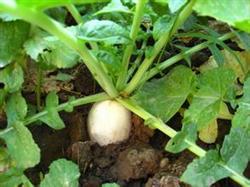
How to grow spring radishes? A full analysis of the key cultivation techniques
Select good seed. Choose varieties with a short growing period, strong cold resistance, late bolting, and resistance to hollowing. At present there are many radish varieties suitable for spring cultivation, among which Baiyuchun, Chunbaiyu, Spring Radish 9646 and Changchun Daigen are better. Prepare the soil and make beds. Choose relatively loose soil, apply 3000 gong... of decomposed organic fertilizer per mu...
-
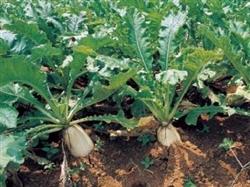
What are the key management techniques for spring radishes in May?
Planting spring radishes in early spring is a path to wealth with low investment, a short cycle, and high returns. It not only supplements the supply of vegetables during the off-season and increases the variety of produce, but also provides a good preceding crop for the following crop. Its main cultivation techniques are introduced as follows: 1. Choose excellent varieties. Generally, choose those with high yield, good quality...
条件筛选