Detailed Explanation of Key Techniques for Early Spring Cultivation of Carrots
Selecting Suitable Varieties Choose spring-sowing varieties with resistance to bolting, a short growing period, relatively good heat tolerance in the later stage, excellent appearance and internal quality, uniform root shape, few deformed roots, and relatively high yield, such as the introduced Kuroda Gosun and Spring Gold, and domestic varieties such as Red Heart No. 5 and Spring Red No. 1. Use new seeds. Carrot seeds belong to...
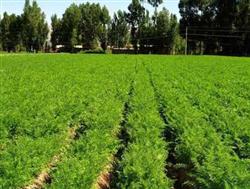
Selecting Suitable Varieties Choose spring-sowing varieties with resistance to bolting, a short growing period, relatively good heat tolerance in the later stage, excellent appearance and internal quality, uniform root shape, few deformed roots, and relatively high yield, such as the introduced Kuroda Gosun and Spring Gold, and domestic varieties such as Red Heart No. 5 and Spring Red No. 1.
Use New Seeds Carrot seeds belong to the short-lived type. If the seeds are stored for too long, their viability decreases, causing the growth vigor of the carrot plants to weaken, and forking occurs when they encounter even slightly hard clods of soil. Therefore, new seeds harvested the previous year or canned seeds within their shelf life should be selected to prevent forking or the formation of deformed roots.
Strictly Control the Sowing Period If sown too early, the seedlings endure low temperatures for too long and are prone to premature bolting; if sown too late, the later high temperatures result in low yield, poor coloring, many deformed roots, and poor marketability. Generally, sow as early as possible when the average daily outdoor temperature is 6-8°C. In the inland areas of Shandong, sowing is suitable from mid-to-late March to early April. When using small arch shelters for cultivation, it can be advanced to late February to early March.
Choose Loose and Fertile Plots Carrots are root vegetables. For sowing, try to choose plots of sandy loam or loam with deep soil layers, loose and fertile soil, good drainage, a sheltered and sunny location, early warming, and good water and air permeability for planting, so as to facilitate root expansion and coloring and improve quality and marketable rate. Try not to choose clay land for planting.
Deep Plowing and Fertilization, Fine Land Preparation When plowing, apply 3000-4000 kg of decomposed farmyard manure, 30 kg of phosphorus-potassium compound fertilizer, and 10 kg of quick-acting nitrogen fertilizer per 667 sq m as base fertilizer. Plow deeply 25-30 cm, and level and harrow finely. Plant on ridges, either single-row or double-row. For single-row planting, ridge width 50 [as written], height 20 cm; for double-row planting, ridge width 70 cm, height 20 cm, row spacing 17 cm. Flat-bed planting can also be used. If flat-bed planting is adopted, bed width 1.5-1.7 m, bed ridge width 30 cm.
Seed Soaking and Germination Promotion Generally, 500-750 g of seed is used per 667 sq m. Carrot seeds do not easily absorb water or allow air passage, and because both the air temperature and soil temperature are low in spring sowing, the seeds germinate and emerge slowly. Seed soaking and germination promotion can be carried out. Specific method: 4-5 days before sowing, place the seeds in warm water at 30-40°C and soak for 3-4 hours, then remove them and place them in a wet cloth bag, keep them at 20-25°C for germination promotion, keep the seeds moist, and turn them regularly so that temperature and humidity are uniform. Once most seeds have sprouted, they can be sown.
Sowing Methods To sow evenly, mix the seeds with 3-4 times their amount of fine soil. For ridge cultivation, drill sowing should be used. First open a furrow 3-4 cm deep, pour bottom water along the furrow to build up soil moisture, and after the water infiltrates the soil, sow the seeds, cover with 2 cm of soil, and then cover with plastic film to help raise temperature and preserve soil moisture. For flat beds, water first, and sow after the water infiltrates the soil. If broadcasting, after sowing cover with 2 cm of soil and smooth it; if drilling, open furrows at 17 cm row spacing and 2 cm deep, smooth after sowing, and cover with plastic film. When using small plastic arch shelters for cultivation, immediately cover with plastic film to raise the soil temperature as much as possible and promote emergence.
Field Management and Timely Thinning and Final Thinning, with plant spacing 10-15 cm. Before the rows close, cultivate to preserve soil moisture and bank fine soil up to the root crown to prevent the root crown from being exposed above the ground after swelling and forming a green shoulder. Weed control is key to high carrot yields. Herbicides can be used for weed control: use 100 g of 50% prometryn wettable powder per 667 sq m, mix with 25 kg of water, and spray the soil surface after sowing and before emergence. Throughout the entire growth period, pay attention to scientific fertilizer and water management.
Disease Control Common diseases include: black rot, black spot, sclerotinia, etc. In the early stage of disease onset, use 72% Kelu at 750 times dilution or 52.5% Yikuaijing dispersible powder at 2000 times dilution for control, spraying once every 5-7 days, for 2 consecutive sprays.
Timely Harvest When the fleshy roots of carrots reach harvest maturity, they generally show yellow-green heart leaves and slightly withered outer leaves, and should be harvested promptly. The specific harvest time also varies depending on the sowing period and variety. Those sown from late February to early March using small arch shelters are generally harvested in early to mid-June, and those sown from mid-to-late March to early April are generally harvested from mid-to-late June to early July.