What to Do About Hollow Heart in Radishes? Causes and Control Measures in Early Spring
Hollow heart in radishes, also called pithiness, is the phenomenon in which cavities form in the central part of the xylem of the fleshy root. 1. Causes: (1) It is related to the variety. Varieties with large parenchyma cells in the fleshy root have poor density in the fleshy root and are prone to hollow heart. (2) It is related to soil texture. Radishes grown in soil that is too sandy will develop hollow heart earlier than radishes grown in loam or clay...
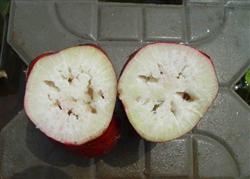
Hollow heart in radishes, also called pithiness, is the phenomenon in which cavities form in the central part of the xylem of the fleshy root. 1. Causes: (1) It is related to the variety. Varieties with large parenchyma cells in the fleshy root have poor density in the fleshy root and are prone to hollow heart. (2) It is related to soil texture. Radishes grown in soil that is too sandy will develop hollow heart earlier than radishes grown in loam or clay. (3) Improper water supply. If moisture is even during the early growth period but drought occurs later, especially during the fleshy root formation stage, the soil lacks water and growth is inhibited, resulting in hollow heart. (4) Unreasonable planting density. Under wider plant and row spacing, the fleshy root grows too quickly, and the growth of leaves and roots loses balance, so the organic nutrients produced by the aboveground part are insufficient to supply the needs of the underground fleshy root as it expands and grows, making hollow heart likely to occur. (5) Unreasonable fertilization. This is especially true when topdressing is too late and the amount is too large, and when fertilizer types are poorly matched; applying too much nitrogen fertilizer makes the aboveground part of the radish grow too vigorously and the root become oversized, causing hollow heart. (6) Harvesting too late or bolting having already occurred. (7) Wounds such as cracked skin and cracks caused during harvest, storage, and transport increase respiration and consume too many nutrients, causing hollow heart. (8) Storage temperature too high. The suitable storage temperature for radishes is 1-3 degrees; above 3 degrees they are prone to sprouting and growing, which leads to hollow heart. (9) Storage environment too dry. The ideal air humidity is 90-95%; when it is below 90%, radishes continuously lose water, making the tissues soft and causing hollow heart. 2. Control measures: (1) Choose varieties that are not prone to hollow heart and have a high degree of density in the fleshy root. (2) Plant at a reasonable density. (3) Fertilize scientifically. For spring radish fertilization, adopt the principle of giving priority to base fertilizer and supplementing with topdressing, and pay attention to a reasonable balance of the three elements nitrogen, phosphorus, and potassium. (4) Water supply should be even. Prevent the soil from being too dry or too wet, and keep soil moisture at 70%-80%. Especially in the later growth stage of radishes, never let the soil become too dry. (5) Harvest at the proper time. (6) Chemical control: generally half a month before harvest, spray once with a 50 mg/kg gibberellin solution (do not spray too early, to avoid inhibiting fleshy root expansion), or spray once with a 10 mg/kg naphthaleneacetic acid solution, which neither affects fleshy root growth nor prevents hollow heart, and delays maturity. If, when spraying 10 mg/kg naphthaleneacetic acid, 5% sucrose and 5 mg/kg borax solution are added and the three are mixed and sprayed, the effect of preventing hollow heart is even better. (7) Minimize mechanical damage such as broken skin and breakage during harvest and transport. (8) Pay attention to the temperature and humidity of temporary storage.