-
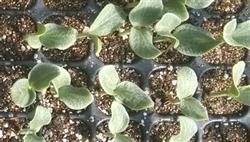
Detailed Guide to Early-Maturing Spring Cultivation Techniques for Japanese Pumpkin
Japanese pumpkin, also known as Western pumpkin, is a new type of vegetable pumpkin introduced in recent years from Japan, South Korea and other places as a high-quality pumpkin. This pumpkin has firm, fine flesh that is sticky or mealy, with excellent flavor, and the fruit is relatively small; when harvested as a vegetable, a single fruit generally weighs 1 kg. It is early-maturing with stable fruit set...
-
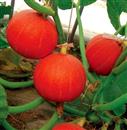
Detailed Explanation of Key Techniques for Spring Sowing and Seedling Cultivation of Winter Squash
1. Seed treatment Before sowing, first prepare seedling pots (specification: 10 cm x 10 cm x 8 cm) and nutrient soil (50% decomposed organic fertilizer, 50% field sandy loam soil, mix evenly). Before sowing, seed treatment should be carried out: remove shriveled and deformed seeds, select plump seeds, and sun the seeds on a sunny day for 1-2 days, ...
-
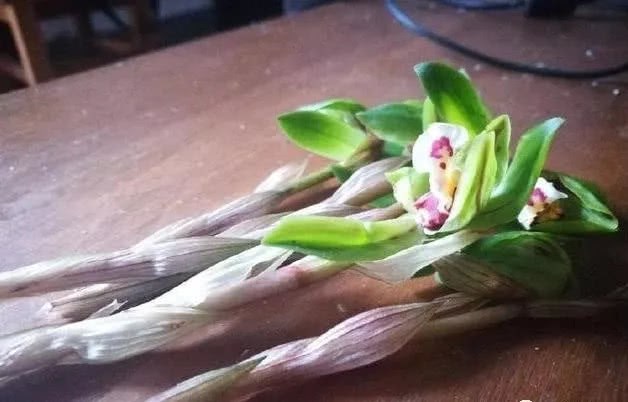
Spring orchid buds dry up as soon as they emerge? It's not too late if you do these things well
Autumn is the bud-forming period for spring orchids (Cymbidium goeringii), and orchid growers' interest shifts from admiring new shoots to looking forward to flower buds. Generally speaking, spring orchids in the Yangtze River basin form flower buds between the end of August and the end of September, and the buds mostly emerge from the soil in October. Some orchid growers, when talking with Haoshe Nongfu...
-
Spring planting fertilization tip: Effective potassium application boosts high yields in spring corn
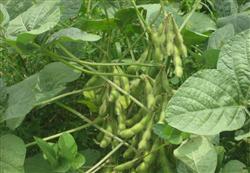
Delayed senescence (staying green and late-maturing) refers to soybeans that, when they should be maturing, still have green branches and leaves with vigorous growth and seeds that are not yet plump, though not shriveled pods or shriveled seeds. The main cause of delayed senescence is excessive application of nitrogen fertilizer or application too late, causing excessive vegetative growth, delaying maturity, and affecting yield. To prevent delayed senescence in soybeans, it is necessary to timely...
-
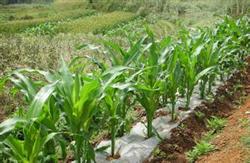
A Full Analysis of Key Spring Corn Cultivation Techniques
Adapt to local conditions and select improved varieties. For plains and hilly areas, promote Yedan 13 and Xiyu No. 3, paired with Huayu No. 4, Zhongdan 32, Chenghai No. 1, and Yuanzheng 808; for intercropping in cotton fields, choose the short-stalked, short-growth-period Yedan 22, Yedan 51, and 9362; in suburban areas where fresh eating is the main purpose, waxy corn varieties such as Zhongnuo No. 1 can be planted; in western Hubei, promote...
-
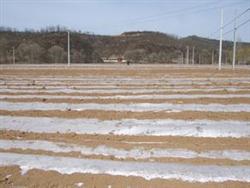
Detailed Cultivation Techniques for Spring Corn Intercropped with Autumn Cucumber
Land preparation and fertilization: Choose a sunny, well-ventilated plot with deep, loose, fertile soil, abundant water and good drainage. Base fertilizer should be mainly organic fertilizer, applied as early as possible in combination with autumn plowing, so that the fertilizer can fully decompose and blend with the soil. According to experiments, applying base fertilizer in autumn increases yield by 14.9% compared with applying it in spring. The base fertilizer can be...
-
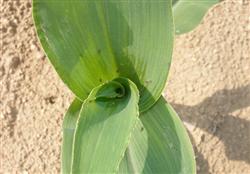
Key Technical Points for Transplanting Spring Corn with Plastic Film Mulch Cultivation
Q: The spring corn already has more than ten leaves, and now the field has a very high population of small brown planthoppers. Can I spray chlorpyrifos or fipronil to control them? A: The main damage small brown planthoppers cause to corn is spreading the viral disease maize rough dwarf. According to relevant data, the susceptible leaf-age period for corn runs from emergence to the 6-leaf stage (9 visible leaves),...
-
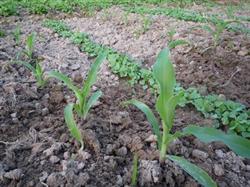
Detailed Explanation of Key Techniques for Raising Seedlings and Transplanting Spring Corn
The spring corn sowing period is approaching, and in production, work on raising seedlings and transplanting should be done well to promote early and steady growth of corn and achieve high and stable yields. For plots selecting improved varieties to harvest tender corn cobs, it is advisable to choose varieties with good quality such as the Jiangnan Huanuo and Suyunuo series; for plots harvesting corn grain, it is advisable to choose high-yielding varieties such as Zhengyu...
-
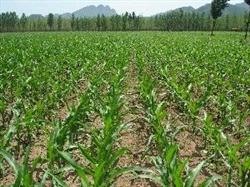
How to plant spring corn well? Master these key points
1. Adapt to local conditions and select good varieties. In plains and hilly areas, promote Yedan 13 and Xiyu No. 3, paired with Huayu No. 4, Zhongdan 32, Chenghai No. 1, and Yuanzheng 808; for intercropping in cotton fields, choose short-stalked, short-growth-period Yedan 22, Yedan 51, and 9362; in suburban areas, mainly for fresh eating, you can plant Zhongnuo 1...
-
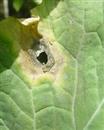
What three things should be noted in spring management of dryland rapeseed?
Sclerotinia rot of rapeseed is a major disease harming rapeseed, and its control must be taken seriously to reduce the damage and minimize losses. Symptoms: when the disease occurs, the lesions on rapeseed leaves are round or irregular, grayish brown or yellow-brown in the center, dark bluish in the middle, with a yellow halo on the outer edge. When dry, the lesions rupture and perforate; under humid conditions...
条件筛选