-
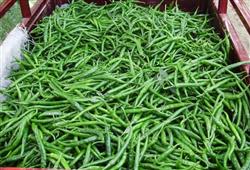
Detailed Explanation of High-Yield Cultivation Techniques for Spring Crop Peppers
Selecting good varieties The spring crop cultivation is essentially early-maturing cultivation, so attention must be paid to the early maturity of the variety while also considering high yield and disease resistance. Suitable varieties include Hongyingda, Andale, Shengfangzhou, and also Bulgarian pointed pepper, Sujiao No. 5, etc. Land preparation and fertilization: spread 10,000 kg of high-quality manure or compost per mu, and apply urea in furrows...
-
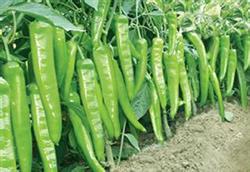
How to Keep Spring Crop Peppers Straight and Not Bent? Doing These Four Things Well Is Key
"Bent peppers have a big impact on price. So how to keep peppers from producing bent fruit has become an important part of increasing vegetable growers' returns. Through managing peppers over the past few years, I believe that as long as you grasp four points, peppers generally will not produce bent fruit." Master Gong told the reporter. So what are the four points Master Gong mentioned? The first...
-
Key Technical Points for Spring Greenhouse Cultivation and Management of Chili Peppers
Since last winter up to now, the market for mildly spicy chili peppers grown in greenhouses has been consistently strong. Therefore, this newspaper hereby introduces its cultivation techniques as follows: 1. Raising seedlings. The flower buds in the middle and lower parts of the chili pepper have already completed differentiation during the seedling stage, so cultivating sturdy seedlings is very important for the quality of flower bud differentiation and for earlier flowering and fruiting. During the seedling period, the suitable...
-
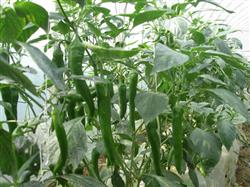
How to manage greenhouse peppers after spring planting?
Early spring greenhouse peppers are generally planted from mid-February to early March, then watered thoroughly with bottom water; after the water seeps in, earth up in stages, seal the holes, and seal the plastic mulch planting openings tightly. At this time, pay attention to the following three management tasks: timely temperature control and ventilation. After planting, the temperature outside the greenhouse is still low, so attention should be paid to heat preservation, keeping the daytime temperature at 22-30°C...
-
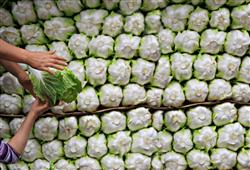
Detailed Explanation of Key Points for Spring Cultivation Techniques of Napa Cabbage
Spring napa cabbage, summer napa cabbage, and early spring napa cabbage do not have a strict harvest period; they can be harvested once the heads have formed. Autumn-winter napa cabbage has a strict harvest period and must be harvested before a low temperature of -2°C occurs. After harvesting napa cabbage intended for storage, orient the heads facing north and the roots facing south, and sun-dry for 2-3 days. Then stack the plants into two rows, ...
-
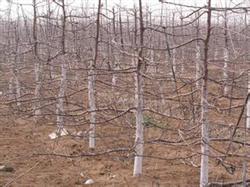
Detailed Explanation of Spring Planting Time and Methods for Cherry Trees
Currently, in protected cultivation of sweet cherries, the main tree forms are the natural open-center form, the improved central-leader form, the central-leader stratified form, and the slender spindle form. The natural open-center form has a trunk height of 30-40 cm, 3-5 main branches, each main branch with 6-7 side branches, and an angle of 30-45 degrees between the main branches and the trunk. Tree height is controlled at 1.5-1.8 m, ...
-
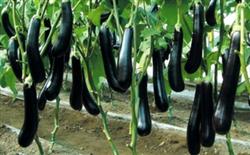
Common Problems of Greenhouse Eggplant in Early Spring and Their Control Methods
In the early spring season, when temperatures are low and light is weak, greenhouse eggplant often shows various abnormal conditions. The common problems and their control are described below: 1. Stunted seedlings In the early spring crop, eggplant often shows stunted seedling symptoms at the seedling stage, such as small leaves, dark green color, thin stems and few roots. After transplanting, such seedlings recover slowly, grow weakly, and...
-
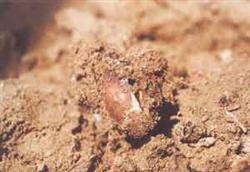
How to prevent and control seed rot after sowing spring peanuts
After sowing spring peanuts and before emergence, seed rot often occurs, with severe cases reaching a rot rate as high as 20%, causing missing plants and broken rows to varying degrees. Causes of seed rot: poor seed quality or improper storage, or too long a storage period; low-lying terrain, heavy clay soil, poor texture, and high soil water content, resulting in a long emergence time for seeds; poorly consolidated seedbed preparation, which affects the...
-
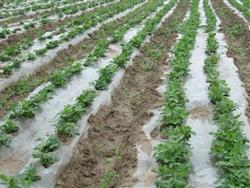
High-yield technique for large-scale film-mulched spring peanut sowing with pod sowing, moisture borrowing and dry sowing
Pod sowing with film mulching is an effective measure for early sowing of spring peanuts by borrowing soil moisture, ensuring full stands, resisting drought and increasing yield. The Agricultural Technology Extension Center of Linmu County began trials and demonstrations in 1987, and from 1992 to 1993 the implemented area reached 8,520 hectares, with average unit yields reaching 3,982.5 kg/ha and 4,057.5 kg/ha, increases of 13.9% and 16....
-
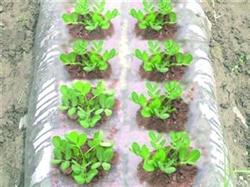
Eight Precautions for Film-Mulched Cultivation of Spring Peanuts
Applying film-mulching cultivation technology to peanut production can raise temperature, ensure full stands, retain water and preserve fertilizer, thereby achieving increased yield, higher income and giving a head start on the season. In 2002, our institute conducted a comparative trial of film-mulched cultivation of spring peanuts, obtaining a plot trial yield of 402.75 kg per mu and a field yield of 367....
条件筛选