Spring planting fertilization tip: Effective potassium application boosts high yields in spring corn
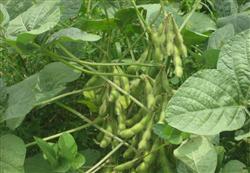
Delayed senescence (staying green and late-maturing) refers to soybeans that, when they should be maturing, still have green branches and leaves with vigorous growth and seeds that are not yet plump, though not shriveled pods or shriveled seeds. The main cause of delayed senescence is excessive application of nitrogen fertilizer or application too late, causing excessive vegetative growth, delaying maturity, and affecting yield. To prevent delayed senescence in soybeans, it is necessary to timely...
 Increased yield raises potassium demand. As corn yield levels increase, the supply of available soil potassium must correspondingly increase during key growth stages. Results from many long-term corn positioning trials prove that when yield increases by 10%-20%, potassium uptake also increases correspondingly. Appropriately raising the potassium content of corn tissue is necessary to maintain stable high yields. In the northern spring corn region, although soil available potassium content is at a relatively high level (such as 70-130 mg/kg), applying potassium fertilizer still has a yield-increasing effect. Especially in some soils with medium available potassium content and limited slowly available potassium capacity, additional potassium fertilizer should be considered for high-yield fields. Therefore, when using yield targets as the main basis for recommending potassium application, attention must be paid both to the fact that applying additional potassium fertilizer to soils with low available potassium content is a necessary measure to ensure high yields, and to the fact that even when soil available potassium levels are medium, applying an appropriate amount of potassium fertilizer also has good effects.
Increased planting density raises potassium demand. In current high-yield hybrid corn cultivation, yields are often greatly increased by increasing density, and at the same time, high-density plants also significantly increase potassium uptake from farmland. Therefore, when density increases, if potassium fertilizer is not correspondingly increased or soil potassium availability is not improved, crops may experience difficulty in ensuring potassium uptake, and yields may decline or fail to reach the ideal level. However, after applying an additional 5-6 kg/mu of potassium fertilizer, yields did not decrease but instead increased somewhat. This is especially true for corn fields with low available potassium content and irrigation conditions. Therefore, when recommending fertilization for corn, in order to adapt to higher density and yield levels, the potassium application rate should be appropriately increased compared with conventional rates.
Nitrogen-potassium balance raises potassium demand. In dense-planting high-yield corn cultivation, coordinating the balanced supply of potassium and nitrogen fertilizer is crucial. Usually, in order to achieve high-yield goals, too much nitrogen is applied, which increases the infection rate of plant diseases and pests such as stalk rot, root rot, and bacterial wilt. If potassium fertilizer supply is not correspondingly increased, symptoms of nitrogen-potassium imbalance will develop. Potassium deficiency first weakens the breaking resistance and epidermal thickness of corn stems and leaves, which both increases the possibility of lodging and raises corn's sensitivity to insect pests and diseases. As is well known, among nutrient elements, both nitrogen and potassium have a major impact on corn disease resistance, but their directions of action differ: excessive nitrogen tends to increase corn's sensitivity to disease, while potassium acts in the opposite way and can increase crop disease resistance.
So, how do you diagnose potassium deficiency in the field? How should potassium be supplemented when deficient?
When spring corn enters the jointing stage, the growth period from the small funnel stage to the large funnel stage is its rapid growth period, and demand for nitrogen, phosphorus, and potassium all increases. In actual production, it is usually customary to apply only nitrogen fertilizer as a topdressing and not to pay attention to potassium topdressing. However, in high-yield dense-planting cultivation of spring corn, whether topdressing is actually needed can perhaps be answered simply by asking the corn growing in the field and observing plant growth conditions. That is, often go to the corn field around 9 or 10 in the morning to look, especially on windy days. If you see spring corn leaves already wilting in the morning, then it is telling you, "I am deficient in potassium." This is because, for farmland that generally does not urgently need irrigation, normal healthy corn plants will not show leaf wilting in the morning; wilting after noon is normal. This is because potassium can affect stomatal closure in leaves and increase the plant's water-retention function. When potassium is deficient, stomatal resistance is high and stomata cannot close normally, causing severe water loss in the corn plant and resulting in wilting. At this time, potassium fertilizer must be applied as a topdressing to remedy the situation. The most feasible measure is to apply 5-8 kg of potassium chloride as a topdressing, by furrow application or hole application, followed by covering with soil.