-
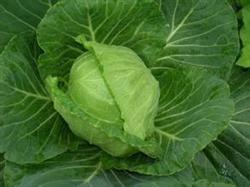
Detailed Explanation of Key Techniques for Spring Cabbage Cultivation
1. Timely sowing. Timely sowing is one of the important technical measures in spring cabbage cultivation. If sowing is too early, the seedlings grow larger, and continuous low temperatures in early spring cause the seedlings to pass through the vernalization stage too early, making premature bolting likely. Conversely, if sowing is too late, the maturity period is delayed, affecting economic returns. In the Hangzhou area, sowing is generally carried out in February...
-
Harmless production technology for early spring potato-stevia-autumn cabbage
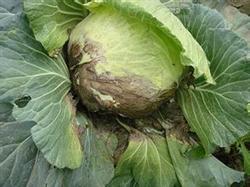
This spring has seen more low-temperature and low-light days, which favors the occurrence of cabbage sclerotinia rot. Vegetable growers are urged to take control measures early to reduce the damage. 1. Symptoms and characteristics: After seedlings are infected, water-soaked light brown lesions appear on the leaves, with indistinct edges, and the diseased tissue soft-rots, causing damping-off. When plants are infected during the head-forming stage, on the stem bases near the ground...
-

Prevent cabbage head splitting in early spring by taking precautions in advance
In early spring, cabbage grown under protective cultivation is prone to head splitting, which not only affects the appearance quality and marketability of the cabbage, but also makes it more susceptible to disease, affecting storage and transportation. According to experiments, cabbage head splitting is not only related to variety, but also to excessive moisture, while it is basically unrelated to fertilizer. If moisture is insufficient, the cabbage heads are small; if moisture...
-

Spring Cultivation Techniques and Management Key Points for Purple Cabbage
Purple cabbage has good cold tolerance, firm heads, brilliant color, strong adaptability, high yield, and good quality. It is suitable for open-field and protected cultivation, with a yield of 2500-3000 kg per mu. 1. Variety selection: Choose varieties with strong winter hardiness and early maturity for spring sowing, such as Purple Cabbage No. 1, Zaohong, and Hongmu. 2. Sowing and seedling raising: Nanjing...
-
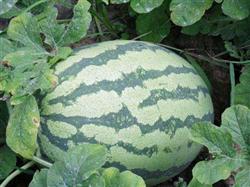
What are the control methods for stiff fruit in spring watermelons?
The causes of stiff fruit fall into the following categories: 1. Dry soil and insufficient fertilizer and water: if fertilizer and water are insufficient during the fruit enlargement period, stiff fruit is easily formed. Therefore, the melon field should be irrigated, with the amount of water increasing from small to large, and the water should not cover the bed surface. The water should not remain in the field for too long, and irrigation should be done in the evening or at night to avoid burning the roots at high temperatures...
-
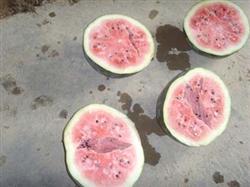
How to effectively prevent and control hollow heart in spring watermelons
Symptoms: Gaps or hollow cavities appear in the flesh inside the watermelon fruit. Causes: It occurs easily when fruit is set at low nodes, when excessive nitrogen nutrition causes rampant vine growth, or when fruit set is poor and leaf area increases. The main cause is excessive accumulation of nutrients in the plant. Hollow fruit usually shows longitudinal grooves on the fruit surface, with thick rind, irregular fruit shape...
-
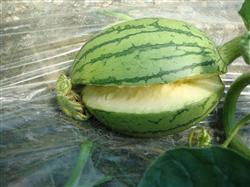
Effective Prevention and Control Methods for Watermelon Fruit Cracking in Spring
Watermelon fruit cracking can be divided into field cracking and harvest cracking. Field cracking is the bursting of the rind under static conditions, mainly caused by sudden changes in soil conditions. For example, if soil moisture is low during a certain stage of fruit development, fruit development is hindered; if rain or heavy irrigation suddenly occurs, soil moisture increases sharply, causing the fruit to expand rapidly and crack,...
-
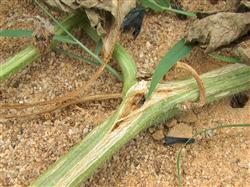
What are the control methods for watermelon fruit hardening in spring
In recent years, protected cultivation of watermelon has developed rapidly in the Jiangsu area. Due to the many rainy days during the growing period, favorable conditions have been provided for the occurrence of watermelon gummy stem blight, and the disease has worsened year by year. Watermelon gummy stem blight mainly damages the stems and vines, and also damages leaves and fruits. When the vines are affected, the disease mostly occurs at the stem nodes near the ground, first appearing as dark green...
-
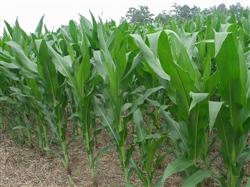
What are the key points for field management in the late stage of spring corn?
1. Choose good varieties. Choosing good varieties is the key to achieving a corn harvest; be sure to choose varieties introduced by formal agricultural technology departments, or varieties that have been approved by the provincial seed approval committee. In 2006, what we introduced was "Changxin No. 1," introduced from elsewhere by Danleng County Changxin Seed Co., Ltd. Per mu...
-
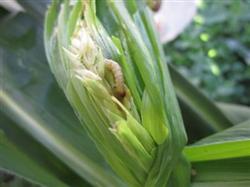
Why should spring corn be fertilized with the "light early, heavy late" approach?
The corn borer, also known as the corn stalk borer. At present, spring corn is at the late whorl stage (funnel stage), which is the best period for controlling the corn borer. During the funnel stage, most newly hatched corn borer larvae crawl into the leaf whorl and feed on the mesophyll of the not-yet-unfolded leaves, and spraying at this stage makes it easy for the spray liquid to enter the leaf whorl, improving control effect...
条件筛选