-

Looking back at the spring and summer of a succulent grower: there were tears and there was joy. What about you?
Moscow Has No Tears Trainee Cupid Twins 00:00/03:31 ...
-
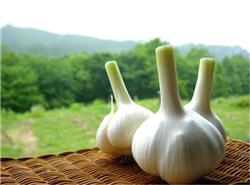
Key Technical Points for Spring Garlic Production Management
First, ensure adequate water supply. As garlic enters the critical water-demand period of bulb expansion, combined with rising temperatures and more frequent windy weather, garlic's demand for water increases. Garlic growers should pay full attention to water management in garlic fields and strive to give one general irrigation (watering) for bulb expansion, so as to meet the water demand for bulb expansion....
-
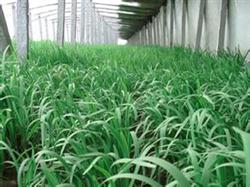
Key Technical Points for Early Spring Management of Greenhouse Chives
1. Temperature management. Chives prefer cool conditions, with an optimum growing temperature of 15-24°C, and should be ventilated appropriately during the day. To promote sprouting, after the greenhouse is covered, the daytime room temperature should be kept at 18-25°C, and after sprouting, the daytime room temperature should be controlled at 17-23°C. Before the first harvest of chives, the daytime temperature should be 15-22°C and the nighttime temperature 10-12°C. After each subsequent harvest...
-
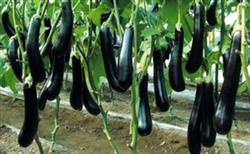
Key Cultivation Techniques for Winter-Spring Crop Eggplant in Greenhouses
1. Sowing and Seedling Raising: Choose early-maturing or mid-maturing varieties. For seedling raising in a sun-facing cold frame, sowing can be done from late November to early December, with a seedling age of over 90 days. If electric heating seedbeds are used for seedling raising, or seedlings are raised in a winter-warm greenhouse, the seedling age can be shortened to 70-80 days, meaning the sowing date can be postponed to mid-to-late December. The morphological indicator for seedlings of suitable age...
-
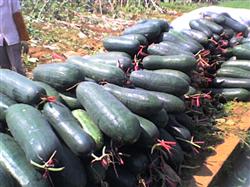
What are the key points for cultivating winter melon in small arched tunnels in early spring?
Winter melon has a well-developed root system, luxuriant branches and leaves, and bears huge fruits; it is a high-yielding crop with strong adaptability. The entire growth period of winter melon is about 100-150 days, and its life is divided into 4 stages: from seed germination to the cotyledons flattening out and the first true leaf appearing is the germination stage; from the first true leaf emerging to the beginning of vine growth is the seedling stage; from the seedling...
-
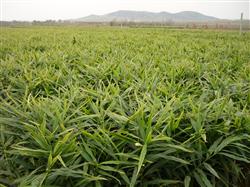
How to plant ginger in early warm spring? The four-improvement technique is key
In recent years, the outlook for earning foreign exchange through exporting high-quality ginger has been promising, but quality requirements have also become increasingly high. Our department guided 20 large-scale growers in promoting and applying the "four improvements" new technique, which made the ginger produced large and plump with shiny skin color, increased the average yield per mu by 64% compared with traditional planting, and achieved doubled income growth for ginger farmers. When spring warms and flowers bloom in March to April...
-
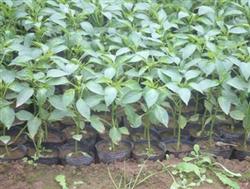
How to raise seedlings for spring-planted peppers? Key technical points explained
(1) Preparing the cold frame Select a plot with fertile soil, sheltered from the wind and facing the sun, where eggplants and tomatoes have not previously been grown, and build a cold frame. For each mu to be planted, raise seedlings using 150 grams of seed, and the cold frame should be more than 10 sq m. Apply plenty of base fertilizer, water heavily to build up soil moisture, and use a small amount of urea, phosphate fertilizer and active potassium fertilizer. Because the cold frame is sealed...
-
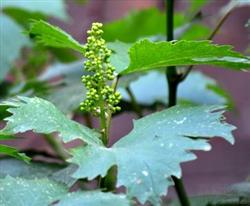
Detailed Explanation of Key Grape Spring Management Techniques
Spring is the season when grapes bud and unfold leaves, canes extend, and they send out clusters and bloom and set fruit. How to strengthen spring grape management and improve grape yield and quality is a matter of widespread concern among fruit growers. The following focuses on the main management work for grapes from February to April. 1. Late February to early March, budding stage: irrigate to promote bud break,...
-
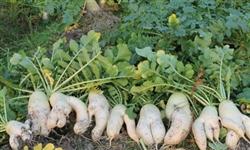
How to prevent forking and pithiness in winter-spring radishes? Reasonable fertilization is key
Right now is the sowing season for winter-spring radishes, and phenomena such as radish forking and pithiness are fairly common in radish production in our province. Agricultural experts point out that mastering fertilizer measures during cultivation can improve radish quality. There are many causes of radish forking, and the main problem is soil quality and cultivation aspects such as soil plowing...
-
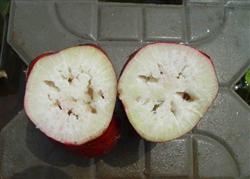
What to Do About Hollow Heart in Radishes? Causes and Control Measures in Early Spring
Hollow heart in radishes, also called pithiness, is the phenomenon in which cavities form in the central part of the xylem of the fleshy root. 1. Causes: (1) It is related to the variety. Varieties with large parenchyma cells in the fleshy root have poor density in the fleshy root and are prone to hollow heart. (2) It is related to soil texture. Radishes grown in soil that is too sandy will develop hollow heart earlier than radishes grown in loam or clay...
条件筛选