-

Pig prices fall below 9 yuan before Spring Festival, expected to mainly fluctuate at a high level
Pig prices fall below 9 yuan before Spring Festival, expected to mainly fluctuate at a high level
-
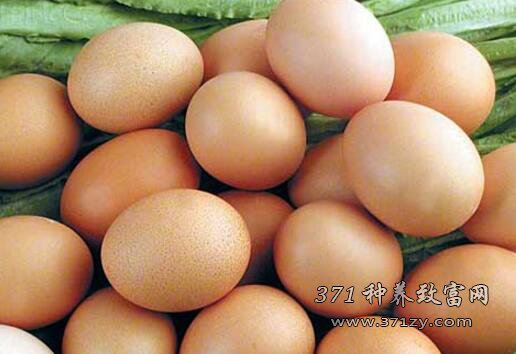
Mutton and egg prices drop slightly before Spring Festival, supply and demand stable, down more than 30% year-on-year
Mutton and egg prices drop slightly before Spring Festival, supply and demand stable, down more than 30% from last year
-

Never forget the kindness of a drop of water even after achieving prosperity; repaying it with a gushing spring warms people's hearts
Never forget the kindness of a drop of water even after achieving prosperity
-
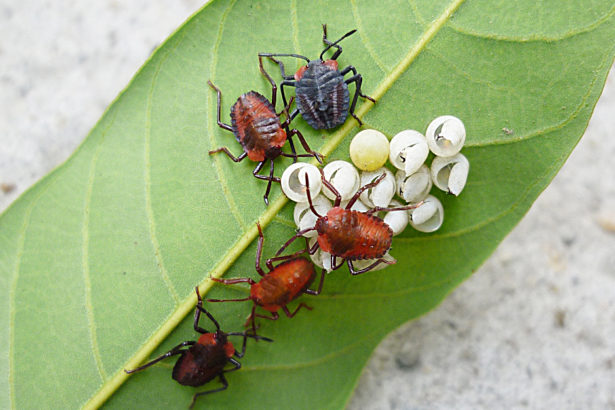
It's the perfect time to tackle the lychee stink bug! Spraying pesticide after egg-laying is too late; releasing Anastatus wasps in spring to remove egg masses is the most effective
It's the perfect time to tackle the lychee stink bug! Spraying pesticide after egg-laying is too late; releasing Anastatus wasps in spring to remove egg masses is the most effective
-
Four key points for fish farming at the start of spring
1. Fertilization: In early spring, when the pond water temperature stabilizes at 8°C to 10°C, start applying additional fertilizer to cultivate natural food organisms in the water. The amount of fertilizer should be determined based on the fertility of the water and the quality of the fertilizer. Generally, apply 60 to 90 kg of human and animal manure per mu, or 100 to 150 kg of livestock manure. If chemical fertilizer is used, follow a nitrogen-to-phosphorus-to-potassium ratio of 1:1:0.5. When applying, first crush it, mix it with water, and splash it evenly over the entire pond. The total amount per mu is 3 to 7 kg, with each application spaced 5 to 10 days apart. Keep the pond water a yellowish-brown or yellow
-
Spring-planted rice D You 68, a variety recommended by the Ministry of Agriculture
D You 68 is a three-line hybrid mid-season rice bred by the Rice Research Institute of Sichuan Agricultural University. It was approved by the Sichuan Provincial Crop Variety Approval Committee in 1997. Its whole growth period is 4-5 days longer than that of Shanyou 63, and it belongs to the late-maturing medium indica combination. Plant height 120 cm, growth uniform, plants luxuriant, tillering ability relatively strong, high ear-bearing rate, large panicles with many grains, panicle length about 23 cm, grains per panicle 187-194, seed setting rate about 80%, 1000-grain weight 26.3-27.7 g. Wide adaptability, strong stress resistance, good color at maturity, relatively great flexibility in seedling age
-
How to grow spring-planted soybeans in Northeast China? A detailed explanation of the technical guidance
In the autumn and winter of last year, precipitation in Northeast China was lower than normal, soil moisture was insufficient, and drought was relatively severe. This spring there has been more rain and snow, temperatures began to rise rapidly in early April, and temperature and precipitation are close to normal. The Soybean Expert Steering Group of the Ministry of Agriculture, together with the National Agricultural Technology Extension Service Center, based on full investigation, proposed the following technical guidance for spring soybean planting: 1. Strictly select excellent varieties. Because of the dry climate last autumn, soybeans may not have matured normally physiologically at harvest, and mechanical threshing increased the possibility of damage to the seed embryo
-
High-Yield Spring Cultivation Techniques for Potatoes in Double-Cropping Regions
I. Select High-Quality Virus-Free Seed Potatoes In double-cropping regions, the spring period suitable for potato growth is relatively short (60-70 days), so it is essential to select early-maturing virus-free varieties with a short dormancy period, early tuber formation, rapid tuber expansion, strong stress resistance, and high quality and yield, such as Yupotato No. 1 and No. 2, and Favorita. The seeding rate is 120 kg per mu. II. Early Cutting and Early Sprouting 1. Warm the seed potatoes and cut them. Before cutting, place the seed potatoes in a room or a sun-heated cold frame at 12-15°C for 5-7 days to warm them, prompting the seed potatoes to break dormancy and the eyes to sprout. About 2
-
What are the cultivation and management techniques for spring-planted potatoes?
Spring Planting Cultivation Techniques for Potatoes. Potatoes have the characteristics of high yield, early maturity, multiple uses, and wide distribution. In recent years, the spring planting area in our region has expanded year by year. 1. Land preparation. Potatoes prefer sandy loam and loam. Deep plowing and winter irrigation can be carried out before winter, with 2500-3000 kg of organic fertilizer applied per mu, and the land leveled before sowing with sufficient bottom moisture irrigation. Through the shallow plowing and fertilizing method, 25 kg of potassium sulfate, 25 kg of diammonium phosphate, and 15 kg of urea per mu are broadcast on the surface and incorporated into the soil with a rotary tiller. When ridging, the ridge
-
Detailed Explanation of Key Spring Potato Management Techniques
Breaking the Film to Expose Seedlings A After potato seedlings emerge and turn green, promptly break the film to expose the seedlings to prevent high temperatures from scorching the young plants. When cutting the film, do not injure the seedlings, and the opening in the film should not be large, generally 3-5 cm. Cutting the film is best done in the morning. After exposing the seedlings, promptly seal the openings to help retain heat. Early Fertilization After potato seedlings emerge, if there is drought, apply 1000-1500 kg of high-quality manure to achieve both drought resistance and nutrient supplementation. If soil moisture is good, apply 10-15 kg of urea in holes. When seedlings grow to 50 cm, apply 15 kg of urea per mu in holes.
条件筛选