Key Technical Points for Spring Garlic Production Management
First, ensure adequate water supply. As garlic enters the critical water-demand period of bulb expansion, combined with rising temperatures and more frequent windy weather, garlic's demand for water increases. Garlic growers should pay full attention to water management in garlic fields and strive to give one general irrigation (watering) for bulb expansion, so as to meet the water demand for bulb expansion....
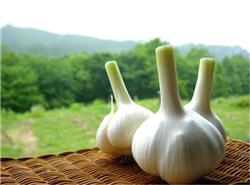
First, ensure adequate water supply. As garlic enters the critical water-demand period of bulb expansion, combined with rising temperatures and more frequent windy weather, garlic's demand for water increases. Garlic growers should pay full attention to water management in garlic fields and strive to give one general irrigation (watering) for bulb expansion, so as to meet the water demand for bulb expansion.
Second, do a good job of foliar supplementary fertilization. The critical period for garlic to absorb N-P-K is concentrated from garlic scape elongation to bulb expansion. Due to differences in farmers' fertilization levels, the growth of fields varies noticeably, and some fields already show signs of nutrient deficiency such as yellowing leaves and weak, thin growth. For this reason, foliar supplementary fertilization should be carried out as appropriate. First, combine with irrigation and apply fertilizer with the water (flushing or broadcasting), applying 15-20 kg of urea per mu. Second, foliar spraying, which can include 0.5% urea, 0.3% monopotassium phosphate or other organic foliar fertilizers.
Third, control pests and diseases. In the middle and late stages of garlic growth, leaf diseases such as soft rot, leaf blight and rust, as well as pests such as garlic maggot, thrips and leafminer, are very likely to occur. Among them, soft rot is a bacterial disease; yellow-white streaks can run through the entire leaf, and when humidity is high, the diseased part becomes yellow-brown and soft-rotted. At the early stage of the disease, spray copper hydroxide wettable ultrafine powder or copper succinate-glutarate as soon as possible; leaf blight mostly starts at the leaf tip as small round whitish spots, which after expanding become irregular or oval gray-white or gray-brown lesions, on which black mold-like growth appears. Drain promptly after rain, and at the early stage of the disease promptly spray fungicides such as chlorothalonil, metalaxyl mancozeb and metalaxyl copper; rust often shows raised brown spots on diseased parts, and after the epidermis ruptures, orange-yellow powder is released. At the early stage of the disease, promptly spray high-efficiency low-toxicity (non-toxic) agents such as triadimefon to control it. For pests, in addition to using sugar-vinegar liquid or light traps, promptly use high-efficiency low-toxicity (non-toxic) agents such as chlorpyrifos, matrine, phoxim and dichlorvos for spraying or root drenching control.
Fourth, harvest at the right time. First, harvest scapes in time. For garlic mainly grown for bulbs, generally when the scape grows to more than 15-18 cm, the scape bends like a steelyard hook, the scape bud clearly swells, and the color turns from green to white, it can be harvested. Second, harvest bulbs at the right time. With dry garlic bulbs as the sales target, generally about 20 days after scape harvesting is the suitable period for harvesting dry garlic. At this time, most basal leaves of the garlic plant are withered, the pseudostem is soft, and when pressed firmly to one side onto the ground it is not brittle but flexible; for fresh garlic sold on the market, generally harvest 5-7 days earlier than the suitable bulb harvest period to maintain a crisp and tender quality.