How to raise seedlings for spring-planted peppers? Key technical points explained
(1) Preparing the cold frame Select a plot with fertile soil, sheltered from the wind and facing the sun, where eggplants and tomatoes have not previously been grown, and build a cold frame. For each mu to be planted, raise seedlings using 150 grams of seed, and the cold frame should be more than 10 sq m. Apply plenty of base fertilizer, water heavily to build up soil moisture, and use a small amount of urea, phosphate fertilizer and active potassium fertilizer. Because the cold frame is sealed...
(1) Preparing the cold frame Select a plot with fertile soil, sheltered from the wind and facing the sun, where eggplants and tomatoes have not previously been grown, and build a cold frame. For each mu to be planted, raise seedlings using 150 grams of seed, and the cold frame should be more than 10 sq m. Apply plenty of base fertilizer, water heavily to build up soil moisture, and use a small amount of urea, phosphate fertilizer and active potassium fertilizer. Because the cold frame is sealed, do not use ammonium bicarbonate or ammonium sulfate as base fertilizer, to prevent ammonia gas from damaging the seedlings. For seedbeds with heavy, poorly aerated soil, some coal ash powder can be applied.
(2) Seed treatment The day before sowing, turn and sun the seeds thoroughly, soak them for 10 minutes in a 1500-fold dilution of carbendazim and a 1000-fold 10% trisodium phosphate aqueous solution, wash them clean with water, then soak the seeds in 50-60°C warm water for 4 hours, drain off the water, cover tightly with a damp cloth and sprout them for 24 hours.
(3) Sowing procedure Water thoroughly to soak the bottom soil, fertilize and level the land --- broadcast evenly --- cover with fine soil 0.5-0.8 cm deep, not more than 1 cm, then cover with plastic film --- cover the cold frame tightly with plastic film, keep the temperature at around 25°C during the day and around 12-15°C at night. After 60-70% of the seedlings have emerged, remove the plastic film. Pay attention to keeping moist; a fine watering can may be used to spray water evenly to raise humidity, and never flood-irrigate.
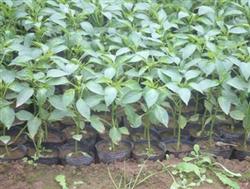
(4) Seedling-stage management When the seedlings have 3-4 leaves, thin them in good time, remove weak seedlings and pull out weeds. In the later period, pay attention to controlling aphids; imidacloprid, carbendazim or thiophanate-methyl, and virus-preventing agents can be mixed and sprayed to achieve simultaneous control of pests and diseases, ensuring the cultivation of strong, disease-free seedlings. Standards for strong seedlings: thick stems with short internodes, thick and dark green leaves, intact stems and leaves free of pests and diseases, well-developed roots with white lateral roots, and 8 leaves at transplanting time. About 15 days before transplanting (early April), ventilate from the top of the cold frame to harden the seedlings, so that the pepper seedlings gradually adapt to the open-field environment and are ready for transplanting. At the same time, water the cold frame before transplanting to reduce damage to the root system when moving the seedlings.
Practice has proved that cultivating strong seedlings and planting strong, pest- and disease-free seedlings is the fundamental guarantee for a bumper and abundant pepper harvest. However, most farmers do not have the habit of controlling pests and preventing diseases during the seedling stage, and this point should draw the attention of the broad community of pepper growers.