-
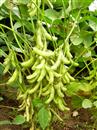
Spring Corn Stubble Transplanting Soybean Cultivation Technique
I. Characteristics and Traits Soybean prefers warmth; seeds begin to germinate at 10-12°C, with 15-20°C being optimal; the optimal growth temperature is 20-25°C; the optimal temperature during flowering and pod-setting is 20-28°C. At low temperatures, pod-setting is delayed, and below 14°C flowering cannot occur; if the temperature is too high, the plant ends growth prematurely. Seed germination requires relatively more water; during the flowering period...
-
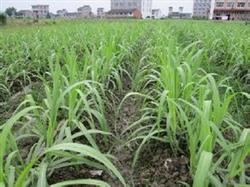
Key Sugarcane Spring Management Techniques and Precautions
Use phosphate fertilizer: Fully crush the phosphate fertilizer, thoroughly mix it with garbage fertilizer and farmyard manure, and compost the mixture before applying. In recent years, many sugarcane growers have directly scattered phosphate fertilizer into the furrows; with this practice, the utilization rate of phosphate fertilizer is less than 10%, and more than 90% is fixed by the soil into ineffective phosphate and wasted. Suggestion: per mu, use 30-50 kg of phosphate fertilizer, fully crushed...
-
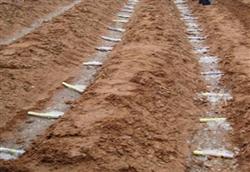
How to cultivate water-saving sugarcane in winter and spring
Paddy field sugarcane is one of the important types of sugarcane cultivation in Yunnan. In many sugarcane-growing areas of our province, soil erosion is severe, and the construction of farmland water conservancy facilities is relatively lagging. In addition, the winter and spring seasons are dry with little rain, and paddy fields lack water. Apart from some fields that can plant sugarcane according to the seasonal requirements, most water-deficient fields are planted relatively late, from the end of April to...
-
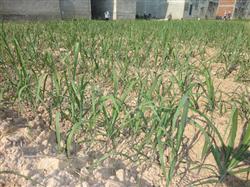
Detailed Explanation of the Cultivation Technique of Interplanting Spring Peanuts with Sugarcane
Sugarcane originated in tropical and subtropical regions and was formerly limited to cultivation south of the Yangtze River. In recent years, through the unremitting efforts of scientific and technological workers, the sugarcane planting area in the Huang-Huai River basin has expanded year by year. During the planting process, the sugarcane stem cannot be used for high-temperature bud cultivation; if stems are used for bud cultivation, sugarcane cultivation will not succeed. To...
-
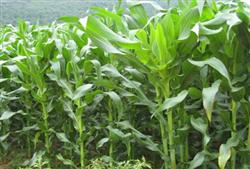
Full Analysis of Key Points for Spring Corn Cultivation Techniques
Adapt to local conditions and select improved varieties. In plains and hilly areas, promote Yedan 13 and Xiyu 3, paired with Huayu 4, Zhongdan 32, Chenghai 1, and Yuanzheng 808; for interplanting in cotton fields, select the short-stalked, short-growth-period Yedan 22 and Yedan 51; in suburban areas, where fresh eating is the main purpose, waxy corn (2319, -21.00, -0.90%) such as Zhongnuo 1 can be planted....
-
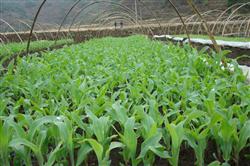
Detailed Explanation of Key Techniques for Spring Corn Seedling Cultivation
The spring corn sowing period is approaching, and in production, seedling cultivation and transplanting should be done well to promote early and steady growth of corn and achieve high and stable yields. Fertilizing the seedbed: For transplanting with nutrient pot seedlings, prepare a seedbed 1.5 m wide and 20 m long for each mu of field, apply 250 kg of decomposed organic fertilizer, 2.5 kg of compound fertilizer, and...
-
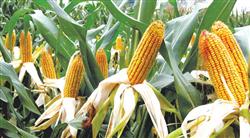
For high yields of spring corn, the sowing step is crucial
Improving the sowing quality of spring-sown corn and actively doing a good job in selecting and sowing good seed, fine land preparation, and timely sowing are crucial for ensuring a full stand and securing a bumper harvest of spring-sown corn. 1. Choose suitable varieties. Select suitable and appropriate improved varieties according to local conditions. According to heat resources and actual production conditions, mid-to-late maturing varieties with a growth period of 120-130 days should be selected...
-
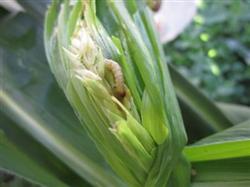
Why should spring corn be fertilized with the "light early, heavy late" approach?
The corn borer, also known as the corn stalk borer. At present, spring corn is at the late whorl stage (funnel stage), which is the best period for controlling the corn borer. During the funnel stage, most newly hatched corn borer larvae crawl into the leaf whorl and feed on the mesophyll of the not-yet-unfolded leaves, and spraying at this stage makes it easy for the spray liquid to enter the leaf whorl, improving control effect...
-
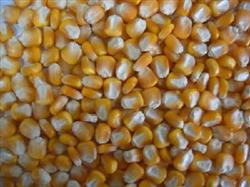
How should spring corn seeds be treated before drought-resistant sowing?
Before sowing, select and sun-dry the seeds. Choose uniform, consistent seeds and sun them for three days on a sunny day to improve germination vigor, disease resistance, and seedling uniformity. Conduct a germination test before sowing. The purity of the selected seeds should be no less than 96%, the cleanliness no less than 98%, and the germination rate no less than. Seed coating. Use a drought-resistant compound seed coating agent on...
-
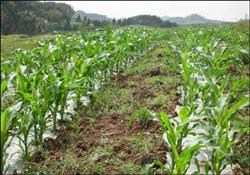
How to sow spring corn in drought-resistant conditions? Detailed explanation of planting key points
1. Base fertilizer: Spring corn should be fertilized according to the basic principles of base fertilizer as the main part and topdressing as the supplement; farmyard manure as the main part and chemical fertilizer as the supplement; nitrogen fertilizer as the main part and phosphorus fertilizer as the supplement; ear fertilizer as the main part and grain fertilizer as the supplement. Base fertilizer should generally account for about 70% of the total fertilization amount, and most phosphorus fertilizer should also be applied together with the base fertilizer, generally applied in the previous year combined with autumn plowing....
条件筛选