Key Sugarcane Spring Management Techniques and Precautions
Use phosphate fertilizer: Fully crush the phosphate fertilizer, thoroughly mix it with garbage fertilizer and farmyard manure, and compost the mixture before applying. In recent years, many sugarcane growers have directly scattered phosphate fertilizer into the furrows; with this practice, the utilization rate of phosphate fertilizer is less than 10%, and more than 90% is fixed by the soil into ineffective phosphate and wasted. Suggestion: per mu, use 30-50 kg of phosphate fertilizer, fully crushed...
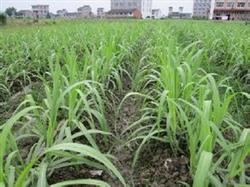
Use phosphate fertilizer
Fully crush the phosphate fertilizer, thoroughly mix it with garbage fertilizer and farmyard manure, and compost the mixture before applying. In recent years, many sugarcane growers have directly scattered phosphate fertilizer into the furrows; with this practice, the utilization rate of phosphate fertilizer is less than 10%, and more than 90% is fixed by the soil into ineffective phosphate and wasted. Suggestion: per mu, use 30-50 kg of phosphate fertilizer, fully crushed, and mix it with more than 750 kg of farmyard manure and garbage fertilizer; when planting sugarcane, apply the fertilizer into the opened furrows. This can multiply the utilization rate of phosphate fertilizer.
Pest control
Borers, aphids, thrips, sugarcane beetles and others have become the main pests affecting sugarcane. Suggestion: when planting sugarcane, after opening the furrows, apply per mu 3-3.5 kg of carbofuran, or 10 kg of 5% phoxim granules, or 0.8-1.5 kg of 14% chlorpyrifos granules.
Moisten before planting
Plant when the newly opened planting furrow is moist or after it has been watered, and plant after the seed cane has been soaked, moistened and disinfected. Soak with 50% carbendazim 1000-fold solution for 10-15 minutes, and apply garbage fertilizer or miscellaneous soil fertilizer when it is moist.
Spring management of ratoon sugarcane
For high yields of ratoon sugarcane, scientific spring management is very important.
1. Clean the field early and break open the ridges to loosen the soil. After cutting the sugarcane, clean the sugarcane field as soon as possible, cleaning all the way to the sugarcane furrows; then break the ridges and bury the sugarcane leaves for composting. Cleaning the field and opening the ridges early can not only reduce overwintering pest sources, but also help the sugarcane buds sprout.
2. Fertilize early and apply enough fertilizer. Before closing the ridges, apply per mu 40-50 kg of phosphate fertilizer, and 1500 kg of farmyard manure or garbage fertilizer; 15 kg of urea, 10 kg of potassium chloride, and 15 kg of compound fertilizer may be added, and after application, close the ridges and cover with soil.
3. Control pests and weeds early. Pests: when closing the ridges, apply per mu 4 kg of carbofuran, or 10 kg of 5% phoxim granules, or 0.8-1.5 kg of 14% chlorpyrifos granules.
Chemical weeding: at the weed sprouting stage, apply 50-70 ml of 96% S-metolachlor, or per mu 250 g of 50% atrazine plus 150 g of 50% acetochlor, or 120-150 ml of 72% metolachlor, or 250 g of atrazine plus 50 g of MCPA, diluted in 60-75 kg of water and sprayed. At the weed seedling stage, apply 500 g of diuron plus acetochlor and 100 g of MCPA, diluted in 40-75 kg of water and sprayed.
4. Check for missing plants and fill gaps early. Gap filling should be done as soon as the seedlings are uniform; wherever buds are missing over a gap of more than 30 cm, seed cane should be replanted; gap filling should be done promptly and immediately after rain.