Detailed Explanation of the Cultivation Technique of Interplanting Spring Peanuts with Sugarcane
Sugarcane originated in tropical and subtropical regions and was formerly limited to cultivation south of the Yangtze River. In recent years, through the unremitting efforts of scientific and technological workers, the sugarcane planting area in the Huang-Huai River basin has expanded year by year. During the planting process, the sugarcane stem cannot be used for high-temperature bud cultivation; if stems are used for bud cultivation, sugarcane cultivation will not succeed. To...
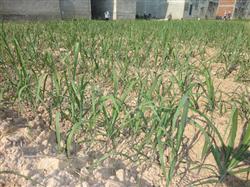 I. Advantages of Interplanting Spring Peanuts with Sugarcane
1. Increased multiple cropping index. Peanuts are a bushy-type crop with short seedlings, while sugarcane is a tall-stalk crop that is upright and has a long growth period. By making use of the time difference in their planting dates and the space during their seedling-stage growth for interplanting, that is, in prepared spring-planted sugarcane land, planting peanuts first and sugarcane afterward, an additional crop of peanuts is obtained for economic income.
2. Easy to operate. In interplanting peanuts with sugarcane, one only needs to plow a furrow between the peanut rows to plant sugarcane, which is easy to carry out and can stagger the busy spring farming season.
3. Increased organic fertilizer for sugarcane. After the peanut harvest, burying the legume vines and the remaining peanut roots, dead branches and fallen leaves into the sugarcane hills can increase organic fertilizer for sugarcane and raise sugarcane yield.
II. Interplanting Techniques
1. Fine land preparation. The penetration of peanut pegs into the soil, the expansion of pods, the growth of the root system, and the reproduction and nitrogen-fixing activity of rhizobia all require a loose, deep and fertile soil environment. Sugarcane also needs such a soil environment. Therefore, fine land preparation and improved and fertilized soil are necessary to obtain high yield. For plowing, a tractor is generally used for deep loosening with two plowings and two harrowings, with deep loosening that does not disturb the soil layers, reaching a depth of 35 cm. Where mechanical plowing is not available, ox-drawn plowing and harrowing can be used, with the standard being that the soil reaches a state of being deep, loose, level and fine.
2. Planting date arrangement. Spring peanut planting date: the local spring peanut planting time in Xuwen County is around "Major Cold" or in late January, seizing warm weather (temperature above 16°C) for sowing. Peanuts sown at this time can flower and peg around Qingming Festival when the climate is mild and sunshine is abundant, avoiding the hot and dry west-wind weather of May, which is favorable for peanut pegging and pod expansion. Sugarcane planting date: mastering the timing of sugarcane planting is the key to achieving a double harvest of peanuts and sugarcane. According to experience, planting sugarcane 32-40 days after sowing peanuts is most suitable, that is, from late February to early March. If sugarcane is planted too early, sugarcane will compete with peanuts for space, sunlight, soil fertility and fertilizer, affecting peanut photosynthesis and its yield. If sugarcane is planted too late, the peanut seedlings and vines will grow excessively and cover the sugarcane seedlings, causing the sugarcane seedlings to be shaded and lack sunlight, resulting in missing seedlings and withered seedlings, affecting sugarcane yield.
3. Select suitable sugarcane varieties. It is best to select sugarcane varieties with high yield, narrow leaves, slow early growth, fast late growth and many tillers.
4. Reasonable close planting and sufficient basal fertilizer. The small row spacing for peanuts is 35 cm, and the large row spacing is 45 cm, with 9,000-9,500 hills sown per mu, 2 seeds per hill; apply 2,500 kg of high-quality farmyard manure per mu, 30-40 kg of standard nitrogen fertilizer, 40-60 kg of superphosphate, 10-15 kg of potassium sulfate or 100-150 kg of plant ash. The row spacing for sugarcane is 75-100 cm, with 3,000 double-bud seedlings per mu. The basal fertilizer for sugarcane is mainly organic fertilizer, supplemented by inorganic fertilizer, that is, 2,500 kg of high-quality farmyard manure, 100 kg of superphosphate, 25 kg of urea, 50 kg of compound fertilizer and 3 kg of carbofuran, mixed and applied in the sugarcane furrow as basal fertilizer for sugarcane.
5. Strengthen field management. After the spring peanut harvest, immediately apply heavy quick-acting fertilizer to promote tillering in sugarcane, applying 25-40 kg of urea per mu, and plow furrows to loosen the soil and remove weeds, burying the legume vines and the remaining peanut roots, dead branches and fallen leaves into the sugarcane hills. When soil moisture is insufficient, irrigate to promote sugarcane tillering, secure a sufficient number of stalks, and promote early growth and rapid development.