For high yields of spring corn, the sowing step is crucial
Improving the sowing quality of spring-sown corn and actively doing a good job in selecting and sowing good seed, fine land preparation, and timely sowing are crucial for ensuring a full stand and securing a bumper harvest of spring-sown corn. 1. Choose suitable varieties. Select suitable and appropriate improved varieties according to local conditions. According to heat resources and actual production conditions, mid-to-late maturing varieties with a growth period of 120-130 days should be selected...
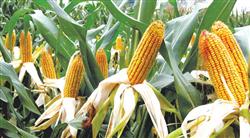
Improving the sowing quality of spring-sown corn and actively doing a good job in selecting and sowing good seed, fine land preparation, and timely sowing are crucial for ensuring a full stand and securing a bumper harvest of spring-sown corn.
1. Choose suitable varieties. Select suitable and appropriate improved varieties according to local conditions. According to heat resources and actual production conditions, mid-to-late maturing varieties with a growth period of 120-130 days should be selected. Based on variety comparison trials in recent years, the spring corn varieties with relatively outstanding comprehensive traits mainly include Nongda 108 and others.
2. Apply sufficient base fertilizer. Because spring corn has a relatively long growth period, the principle of applying more base fertilizer should be followed. Organic fertilizer used as base fertilizer should also be applied early, applied all at once in combination with land preparation, generally 2000 kg of organic fertilizer per mu. At the same time, chemical fertilizers should be applied in combination. All of the 30% of total nitrogen fertilizer can be applied as base fertilizer, while phosphate and potassium fertilizers can be used as seed fertilizer and applied all at once at sowing, generally 15 kg of diammonium phosphate, 10 kg of potassium sulfate, and 1-1.5 kg of zinc sulfate per mu.
3. Improve sowing quality
1. Fine land preparation. Spring corn requires deep plowing, and the earlier the autumn plowing, the better. After the previous crop is harvested, timely stubble clearing and plowing are beneficial for soil maturation, water storage and moisture conservation, and eliminating diseases, insects, and weeds. After plowing, harrowing and leveling must be done to conserve moisture. In late autumn and early spring, harrowing and leveling should also be carried out to conserve moisture. In areas with severe spring drought, continuous operations of pressing, harrowing, and leveling should be used to make the soil compact, which is more conducive to lifting and conserving moisture. In places with good soil moisture, direct sowing can be done, while in places with insufficient moisture, supplementary moisture sowing should be adopted.
2. Seed selection and treatment. When purchasing seed, it is best to choose coated seed. For seed that has not been coated, seed selection, sunning, and chemical seed dressing should be done before sowing to achieve the goal of neat, uniform, fast, and early emergence. Through seed selection, large and small seeds should be graded for sowing to improve seedling uniformity at the seedling stage; sunning seed can improve seed germination vigor and germination rate, usually sunning seed for 2-3 days before sowing; chemical seed dressing can effectively prevent and control the occurrence of diseases and insect pests. You can use 50 g of 50% phoxim emulsifiable concentrate, add 1.0 kg of water, mix evenly, then evenly spray on 20-30 kg of seed, cover the seed for 3-4 hours, spread it out, and sow after drying in the shade to effectively control underground pests; use 25% triadimefon wettable powder at 0.3%-0.5% of seed weight for seed dressing, or use 12.5% diniconazole wettable powder at 0.4%-0.5% of seed weight for seed dressing, which can effectively prevent and control the occurrence of diseases such as corn smut.
4. Sow at the appropriate time. Sowing spring corn too early can easily cause low-temperature seed rot and uneven emergence, while sowing too late can lead to poor normal maturation of the grain later. When the soil temperature at a depth of 5-10 cm in the surface layer is 10°C-12°C, sowing can be carried out. In Hebei Province, the suitable sowing period is generally from late April to early May, generally earlier in the south and later in the north, earlier in the plains, and later in mountainous areas.
5. Reasonable close planting. Increasing planting density is an important factor in achieving high yields of spring corn. For plots with relatively high soil fertility, the planting density is generally more than 4000 plants; for plots with relatively low soil fertility, 3500-4000 plants per mu is appropriate, and the sowing rate per mu is 2-2.5 kg. The planting method adopts equal row spacing or wide-narrow row spacing, and the sowing depth is suitably 4-6 cm. 6. Chemical weed control technology. Chemical weed control saves time and labor and is also very effective, but safe and reliable special herbicides for corn fields must be selected, and their correct use methods must be mastered. Generally, for spring corn fields, soil treatment agents such as acetochlor-atrazine mixture can be selected as chemical herbicides. Use 150-200 ml of acetochlor-atrazine mixture per mu, add 50 kg of water, and carry out closed soil treatment after sowing and before emergence. For plots where the effect of closed soil treatment is poor, at the 3-5 leaf stage of corn and when weeds have grown 2-4 leaves, use 100 ml of 4% nicosulfuron suspension concentrate per mu, add 30-50 kg of water, and spray to kill weeds. When spraying chemical herbicides, attention should be paid to choosing windless days and applying the chemical in the morning or evening when relative humidity is above 65%, and the nozzle should be kept as low as possible to ensure accurate dosage, sufficient water, and uniform spraying, avoiding repeated spraying and missed spraying.