How to cultivate water-saving sugarcane in winter and spring
Paddy field sugarcane is one of the important types of sugarcane cultivation in Yunnan. In many sugarcane-growing areas of our province, soil erosion is severe, and the construction of farmland water conservancy facilities is relatively lagging. In addition, the winter and spring seasons are dry with little rain, and paddy fields lack water. Apart from some fields that can plant sugarcane according to the seasonal requirements, most water-deficient fields are planted relatively late, from the end of April to...
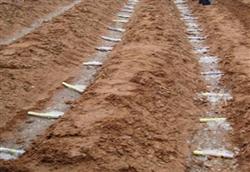
Paddy field sugarcane is one of the important types of sugarcane cultivation in Yunnan. In many sugarcane-growing areas of our province, soil erosion is severe, and the construction of farmland water conservancy facilities is relatively lagging. In addition, the winter and spring seasons are dry with little rain, and paddy fields lack water. Apart from some fields that can plant sugarcane according to the seasonal requirements, most water-deficient fields are planted relatively late, only around the end of April to early May, which seriously affects the yield, sugar content and benefits of paddy field sugarcane. In recent years, the relevant departments of Yunnan Province, taking into account the climate characteristics of our province, have focused on reforming the planting system and exploring water-saving sugarcane planting technology, achieving notable results. Practice has proved that using this technology to plant sugarcane increases sugarcane yield by an average of 1.5-2 tons per mu and raises sugar content by 0.4%-0.6%. The key points of this technology are as follows:
Land preparation
Deep plowing with careful breaking up of clods and careful harrowing, to achieve "deep, loose, fine, level". Dig drainage and irrigation ditches around the perimeter; generally the ditch bottom is about 40 cm wide and the ditch depth is 40-50 cm, determined according to the size of the field. For fields that are too large, add cross-shaped or grid-shaped ditches to ensure water retention in drought and drainage in rain.
Digging sugarcane planting furrows
The row spacing of sugarcane furrows is between 90-100 cm, and the depth of the sugarcane planting furrow is generally 30-35 cm. After digging into the hardpan, before planting, dig 4-5 cm deep hardpan and break it up as reserve soil for covering the seed.
Selecting good varieties
Selecting good varieties suitable for local natural conditions, free of mixture, lodging and pests and diseases, is the key to obtaining high and stable yields. Drought-resistant and barren-tolerant varieties such as Liangyu 97/18, Chuansugar 79/15, New Taitang No. 22, No. 20, and Yuesugar 86/368 can be selected.
Cutting seed cane and seed treatment
Cutting seed cane When cutting seed cane, pay attention to plant selection, choosing cane stalks that are free of mixture, free of pests and diseases, uniform in stalk, and with plump buds. The knife used for cutting seed cane should be thin and sharp. The seed cane should be cut as much as possible with a cross-section, not a slanted surface, and cut off in one stroke, to reduce cracking of the cut and the wound surface, and reduce the surface for pathogen invasion, with two buds as one segment.
Seed treatment For fields with the conditions, dig a seed soaking pool, seal the bottom and surrounding sides of the pool with plastic film, and soak the seeds in 2%-3% lime water for 24 hours. In places where it is inconvenient to fetch water, 5%-8% lime water can be put into a rubber bucket, and then all the seed cane can be inserted or the cut ends dipped for disinfection, to prevent red rot, pineapple disease, etc.
Planting at the right time
Generally, planting from mid-January to mid-February is appropriate.
Determination of planting rate Generally, 7500-8500 buds per mu.
Planting method The "triangle" facing-empty method is best, about 1.5 cun from both sides of the sugarcane furrow.
Application of base fertilizer
The principle for applying base fertilizer is mainly decomposed farmyard manure (1000 kg/mu), supplemented by chemical fertilizer: urea 15 kg, ordinary calcium superphosphate 50 kg, potassium chloride 10 kg, plus 3 kg of soil insecticide, mixed evenly and applied into the sugarcane planting furrow.
Watering, cleaning furrows, covering soil, sealing weeds, covering with film
Determination of watering amount Generally, the standard is that the farmyard manure applied into the sugarcane planting furrow fully absorbs moisture with a slight seepage of water. Use 20-30 carrying poles of water per mu. Water one furrow and cover one furrow, increase water and preserve soil moisture, promote early and rapid growth of sugarcane, and achieve uniform and strong seedlings.
Cleaning furrows and covering soil After planting, fertilizing, applying pesticide and watering the first sugarcane planting furrow, clean the moist fine soil of the second furrow and cover it on the first sugarcane planting furrow; generally covering 1.5 cun above the seed cane is appropriate, then press with a board, covering the soil into a convex tile shape.
Sealing weeds Use 200 ml of 40% atrazine mixed with 60-100 kg of water, and spray evenly on the surface of the sugarcane planting furrow.
Film covering Use 40 cm wide plastic film for covering. The surrounding edges must be pressed tightly and firmly, fully expanding the light transmission of the middle part, raising soil temperature and speeding up germination.
Intertillage management
From the end of May to June, the rainy season begins. This period is precisely the key period for sugarcane production management. The seasonal requirements must be seized, and the following measures must be carried out well according to the "double high" sugarcane production management requirements:
Removing the film at the right time From the end of April to early May, as the temperature continues to rise, after the sugarcane seedlings are fully established and enter the mid-tillering stage, the film should be removed in time before the rainy season arrives, and the waste plastic film should be collected and stacked together.
Timely topdressing of seedling fertilizer to promote tillering and strengthen seedlings, combining promotion and control, preventing sugarcane beetles and borers, and reducing the death rate After removing the film, use 20 kg of urea per mu, 30 kg of ordinary calcium superphosphate, plus an appropriate amount of sugarcane-specific insecticide, mix evenly and apply at the base of the sugarcane seedlings, and carry out small hilling and weed sealing. The thickness of hilling depends on the target yield and basic seedlings. If the number of seedlings has reached the target, hill a little higher to control ineffective tillering and cultivate strong seedlings; if it has not reached the target, it is appropriate to just cover the fertilizer, to promote tillering development and improve fertilizer use efficiency and stalk formation rate.
Heavy application of stalk-promoting fertilizer and large hilling to prevent lodging From June to July, sugarcane enters the elongation stage, which is the key period for high and stable sugarcane yield, and also the period when sugarcane needs the most fertilizer and water and grows the fastest. Because the rainy season in a small number of areas of our province is concentrated in the three months of June, July and August, it is necessary to strengthen furrow cleaning, drainage and waterlogging prevention, weed removal and removal of lower leaves, prevent water accumulation, and improve ventilation and light transmission conditions to ensure healthy growth of sugarcane. Choose sunny days and use 30-40 kg of urea per mu, 50 kg of ordinary calcium superphosphate, and 10 kg of potassium fertilizer, mix and apply at the base of the sugarcane seedlings, and hill high, with 5-7 cun being appropriate, to prevent lodging.
Control of diseases, insects, weeds and rodents
Weed control After removing the film, topdressing seedling fertilizer and small hilling, generally use 200-250 ml of 40% atrazine mixed with 40 kg of water per mu, and spray the sugarcane furrows to seal and kill weeds. For fields that have not been sealed and killed and where weeds are too large, use 150 ml of 20% gramoxone plus 150 ml of atrazine mixed with 50 kg of water to kill and seal between sugarcane rows. Choose sunny days for spraying, and be careful not to spray onto sugarcane leaves and the base of the sugarcane, to avoid phytotoxicity.
Control of leaf pests From June to October, the main pests harming sugarcane leaves include thrips, woolly aphids, etc. The outbreak centers in sugarcane fields must be eliminated in time. Pesticides such as 20% libaodan emulsifiable concentrate or 48% lesiben emulsifiable concentrate or 40% omethoate can be selected and diluted with water at 1500-2000 times for spraying. Spraying must be thorough and meticulous, leaving no dead corners.
Disease control The diseases that commonly occur in many sugarcane areas mainly include sugarcane brown stripe disease and rust disease. Control measures: First, drain waterlogging in the field, remove withered and yellow lower leaves and weeds, so that the surroundings of the sugarcane are well ventilated and light can penetrate; second, appropriately reduce the application rate of nitrogen fertilizer and increase the application of phosphorus and potassium fertilizers; third, for fields with severe disease, use pesticide control, spraying 500-600 times liquid of 50% carbendazim or 75% chlorothalonil or 65% zineb or 12.5% diniconazole per mu. Spraying should be carried out on sunny afternoons, about once every 7 days, for 2-3 consecutive treatments.
Harvest and cut at the right time, and take care to protect the sugarcane stubble
When cutting sugarcane, use a small sugarcane-cutting hoe and cut low and quickly at 3-5 cm below the soil surface of the sugarcane stalk. Avoid incorrect sugarcane cutting methods that crack the sugarcane stubble and damage the sugarcane buds, ensure the germination of low-position side buds, and lay a good foundation for the next season's production.