-
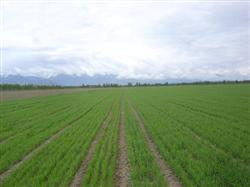
What are the key points of spring wheat management techniques?
How should wheat be managed in spring? Here is an introduction to spring wheat management for reference: 1. What are the main diseases, pests and weeds to be controlled in wheat in spring? The main task for wheat disease, pest and weed control in spring is controlling weeds in wheat fields. The main weeds in wheat fields in our county are: grass weeds include: jointed goatgrass, bromegrass, wild oat; broadleaf...
-
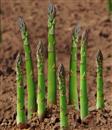
Spring Asparagus Planting: Seedling Raising Methods and Key Technical Points
How do you raise seedlings for spring asparagus planting? Please advise. Asparagus production generally adopts seedling raising and transplanting. Centralized seedling raising and transplanting gives a high emergence rate, can save seeds, lower costs, facilitates centralized management, helps prevent and control pests and diseases and cultivate strong seedlings; it can extend the growing period in the planting year and increase the yield in the second year; when transplanting, the seedlings can be...
-
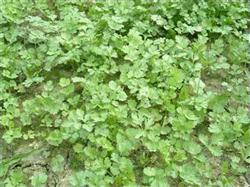
How should cilantro be planted in early spring so it grows well?
How should cilantro be planted in early spring? Please guide. For early spring cilantro planting, you can refer to the following methods: 1. Land preparation and fertilization. Choose cool, loose, fertile sandy loam soil rich in organic matter. After deep plowing, sun-dry the beds. The plowing depth is generally about 25-30 cm. During plowing, apply about 5000 kg of farmyard manure. It is best...
-

How to Grow Spring Peanuts for High Yield: Planting Methods and Key Technical Points
How to grow spring peanuts for high yield? Seeking guidance. Spring-planted peanuts are a major cash crop in our province, with a large planting area; yields are high but uneven, and there are still many medium- and low-yield fields, leaving great potential for increasing production. To achieve high yields in spring peanuts, six technical steps must be mastered well: 1. Select excellent varieties. Good seed is the foundation for achieving high yields...
-
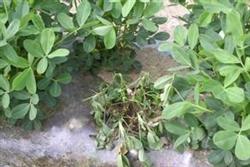
Comprehensive Control Methods for Peanut Wilt Disease in Early Spring Plastic Mulch Cultivation
Peanut wilt disease includes stem rot, root rot, southern blight, stalk rot and several other diseases, and it severely affects early spring plastic mulch peanut production. 1. Disease characteristics. Their common feature is that the peanut stem or leaf wilts and the affected part becomes discolored and necrotic. Generally, continuous cropping plots and plots with poor soil are more severely affected; rotation plots and plots with high fertility...
-
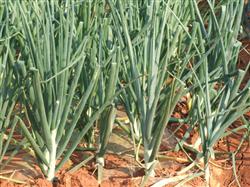
What is the correct way to water onions in spring?
How should onions be watered in spring? Please advise. For onions planted before winter, apply the green-up water in spring. The timing of the green-up water must be right: watering too early lowers the soil temperature, which is bad for onion growth, while watering too late also inhibits plant growth and causes dry leaf tips. When the onion bulbs begin to swell, water must be controlled...
-
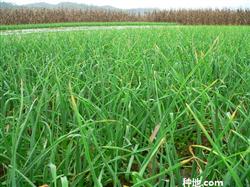
Detailed Explanation of Key Technical Points for Spring Field Management of Garlic
How to manage garlic in spring? Please introduce the water and fertilizer management of garlic after it turns green in spring, which is the key to a bumper garlic harvest. As the weather warms and the plants turn green, water and fertilizer uptake gradually increases, especially during the bolt-bearing stage and the bulb enlargement stage, which are the peak periods of water and fertilizer demand for garlic. Therefore, throughout the entire growth period of garlic, timely irrigation and topdressing should be carried out according to soil moisture, soil fertility and seedling conditions...
-
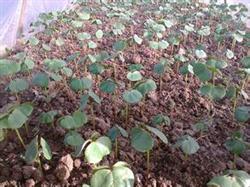
Method for Relay Intercropping Cotton with Spring Cauliflower and Summer Lettuce
The real culprit behind this headless cotton phenomenon is a pest called cotton thrips, which is the most serious pest damaging cotton fields, with tobacco thrips being the main species. The adults and nymphs of tobacco thrips are very small, difficult to see with the naked eye, and can only be seen on the underside of leaves with a magnifying glass. It damages cotton seedlings as adults or 1st and 2nd instar nymphs...
-
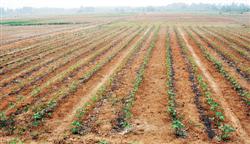
Spring cotton production technical guidance: how to manage the Yellow River basin cotton region
Raising seedlings and transplanting Simplified seedling raising and transplanting. First, choose a good seedling-raising site. It should be high-lying, sheltered from the wind and facing the sun, with convenient access to water and transportation. Second, prepare materials. Use seedling-raising substrate plus clean river sand to make a seedbed or fill plug trays, replacing nutritional pots, and prepare enough materials for 500 seedlings per sq m of seedbed. Third, sow at the right time...
-
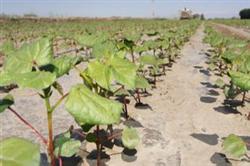
How to improve the emergence rate and seedling survival rate of cotton in spring
Main reasons for low cotton emergence rate and seedling survival rate: Poor land preparation: mainly uneven land, uneven soil moisture, and excessively thick dry soil layers in some places, resulting in incomplete emergence after sowing. Long-term cotton planting with plastic film: causing excessive residual film in the topsoil, so that some seeds are sown directly onto the plastic film in the soil and cannot...
条件筛选