How to Grow Spring Peanuts for High Yield: Planting Methods and Key Technical Points
How to grow spring peanuts for high yield? Seeking guidance. Spring-planted peanuts are a major cash crop in our province, with a large planting area; yields are high but uneven, and there are still many medium- and low-yield fields, leaving great potential for increasing production. To achieve high yields in spring peanuts, six technical steps must be mastered well: 1. Select excellent varieties. Good seed is the foundation for achieving high yields...
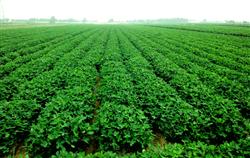
How to grow spring peanuts for high yield? Seeking guidance
Spring-planted peanuts are a major cash crop in our province, with a large planting area; yields are high but uneven, and there are still many medium- and low-yield fields, leaving great potential for increasing production. To achieve high yields in spring peanuts, six technical steps must be mastered well:
1. Select excellent varieties. Good seed is the foundation for achieving high yields, so varieties with strong resistance, high yield and high oil content should be used first. In recent years, trials have shown that "three-high" good varieties such as Shanyou 523, Shanyou 71 and Yueyou 79 are worth promoting. When planting, pod selection and kernel selection should also be carried out, and only large, plump pods and kernels that are free of pests, diseases and damage should be selected for planting.
2. Build up excellent soil fertility. Spring peanut fields need to develop a deep, soft, fertile and loose soil environment, with two main aspects to focus on: first, plow and harrow more, prepare the land carefully and harrow it fine and level; second, apply more organic fertilizer. When preparing the land, apply 800-1000 kg of high-quality farmyard manure and barnyard manure, 25-30 kg of phosphate fertilizer, 10 kg of potassium chloride and 2-3 loads of plant ash per mu, broadcasting them throughout the entire soil layer.
3. Sow early at the right time. Spring peanuts should be sown appropriately early, with the best period around "Yushui" to "Jingzhe", and planting can be done when the temperature rises above 20°C.
4. Increase the number of plants appropriately. Appropriately increase the sowing rate and the number of individual plants, coordinate the contradiction between individual and population development, and carry out rational close planting on the principle of making full use of soil fertility and light energy. Generally, a sowing rate of 20,000 plants per mu is suitable; use arched beds 1.4-1.5 m wide including the ditch, with high beds in paddy fields (low beds may be used in dry fields), a plant spacing and row spacing of 18 x 23 cm, 2 seeds per hole (seed spacing 2-3 cm), and cover with 2-3 cm of soil.
5. Strengthen scientific management. To manage spring peanuts well, focus on four aspects: (1) Apply herbicide properly. A few days before emergence, use 100-125 g per mu of herbicides such as "Dual", mix with 100 kg of water, and spray evenly on the soil until moist; (2) Topdress at the right time, with emphasis on the three-leaf fertilizer, seven-leaf fertilizer and foliar fertilizer. Each time, use 4-5 kg of urea per mu, mix with liquid fertilizer and apply between the plants; at the first flowering stage, apply an additional 20-30 kg of black (white) lime per mu. At the pod-setting stage, use 80-100 g of monopotassium phosphate and 250 g of urea mixed with 80 kg of water. Spray on the foliage twice; (3) Loosen soil and earth up in time. Loosening soil and earthing up can eliminate weeds, reduce soil moisture evaporation and help soil aeration. Generally, loosen soil and earth up twice each: loosen soil at the beginning of tillering and at full tillering after emergence, and carry out shallow earthing up and heavy earthing up at the first and second flowering stages respectively; (4) Irrigate and drain rationally. Peanuts like moisture, fear drought and fear waterlogging; when planting, the soil should be moderately moist and emergence water should be applied well to promote rapid and uniform emergence. During the tillering and flowering-podding stages, irrigate promptly and moderately when drought occurs to preserve moisture and promote branching and plump pods. When water accumulates on rainy days, drain it promptly to prevent waterlogging. From the mid-growth stage onward, deepen the drainage ditches and field-surrounding ditches, and open a central ditch in large fields to lower the groundwater level and facilitate drainage and prevent waterlogging. 6. Control insects and prevent diseases in time. In the early stage, focus on controlling aphids, thrips and others; in the mid-stage, focus on controlling tobacco cutworm, rust and leaf spot. For insect pests, use 100 g of trichlorfon per mu mixed with 80 kg of water and spray; for diseases, spray chlorothalonil and Bordeaux mixture, and spray more than twice.
Click to get more peanut growing techniques
Click to get more grain and oil crop growing techniques