How to Grow Licorice? A Detailed Guide to Cultivating the Medicinal Plant Licorice
●Growth Habits. Licorice, also known as sweet grass root, red licorice, and powdered licorice. It is a plant of the Fabaceae family. Its roots and rhizomes are used as medicine. It has the effects of clearing heat and detoxifying, moistening the lungs and relieving cough, tonifying the spleen and boosting qi, and harmonizing various medicines. Licorice mostly grows in the northern temperate zone, in plains, mountainous areas, or river valleys at an altitude of 0-200 m. The soil is mostly sandy soil. Soil...
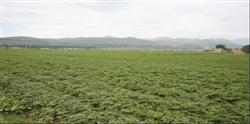 ●Growth Habits
Licorice, also known as sweet grass root, red licorice, and powdered licorice. It is a plant of the Fabaceae family. Its roots and rhizomes are used as medicine. It has the effects of clearing heat and detoxifying, moistening the lungs and relieving cough, tonifying the spleen and boosting qi, and harmonizing various medicines. Licorice mostly grows in the northern temperate zone, in plains, mountainous areas, or river valleys at an altitude of 0-200 m. The soil is mostly sandy soil. The soil pH should preferably be neutral or slightly alkaline. It prefers an ecological environment with ample sunlight and a large temperature difference between day and night. The northwest, north, and northeast regions of China are all suitable for growing licorice.
●Field Management of Licorice
1. Thinning seedlings. If the sowing row spacing is 30 cm, then it is sufficient to maintain a plant spacing of 18.5 cm-20 cm when thinning seedlings.
2. Irrigation. Before and after emergence, licorice should be kept with constantly moist soil to facilitate emergence and seedling growth. The specific irrigation should depend on the soil type and salinity-alkalinity: for sandy soil with no salinity-alkalinity or slight salinity-alkalinity, water can be applied immediately after sowing; for heavy clay soil or soil with relatively heavy salinity-alkalinity, water should be applied before sowing. The key to cultivating licorice is preserving the seedlings; generally, once the plants have grown, no further watering is needed.
3. Intertillage and weeding. This is generally carried out in the same year as emergence, especially during the seedling stage, when weeds must be removed in time. From the second year onward, the licorice roots begin to grow, and weeds find it difficult to compete with them, so intertillage and weeding are no longer needed.
4. Fertilization. Before sowing, sufficient base fertilizer should be applied, preferably barnyard manure. In the sowing year, phosphate fertilizer can be applied as a top dressing in early spring, and before the winter freeze, organic fertilizer can be applied as a top dressing per mu. Licorice roots have root nodules and can fix nitrogen, so nitrogen fertilizer is generally not applied.
5. Pests and diseases and their control. In rainy seasons, powdery mildew and rust are likely to occur; in dry seasons, red spiders are likely to occur. They can be controlled by spraying with a 1000x-1500x dilution of 40% dimethoate emulsifiable concentrate.
●Harvesting and Processing
Licorice roots are deep, so deep digging is necessary. Do not dig them broken or damage the root bark. After digging them out, remove the residual stems and soil. Do not wash them with water. While fresh, separate the main roots from the lateral roots, remove the rhizome heads, fibrous roots, and branches, sun-dry until semi-dry, tie into small bundles, and then sun-dry until fully dry. They can also be dug in spring before the licorice stems and leaves emerge, but the quality is better when dug in autumn.