-

How can oyster mushrooms (Pleurotus pulmonarius) be grown on rice straw for high yields?
How can you grow oyster mushrooms (Pleurotus pulmonarius) on rice straw for high yields? Seeking answers. To grow oyster mushrooms on rice straw and achieve high yields, you can refer to the following methods. 1. Selection and disinfection of rice straw: Rice straw is the substrate for the growth of oyster mushrooms. The nutrients for the growth of oyster mushrooms mainly come from the cellulose, hemicellulose and lignin in the rice straw. The quality of disinfection is related not only to the physical and chemical properties of the substrate, but also to the contamination rate of competing microorganisms. Therefore, the selection and disinfection of rice straw are prerequisites for high and stable yields.
-

What are the common symptoms of herbicide damage in rice?
In which situations has rice been damaged by herbicides? Please note that rice suffering herbicide damage may show the following symptoms for reference: Rice spots: common ones include brown spots, yellow spots, blighted spots, net-like spots, etc. For example, if butachlor is mistakenly sprayed in the early growth stage of rice, the rice seedlings will clearly show irregular brown spots. Rice deformity: herbicide damage...
-

When is the best time to apply potassium fertilizer to rice?
When is the best time to apply potassium fertilizer to rice? Please provide guidance. In rice production, scientific and rational application of potassium fertilizer plays an important role in cultivating robust seedlings, improving resistance to disease, pests, and lodging, as well as the seed-setting rate, and achieving high and stable yields. But during the rice planting process, when is the best time to apply potassium fertilizer?...
-

What are the control methods for rice seedling albinism?
How to control rice seedling albinism? Please introduce the control methods. Rice albinism begins at the three-leaf stage; at first the leaf tips turn white, then it spreads downward along the midrib to the leaf base, and from the midrib outward to both leaf margins, until finally the whole leaf turns white. Some leaves appear as white stripes with the leaf margins still green, and the leaf sheaths...
-

What are the control methods for the rice leaf beetle? Explained in one article
What damage does the rice leaf beetle cause? What control methods are there? We also ask netizens to help introduce them. Zhongdiwang has compiled the damage caused by the rice leaf beetle and its control methods, listed below for netizens' reference. Damage caused by the rice leaf beetle: The leaf beetle mainly damages rice seedlings and rice plants in paddy fields. Adults and larvae feed...
-

What are the control methods for rice bacterial leaf streak?
What harm does rice bacterial leaf streak cause? What methods can be used to control it? We also ask experienced netizens to help explain. Zhongdiwang has compiled the harm and control methods of rice bacterial leaf streak, listed below for netizens' reference. Harm of rice bacterial leaf streak: In the early stage of rice disease, the lesions...
-

How are herbicides used in rice paddies? A detailed guide to application methods
How are herbicides used in rice paddies? What should you do if herbicide damage occurs? We hope experienced readers can help share their knowledge. Zhongdi Network has compiled the methods for applying herbicides in rice paddies and how to identify and remedy herbicide damage. These are listed below for readers' reference. Methods for using herbicides in rice paddies: The common...
-

How can you tell whether rice seeds carry disease?
How do you tell whether rice seeds carry disease? Is there a way to identify it? We ask knowledgeable readers to help guide us. The Zhondi website has compiled methods for identifying whether rice seeds carry disease, listed below for readers' reference. Generally, if rice seeds contain diseased grains infected with bakanae disease, these become seedlings; some have a linear stripe at the suture of the outer glume of the grain, while the surface of the grain shows no symptoms.
-
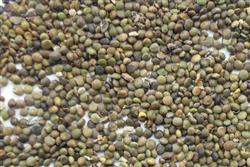
How should licorice seeds be treated? Introduction to common treatment methods
How should licorice seeds be treated? Is there anyone who can help explain? Licorice seeds generally begin to germinate at 10-15°C, and germinate fastest at 15-20°C. Old seeds have a reduced germination rate. One of the biggest characteristics of licorice is that it exhibits hard-seededness, usually with a hard seed rate of 70-90%, making it very difficult for seedlings to emerge after sowing, so in production, seeds...
-
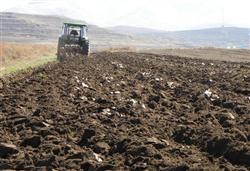
How can licorice (Glycyrrhiza) be grown for high yields?
How can cultivated licorice achieve high yields? What should be noted? We ask experienced readers to share their advice. Zhongdiwang has compiled the techniques for cultivating licorice, listed below for readers' reference. Soil selection for planting licorice: licorice prefers a dry climate and tolerates severe cold, and is suitable for deep soil...
条件筛选