-
Control Methods and Key Technical Points for Sclerotinia Rot of Rapeseed
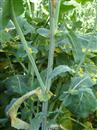
Sclerotinia rot of rapeseed, also called stem rot, is a fungal disease. It has a long period of harm, occurring from emergence to maturity, and is most prevalent after flowering. 1. After infection at the seedling stage, reddish-brown spots appear on the stem base and leaf stalks, then expand and turn white, with white cottony mycelium on the rotting tissue, and finally...
-
How to Treat Stunted Growth in Rapeseed with Targeted Control
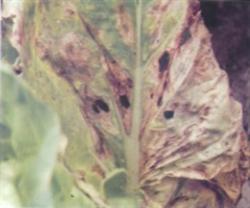
[Distribution and Damage] It occurs in all rapeseed-producing areas, with more frequent occurrence in the Yangtze River Basin and South China. This disease is caused by Alternaria brassicae (Berk.) Sacc., A. brassicicola (Sehw.) Wiltshire, and A. raphani Gr. et S...
-
How to Fertilize Rapeseed for High Yield? A Detailed Guide to Practical Fertilization Methods
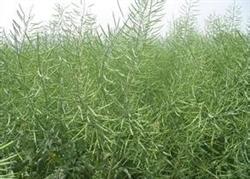
1. Apply seedling fertilizer early. In late November or early December, mainly use organic fertilizer, applying 1500-2000 kg of organic fertilizer per mu. For some fields with poor growth, an appropriate amount of chemical fertilizer should also be applied. 2. Apply stem-elongation fertilizer at the right time. Stem-elongation fertilizer should preferably be applied when the main stem bolts to 10 cm. For fields with good early seedling vigor, it may be slightly...
-
New tricks for winter management of rapeseed: master the methods to help it overwinter
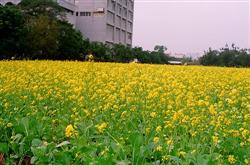
Generally, the boron content in cruciferous crops is higher than in monocotyledonous crops; usually, crops with a high boron content also have a high boron requirement. Boron can promote the normal development of the reproductive organs of boron-loving crops such as rapeseed, accelerate pollen germination and pollen tube elongation, and facilitate fertilization and seed setting. When boron is deficient, these organs may wilt...
-
Symptom Identification and Control Methods of Rapeseed Viral Diseases
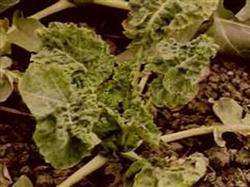
[Distribution and Damage] It occurs to varying degrees in all rapeseed-producing areas across the country, and generally the winter rapeseed areas suffer more severe disease than the spring rapeseed areas. This disease is caused by single or mixed infection of viruses such as Turnip mosaic virus (TuMV), Cucumber mosaic virus (CMV), Tobacco mosaic virus (TMV) and Rapeseed mosaic virus (YMV). Generally, yield is reduced by 20%-3...
-
Five key steps for transplanting rapeseed on stubble fields
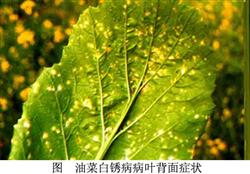
1. Symptom characteristics. Rapeseed white rust mainly infects leaves, stems, flower stalks and floral organs. The symptoms on leaves and stems are characterized by blister-like lesions. The blister surface is white or milky white, slightly raised, small (ranging from 1 to 3 mm), and numerous; after rupturing, it releases a white powdery substance (the sign of disease), eventually causing the leaves to turn yellow and drop early....
-
Comprehensive Control Techniques for White Rust of Rapeseed
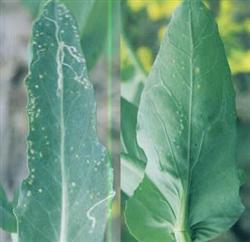
The pathogen of rapeseed white rust is Albugo candida, a disease commonly occurring on rapeseed and cruciferous vegetables in the Yangtze River basin, often occurring together with rapeseed downy mildew on the same flower stalk. I. Symptoms: All aboveground organs of rapeseed are susceptible throughout the entire growth period. Pale green small spots first appear on the leaf surface, later turning yellow...
-
What are the field management measures for wheat and rapeseed during the overwintering period?
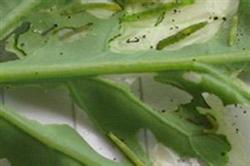
The diamondback moth is one of the main pests on rapeseed. In the central Jiangsu region, it can occur 3-4 generations in a single rapeseed growing season, with overlapping generations. When temperatures rise above 12°C (March-April), it is the peak period of damage. When rapeseed seedlings have 8-10 leaves, field inspections should be carried out. When larvae reach 20 or more per square meter, pesticide control should be applied immediately, ...
-
Early control of rapeseed sclerotinia and aphids is essential
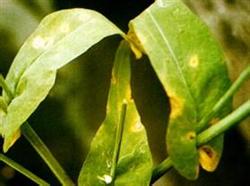
According to recent surveys by regional forecasting stations, there is currently an abundant source of sclerotinia inoculum in rapeseed fields in our province, the disease resistance of the varieties is not strong, and the weather forecast indicates above-average rainfall during the rapeseed flowering period. Sclerotinia is expected to occur at a moderate level, with local areas along the south of the Jiangsu River expected to have heavier occurrence, and the severity will be slightly greater than last year. In addition, aphid populations in rapeseed in most areas are...
-
What three things should be noted in spring management of dryland rapeseed?
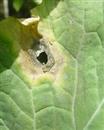
Sclerotinia rot of rapeseed is a major disease harming rapeseed, and its control must be taken seriously to reduce the damage and minimize losses. Symptoms: when the disease occurs, the lesions on rapeseed leaves are round or irregular, grayish brown or yellow-brown in the center, dark bluish in the middle, with a yellow halo on the outer edge. When dry, the lesions rupture and perforate; under humid conditions...
条件筛选