-
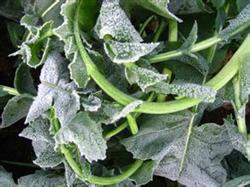
How to prevent frost damage in rapeseed? Applying to the soil and spraying on the leaves works well
Rapeseed is a winter crop. If the variety is chosen improperly, sowing or transplanting is too late, or fertilization is improper, frost damage is likely to occur. To prevent frost damage in rapeseed, in addition to selecting cold-resistant and hardy varieties, sowing at the right time, and raising strong seedlings for transplanting, the following technical measures should also be emphasized: increasing the application of phosphorus and potassium fertilizers. Phosphorus can promote the development of the rapeseed root system and enhance the...
-

-

-
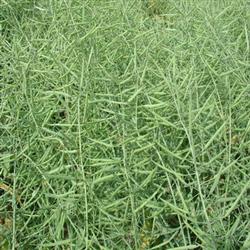
Correct Methods and Technical Key Points for Fertilizing Winter Rapeseed
Rapeseed "flowering but not seeding," also known as stunted non-seeding. That is, from the onset of the disease in the plant until maturity, it continues to bloom successively, but cannot set seed normally. It is a physiological disease caused by planting rapeseed on boron-deficient soil, mainly occurring in Brassica napus varieties, but in recent years it has also been found in Brassica rapa rapeseed. After the disease occurs...
-
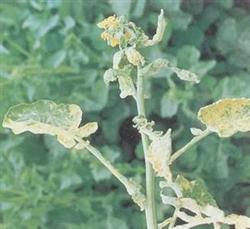
Beware of viral disease in rapeseed seedlings: detect and treat early
The characteristics of viral disease occurrence in rapeseed seedlings in seedbeds are as follows: 1. In seedbeds where farmyard manure such as pig manure, cow manure and chicken manure was applied during land preparation, the rapeseed seedlings do not develop the disease. 2. In seedbeds where no farmyard manure was applied and only ammonium bicarbonate was applied, the rapeseed seedlings develop the disease severely. 3. For the same variety and the same fertilizer rate, rapeseed seedlings in seedbeds with high fertility do not develop the disease, while rapeseed seedlings in seedbeds with low fertility do develop the disease.
-
Effect of phosphorus nutrition on double-low rapeseed and the timing of application
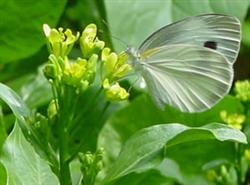
Rapeseed white butterfly, scientific name Artogeia (Pieris) rapae (Linnaeus), order Lepidoptera, family Pieridae. Synonym Artogeia rapae (L.). Also known as the cabbage white butterfly, white powder butterfly. The larva is called the cabbage caterpillar. Distributed throughout the country. Hosts include rapeseed, cabbage, cauliflower, Chinese cabbage, radish and other cruciferous vegetables...
-
Detailed explanation of the double-low rapeseed minimal and no-tillage relay direct seeding cultivation technique
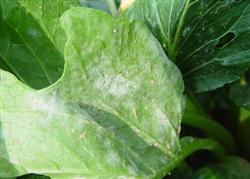
Controlling rapeseed powdery mildew well is a prerequisite for obtaining high yield and high quality in rapeseed, while autumn-sown rapeseed at the final flowering stage and the middle-to-late pod stage is precisely in the March-April period of high temperatures and shading between plants, when powdery mildew occurs rather commonly, greatly reducing the 1000-grain weight of rapeseed and thereby affecting yield; therefore, the control of rapeseed powdery mildew is very important. 1. Harm...
-
How to prevent and control rapeseed viral disease? A detailed practical guide
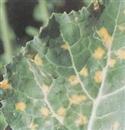
Viral disease is one of the main diseases of rapeseed. Affected plants reduce yield by around 20%, and in severe cases by more than 70%. It is generally more susceptible in years with little rain or in areas where vegetables are often grown nearby. Comprehensive control techniques must be adopted to prevent and control rapeseed viral disease. First, disease-resistant varieties should be selected; second, aphids should be controlled in a timely manner; third...
-
Apply one round of Gramoxone to control weeds before sowing or transplanting rapeseed
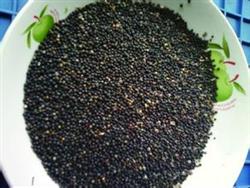
20% Gramoxone aqueous solution is a contact, non-selective herbicide. When rice, cotton and other crops are harvested and the stubble is cleared, spraying Gramoxone before no-till direct seeding or transplanting rapeseed can build soil fertility, improve soil structure, increase aeration, and preserve fertilizer and water. Compared with plow-tillage rapeseed cultivation, it saves labor and cost, especially in rural areas where labor has been greatly reduced...
-
How to prevent and control weeds in rapeseed? Master the occurrence characteristics and control methods
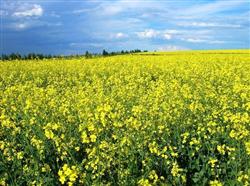
The amount of nitrogen, phosphorus and potassium absorbed by rapeseed is nitrogen greater than potassium, and potassium greater than phosphorus. For every 1000 kg of rapeseed produced, it needs to absorb 2.76 kg of nitrogen, 0.33 kg of phosphorus and 2.06 kg of potassium. The absorption ratio of nitrogen, phosphorus and potassium is 8.38:1:6.24. A deficiency of the trace element boron will produce boron deficiency symptoms. Rapeseed plants...
条件筛选