-
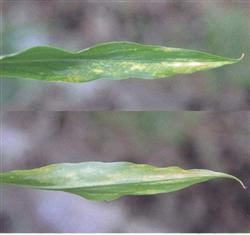
Ginger Cultivation Techniques: What Diseases of Large Ginger Need to Be Prevented and Controlled?
What diseases of large ginger need to be prevented and controlled? Please give an introduction. The following introduces several common diseases of large ginger and their prevention and control methods: Ginger blast: mainly spread by irrigation water and underground pests, and can occur from the sprouting and emergence of seed ginger to before the harvesting of ginger. This disease mostly occurs in high-temperature, frequently rainy, and waterlogged fields. Prevention and control: ginger...
-
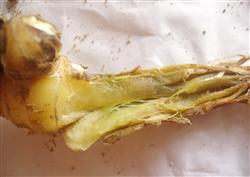
How to prevent and treat ginger rot? A detailed explanation of cultivation techniques
How to prevent and treat large ginger rot? Please provide methods. Large ginger rot is mainly caused by ginger blast. Results from many years of trials show that prevention and treatment of this disease should focus on agricultural measures, supplemented by chemicals. Specifically, 75 kg of lime should be spread per mu in the planting site; when the plants grow to about 35 cm tall, spray once, and thereafter every 2-3...
-
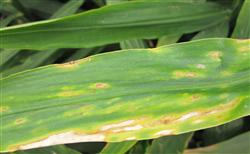
How to prevent and control leaf spot disease in ginger during hot and rainy seasons?
How to prevent and control leaf spot disease in large ginger during hot and rainy seasons? Please give an introduction to the methods. During the hot and rainy season, the occurrence of leaf spot disease in large ginger is on the rise, and prevention work for this disease currently needs to be done well. Ginger spot disease mainly damages leaves. Infected leaves develop yellow-white elliptical or irregular lesions, and in humid conditions scattered small black dots grow on the lesions...
-
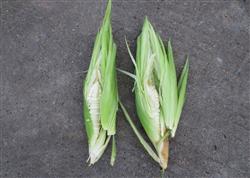
How to Prevent "Banana Ears" in Summer Corn
How can banana ears be prevented when planting corn in summer? Please give an introduction. The "banana ear" of summer corn is a type of deformed ear, specifically shown as plants growing too tall with thin stalks, poor development of the main ear, no kernels or very few kernels, and in some plants, 3 to 5 small...
-
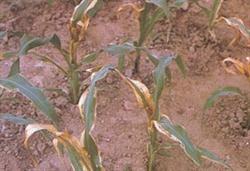
How to prevent seedling burn when planting corn in summer?
How can seedling burn be prevented when planting corn in summer? Please explain the methods. When planting corn in summer, improper application of starter fertilizer makes summer corn prone to seedling burn, so first of all, choose the right fertilizer type and control the application rate. Urea and other urea-based fertilizers are not suitable as starter fertilizer, otherwise seedling burn easily occurs; a nitrogen, phosphorus and potassium compound fertilizer can be applied. Corn needs...
-
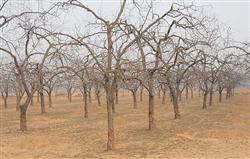
What are the methods for preventing and controlling pests and diseases of jujube trees in autumn and winter?
Please introduce the methods for preventing and controlling pests and diseases of jujube trees in autumn and winter? Detailed operation methods would be best. For the methods for preventing and controlling pests and diseases of jujube trees in autumn and winter, you can refer to the following methods: 1. Clean the orchard: Pests and diseases such as jujube rust, green plant bug, and jujube slug moth overwinter in fallen branches, leaves, or weeds under the trees. Therefore, after the jujube trees shed their leaves...
-
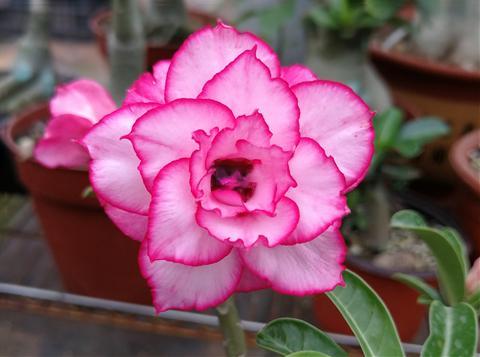
Desert Rose Disease Prevention and Control Tips: Endless Blooms, Elegant and Charming
Desert rose blooms are vibrant and deeply loved by people. During care, you may encounter disease problems, such as leaf spot and soft rot. How should these be prevented and controlled? Below, the editor will take everyone to take a look! Desert rose disease prevention and control methods...
-
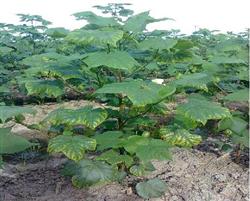
How should late-stage premature senescence in cotton be managed to prevent and control it?
How can management prevent and control late-stage premature senescence in cotton? Please provide methods. To prevent and control late-stage premature senescence in cotton, you can refer to the following methods: 1. Fertilizer and water management: According to the condition of the cotton plants, the climate and the soil conditions, apply the flowering and boll fertilizer heavily; if the flowering and boll fertilizer is insufficient, then apply a top-dressing fertilizer. After mid-August, if the maximum field water-holding capacity is below 60%, and in early September below 55%, water promptly to promote fertilizer with water and ensure the fertilizer effect is exerted in time. If cotton premature senescence is caused by soil potassium deficiency, while applying base fertilizer, increase the application of potassium sulfate or potassium chloride by 5-10 kg during the seedling and bud stages. When fertilizing, be sure to plow deeper than 20 cm, apply the fertilizer at the plow bottom, achieve deep fertilizer application, promote root penetration downward, reduce fertilizer loss, and improve fertilizer use efficiency. During the flowering and boll-setting stage, if drought occurs, water lightly, carefully clean the furrows and beds to prevent waterlogging again; if waterlogging occurs, drain promptly.
-
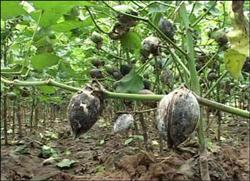
How to prevent and control cotton boll rot? Do this in hot and humid weather
How to prevent and control cotton boll rot in hot and humid conditions? Please explain the methods. Cotton boll rot can be prevented and controlled by referring to the following methods: 1. Rational fertilization: apply more organic fertilizer and phosphorus-potassium fertilizer, apply nitrogen fertilizer in appropriate amounts, prevent excessive vegetative growth of cotton plants, reduce canopy closure in the cotton field, and improve ventilation and light penetration. 2. Timely drainage: for low-lying...
-
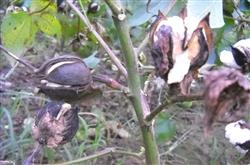
Why do cotton bolls rot? How to prevent and control cotton boll rot?
Why do cotton bolls rot? How to prevent and control cotton boll rot? Please give an introduction. Cotton boll rot occurs to varying degrees almost every year. Therefore, on the basis of understanding the conditions and causes of cotton boll rot, comprehensive measures should be taken for prevention and control, striving to reduce losses to a minimum. 1...
条件筛选