How to Prevent "Banana Ears" in Summer Corn
How can banana ears be prevented when planting corn in summer? Please give an introduction. The "banana ear" of summer corn is a type of deformed ear, specifically shown as plants growing too tall with thin stalks, poor development of the main ear, no kernels or very few kernels, and in some plants, 3 to 5 small...
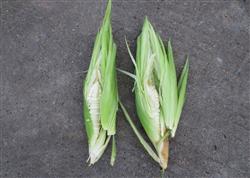
How can banana ears be prevented when planting corn in summer? Please give an introduction
The "banana ear" of summer corn is a type of deformed ear, specifically shown as plants growing too tall with thin stalks, poor development of the main ear, no kernels or very few kernels, and in some plants, 3 to 5 small ears growing at the same time from one or two leaf axils in the middle of the plant, with the ears connected to the stalk, shaped like banana ears, and with poor pollination or no pollination. At the same time, female ears also grow from 3 to 4 consecutive leaves in the middle of some plants, forming multiple leaves and multiple ears on a single plant. Relevant agricultural experts have diagnosed this disease as corn "banana ear."
There are many reasons for the formation of "banana ears." The axillary buds on the elongated stem nodes below the top 4-6 nodes of corn can all differentiate into female ears. Under normal circumstances, only the first 1 to 2 axillary buds can develop into ears, while most of the rest degenerate during development. If the plant grows too vigorously, or the main ear does not develop, these dormant buds can be activated and develop into multiple small ears, thus forming multiple ears on one plant. This principle is roughly similar to the biological principle of removing "apical dominance."
During the growth of corn, drought and low temperatures can very easily cause the death of the main axis. After the main axis of corn dies, under conditions of relatively high nutrient accumulation in the husk leaves at each node of the ear stalk, dormant buds sprout new female ears, forming "banana ears." In addition, extreme weather can cause corn flowering to miss its period, so the main ear is not pollinated or develops poorly. Also, continuous rain during the corn tasseling period can cause corn pollen to lose vitality, so the female ears cannot be fertilized. All of these can form "banana ears" with no kernels or very few kernels.
In addition, after damaging young corn ears, pests and diseases such as corn borers, aphids and corn leaf spot disease can also lead to the formation of banana ears.
To prevent the formation of corn "banana ears," agriculture mainly relies on sowing at the right time, and not sowing too early. For spring corn, avoid the extreme temperatures of early spring and wait until the soil temperature is stable above 14°C before sowing. Second, maintain a reasonable planting density. If the corn plant density is too high, some corn will be poorly pollinated, thus causing the formation of corn "banana ears." Third, pay attention to fertilizer and water. If fertilizer and water are excessive, the excessive nutrients in corn plants will also promote the differentiation and development of dormant axillary buds, thus forming the phenomenon of multiple ears on one plant.
Click to get more corn planting techniques
Click to get more food crop planting techniques