How to prevent and control cotton boll rot? Do this in hot and humid weather
How to prevent and control cotton boll rot in hot and humid conditions? Please explain the methods. Cotton boll rot can be prevented and controlled by referring to the following methods: 1. Rational fertilization: apply more organic fertilizer and phosphorus-potassium fertilizer, apply nitrogen fertilizer in appropriate amounts, prevent excessive vegetative growth of cotton plants, reduce canopy closure in the cotton field, and improve ventilation and light penetration. 2. Timely drainage: for low-lying...
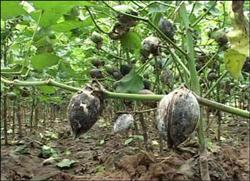
How to prevent and control cotton boll rot in hot and humid conditions? Please explain the methods
Cotton boll rot can be prevented and controlled by referring to the following methods:
1. Rational fertilization: apply more organic fertilizer and phosphorus-potassium fertilizer, apply nitrogen fertilizer in appropriate amounts, prevent excessive vegetative growth of cotton plants, reduce canopy closure in the cotton field, and improve ventilation and light penetration.
2. Timely drainage: for cotton fields that are low-lying, drain poorly and accumulate heavy water, the drainage ditches should be deepened to speed up drainage. Remove both visible surface waterlogging and hidden subsurface waterlogging from the cotton field, improve the environmental conditions for cotton growth and development, enable the cotton to set more bolls without premature senescence, and reduce the damage of boll diseases. In addition, for drainage of the cotton field and prevention of cotton lodging, banking soil around the plants before cotton flowering is also an effective agronomic measure and should be promoted.
3. Moderate chemical regulation: in cotton fields with better fertilizer and water conditions, the cotton plants are prone to excessive growth, so mepiquat chloride should be sprayed reasonably in the early and middle stages of cotton growth to regulate cotton growth, prevent excessive vegetative growth of the cotton plants, and reduce the damage of boll diseases.
4. Regulate boll setting: when plastic-film cotton or early-developing cotton has too many pre-summer bolls, taking effective measures to regulate the boll-setting period and boll-setting position of cotton can reduce boll rot. For early-developing cotton, it is recommended to remove the early buds on the lower 1 to 4 fruiting branches or remove the first and second fruiting branches as early as possible.
5. Rational pruning: for cotton fields with too narrow row spacing and premature row closure, in order to reduce excessive canopy density in the field and improve light conditions and ventilation in the middle and lower parts, the side shoots should be removed as early as possible, which can reduce shed buds and bolls and boll rot.
6. Inter-row cultivation and loosening the soil: inter-row cultivation and loosening the soil are recommended to break up surface compaction, reduce humidity in the cotton field, improve the environmental conditions for cotton growth, and reduce cotton boll rot.
7. Pick and sun diseased bolls: pick and harvest cotton bolls that are more than 40 days into the boll stage, whose boll shells have faded and turned yellow and begun to show black spots, before they rot. After picking, dip the cotton bolls in a 1% ethephon solution and then dry them in the sun; this can yield cotton with fairly good boll opening.
8. Intercropping and relay intercropping: rational intercropping and relay intercropping have a clear disease-preventing effect on cotton boll diseases; the double-cropping systems of wheat-cotton, cotton-vegetable and cotton-melon have relatively good disease-prevention effects.
9. Chemical control: chemical control is an important measure in the integrated control of cotton boll rot, and targeted fungicide sprays should be applied. In August to September, when the weather forecast predicts several consecutive days of rainy weather, spraying should be carried out promptly for protection. Spraying should be concentrated on the middle and lower parts of the cotton plants. Commonly used agents include carbendazim 1000-fold solution, 58% metalaxyl-mancozeb wettable powder diluted 600 to 800-fold, 80% mancozeb wettable powder diluted 500 to 600-fold, 70% chlorothalonil wettable powder diluted 500-fold, etc.
10. Emergency measures: if in the late stage of cotton growth there is too much rainy weather, the cotton field is excessively shaded, humidity is too high, and the problem of cotton boll rot still has not been effectively controlled (this situation is generally rare or affects a very small area), then after fully weighing the loss from cotton boll rot against the loss affecting the development of upper cotton bolls, emergency measures should be taken. Remove the old leaves from the middle and lower parts of the cotton plants, or push the plants together into ridges, to thoroughly improve ventilation and light penetration in the cotton field, reduce humidity in the cotton field, reduce boll rot, bring the losses down, and obtain the harvest that should be achieved. Pay special attention that this measure is only to be used as an emergency measure; if applied too early or inappropriately, it will cause cotton yield reduction and affect fiber quality.
Click to get more cotton cultivation techniques
Click to get more food crop cultivation techniques