Desert Rose Disease Prevention and Control Tips: Endless Blooms, Elegant and Charming
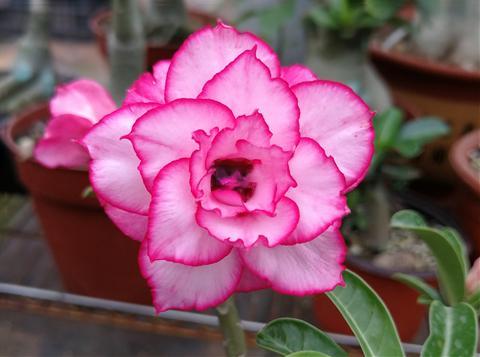
Desert rose blooms are vibrant and deeply loved by people. During care, you may encounter disease problems, such as leaf spot and soft rot. How should these be prevented and controlled? Below, the editor will take everyone to take a look!
Desert rose disease prevention and control methods:
(1). Leaf spot
Leaf spot is a relatively common disease of desert rose. Generally, we find brown spots on the leaves, and they will slowly enlarge and then form clustered lesions. In the end, the leaves wither and fall off. This is the symptom of leaf spot. Generally, when encountering such a situation, it can be confirmed that leaf spot has occurred.
Prevention and control methods:When leaf spot occurs, we can use 50% thiophanate wettable powder, mixed with water at 500 times, and spray it on the affected leaves to promptly control leaf spot. Other leaves also need to be sprayed to prevent the disease and maintain the plant's ornamental value.
(2). Soft rot
Desert rose often develops this during high temperatures in summer. Generally, if the plant does not have good ventilation, water accumulates and is not drained in time, which can easily lead to root rot and cause soft rot. The manifestation of soft rot is that leaves soften in a humid environment, can be seen turning white or pale yellow, and finally become dark brown.
Prevention and control methods:First, choose a potting soil medium with good air permeability and drainage. Do not water too much and cause water accumulation. Generally, water once every 1 month. A 200-times Bordeaux mixture can be sprayed appropriately to prevent the disease.