Why do cotton bolls rot? How to prevent and control cotton boll rot?
Why do cotton bolls rot? How to prevent and control cotton boll rot? Please give an introduction. Cotton boll rot occurs to varying degrees almost every year. Therefore, on the basis of understanding the conditions and causes of cotton boll rot, comprehensive measures should be taken for prevention and control, striving to reduce losses to a minimum. 1...
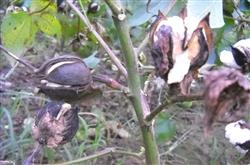
Why do cotton bolls rot? How to prevent and control cotton boll rot? Please give an introduction.
Cotton boll rot occurs to varying degrees almost every year. Therefore, on the basis of understanding the conditions and causes of cotton boll rot, comprehensive measures should be taken for prevention and control, striving to reduce losses to a minimum.
1. Conditions and causes of cotton boll rot
Cotton boll rot is caused by infection and damage to cotton bolls by various pathogenic fungi. Especially in weather with frequent rain, when the cotton field has high humidity, severe canopy closure, and poor ventilation and light penetration, it is suitable for the reproduction and infection of pathogens, and the disease is often severe, with cotton boll rot also being relatively serious. Cotton boll diseases mainly include blight, anthracnose, angular leaf spot, and red rot, among which blight is the main type of damage in boll rot, accounting for 28.3%~99.7% of boll diseases. Extensive cotton field management, delayed pruning or chemical control measures, and excessive plant growth are all conducive to disease development.
2. Prevention and control measures for cotton boll rot
1. Reasonable fertilization. Increase the application of organic fertilizer and phosphorus and potassium fertilizer, use nitrogen fertilizer in appropriate amounts, prevent excessive growth of cotton plants, reduce canopy closure in the cotton field, and improve ventilation and light penetration.
2. Timely drainage. For cotton fields in low-lying areas with poor drainage and heavy water accumulation, drainage ditches should be deepened to speed up drainage. Remove visible waterlogging and hidden waterlogging from the cotton field, improve the conditions for cotton growth and development, achieve more boll setting and no premature senescence in cotton, and reduce the damage of boll diseases. In addition, for drainage in cotton fields and prevention of cotton lodging, earthing up before cotton flowering is also an effective agronomic measure and should be promoted.
3. Regulate boll setting. For plastic-film mulched cotton or early-developing cotton with too many pre-frost bolls, taking effective measures to regulate the boll-setting period and boll-setting position of cotton can reduce boll rot.
4. Reasonable pruning. For cotton fields with too narrow row spacing and early row closure, in order to reduce excessive canopy closure in the field and improve light conditions and ventilation in the middle and lower parts, the side shoots should be removed as early as possible, which can reduce the shedding of buds and bolls and boll rot.
5. Pick and sun diseased bolls. Cotton bolls that are more than 40 days into the boll period, whose boll shells have faded and turned yellow and begun to show black spots, should be picked and harvested before they rot. After the harvested cotton bolls are dipped in a 1% ethephon solution, they should be dried in the sun, which can yield cotton with better boll opening.
6. Chemical control. Chemical control is an important measure in the comprehensive control of cotton boll rot, and targeted fungicide spraying should be carried out. In August and September, when the weather forecast predicts several consecutive days of rainy weather, spraying should be carried out promptly for protection. Spraying should be concentrated on the middle and lower parts of the cotton plants. Commonly used agents include 50% carbendazim 1000-fold solution, 58% metalaxyl-mancozeb wettable powder diluted 600~800-fold solution, and 70% chlorothalonil wettable powder diluted 500-fold solution, etc.
Click to get more cotton cultivation techniques
Click to get more food crop cultivation techniques