-
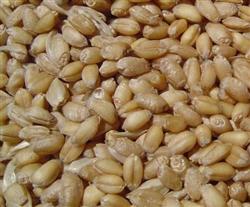
What are the benefits of disease prevention for wheat seeds?
What are the benefits of disease prevention for wheat seeds? Please explain. During the wheat sowing period, wheat pests and diseases are a key factor restricting high wheat yields. They are divided into seed-borne and soil-borne diseases, mainly including: sheath blight, root rot, smut, etc. These pests and diseases occur at the seedling stage and have a long incubation period. If a compound outbreak occurs, the control effect is relatively poor, with yield reductions of 10-30% in mild cases and total crop failure in severe cases.
-
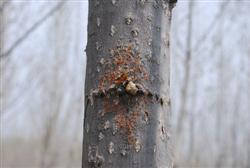
What to Do When Poplar Trees Get Canker Disease? A Detailed Guide to Prevention and Control Methods
Poplar is the general term for deciduous trees of the genus Populus in the willow family (Salicaceae). The genus contains more than 100 species, mainly distributed in the temperate and cold zones of Europe, Asia, and North America, as well as the Mediterranean coastal countries and the Middle East. China has more than 50 species. The wood is used for civil construction materials, furniture production, matchsticks, sawn timber, papermaking, and is also used for...
-
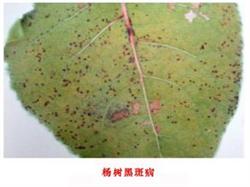
Detailed Explanation of Prevention and Control Methods and Occurrence Patterns of Poplar Black Spot Disease
Poplar black spot disease, also known as poplar brown spot disease, generally occurs on young leaves, tender shoots and fruit clusters, spreading from top to bottom, mainly damaging leaves. In the early stage of the disease, needle-like sunken shiny small spots first appear on the underside of leaves, then the lesions expand to about 1 mm, black, slightly raised, and brown spots also appear on the upper side of the leaves, 5-6 days...
-
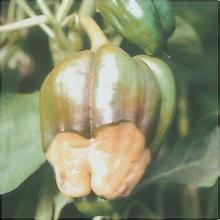
How to Prevent Sunscald and Blossom-End Rot in Sweet Peppers in Summer
How do you prevent sunscald and blossom-end rot when growing sweet peppers in summer? Here are the methods. In greenhouses, sweet peppers often develop rotten fruit, and the main causes are sunscald and blossom-end rot. Sunscald is mainly caused by direct sunlight on the fruit surface, or by dew droplets forming in the morning on the greenhouse film or the fruit; when the sun shines on them, the light concentrates and generates heat, causing the skin cells...
-
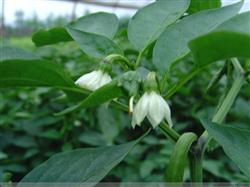
How to prevent sweet pepper flower drop? Detailed summer control methods
How to prevent sweet pepper flower drop in summer? Please explain the methods. Sweet pepper flower drop in summer is mainly caused by the following factors: 1. Temperature reasons. If the temperature is too high (above 35°C), incomplete flower organ development or dried-up stigmas can lead to poor pollination and fertilization, causing flower and fruit drop. In addition, high night temperatures in summer make plants prone to excessive vegetative growth,...
-
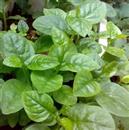
Detailed Explanation of Disease Prevention and Control Techniques for Ceylon Spinach
The main diseases of Ceylon spinach (Malabar spinach) include brown spot disease (also known as fish-eye disease), red spot disease, snake-eye disease, and sun scald, among others. They can cause damage from the seedling stage through to the end of harvest, mainly affecting the leaves. Infected leaves initially show small, sunken, purplish-red, water-soaked round spots, which gradually expand. In severe cases, the spots can number more than a hundred, merge with one another into large lesions, and cause premature leaf aging.
-
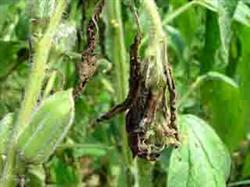
How to prevent and control bacterial wilt in white sesame? These methods you need to master
How to prevent and control bacterial wilt in white sesame? Please advise. Bacterial wilt in white sesame is very common and has a serious impact on its yield and quality. Its disease characteristics and control techniques are as follows: 1. Conditions for disease onset. Bacterial wilt in white sesame is mainly caused by excessive soil moisture in the field. The pathogen overwinters in the soil with diseased plant residues...
-
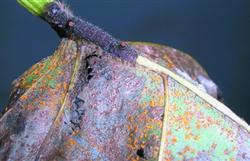
How to prevent and control poplar canker? These methods you need to know
Poplar canker: also known as poplar rot disease. Symptoms occur on the trunk and branches, manifesting as two types: dry rot and dead branch. The dry rot type mainly occurs on the main trunk, large branches and branch forks. In the early stage, the diseased part appears as dark brown water-soaked spots, the cortical tissue rots and softens. After the diseased spots lose water, the bark shrinks and sinks, sometimes cracking...
-
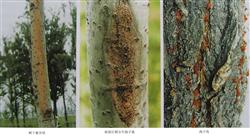
Timely Prevention and Control of Poplar Bacterial Canker and Poplar Bark Rot
Poplar bacterial canker and poplar bark rot are mainly distributed in Northeast China, Northwest China and North China, and are common and frequently occurring diseases of poplar in shelterbelts, timber forests and urban and rural landscaping in northern China. Poplar bacterial canker and poplar bark rot are world-renowned and important poplar trunk and branch diseases, and are also common and frequently occurring diseases. Their transmission...
-
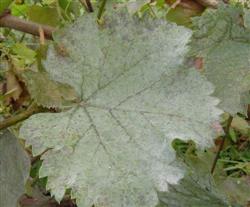
Which diseases should be the focus of prevention and control for grapes in summer?
Which diseases should be prevented and controlled when growing grapes in summer? Please provide an introduction. The following introduces three diseases that should be intensively prevented and controlled in grapevines in summer: Downy mildew: This disease mainly occurs on grape leaves and new shoots. When it develops, yellow or brown spots appear on the leaves, and in damp conditions there is also a layer of grayish-white mold on the leaves. It generally begins to develop from mid-to-late July...
条件筛选