How to prevent and control poplar canker? These methods you need to know
Poplar canker: also known as poplar rot disease. Symptoms occur on the trunk and branches, manifesting as two types: dry rot and dead branch. The dry rot type mainly occurs on the main trunk, large branches and branch forks. In the early stage, the diseased part appears as dark brown water-soaked spots, the cortical tissue rots and softens. After the diseased spots lose water, the bark shrinks and sinks, sometimes cracking...
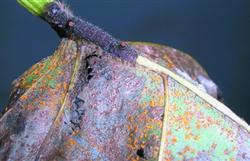
Poplar canker: also known as poplar rot disease
Symptoms occur on the trunk and branches, manifesting as two types: dry rot and dead branch:
The dry rot type mainly occurs on the main trunk, large branches and branch forks. In the early stage, the diseased part appears as dark brown water-soaked spots, the cortical tissue rots and softens. After the diseased spots lose water, the bark shrinks and sinks, sometimes cracking, with obvious dark brown edges. In the later stage, many needle-like black small protrusions appear on the diseased spots, namely the fungal pycnidia. When moist, orange-red curly tendril-like cirrhi of conidia are squeezed out from them. Under suitable conditions, the diseased spots expand quickly. When the diseased spots encircle the trunk for 1 full turn, the part above dies. The cortex of the diseased spot turns dark brown and rots, sometimes reaching the xylem, and is easily peeled off from the xylem. When environmental conditions are favorable for tree growth, disease resistance improves, and callus tissue can grow around the diseased spots, preventing their expansion.
The dead top type mainly occurs on 1-4 year old young trees or branches of large trees. In the early stage, the diseased part appears dark gray with inconspicuous symptoms. When the diseased part rapidly expands around the branch for one full turn, the part above dies. Afterwards, many small black dots are scattered on the dead branches, namely the fungal pycnidia.
Disease occurrence pattern: The pathogen overwinters in diseased tissues as mycelium, pycnidia or perithecia. In the following spring, when temperature (10-15.2) and humidity (60%-80%) are suitable, conidia are produced for spread. The spores germinate and invade host tissues through various wounds, with an incubation period of 6-10 days. The disease begins to occur in mid-to-late March each year, forming new lesions, while old lesions continue to expand. Mid-April to late May is the peak period of disease occurrence, and development stops in October. Both pathogenic fungi of poplar canker are weak parasites, and can only infect trees with poor growth and weakened tree vigor. The pathogen first lives on various wounds or weakened parts, and gradually infects living tissues. The water content of bark is closely related to the disease; low bark water content is conducive to disease occurrence. The pathogen can live saprophytically on dead trees for a relatively long time. All environmental factors unfavorable to poplar growth, such as climate, soil conditions, suppression, extensive management, and damage from other diseases and pests, which weaken tree growth, can all lead to the occurrence of this disease.
Key control points: For large trees with severe disease occurrence, the diseased spots can be scraped off and medicine applied for control. The rest is the same as for poplar canker disease.