Timely Prevention and Control of Poplar Bacterial Canker and Poplar Bark Rot
Poplar bacterial canker and poplar bark rot are mainly distributed in Northeast China, Northwest China and North China, and are common and frequently occurring diseases of poplar in shelterbelts, timber forests and urban and rural landscaping in northern China. Poplar bacterial canker and poplar bark rot are world-renowned and important poplar trunk and branch diseases, and are also common and frequently occurring diseases. Their transmission...
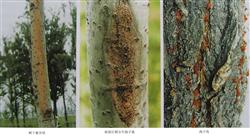
Poplar bacterial canker and poplar bark rot are mainly distributed in Northeast China, Northwest China and North China, and are common and frequently occurring diseases of poplar in shelterbelts, timber forests and urban and rural landscaping in northern China.
Poplar bacterial canker and poplar bark rot are world-renowned and important poplar trunk and branch diseases, and are also common and frequently occurring diseases. Their infectious pathogens exist widely in nature and can remain latent in poplar trees for long periods.
1. Disease-inducing factors. The severity of this type of disease is directly proportional to the degree of frost damage, sunscald, insect damage, salt damage and drought damage.
When the planting stock used is too large, has been transplanted too many times, or has been heeled in for too long, large seedlings or young trees are unlikely to recover their vigor after transplanting; or when pruning techniques are poor, pruning is too severe, or there is much mechanical injury, the disease is more likely to occur.
In addition, most poplar varieties will develop severe disease when grown in areas or years with adverse environmental conditions and unfavorable cultivation practices, such as drought, waterlogging, sunscald, frost damage and other harsh conditions, and the disease develops rapidly, causing huge losses.
2. Disease symptoms. This type of disease damages the bark of poplar trunks and branches. From early spring to early summer, dark brown water-soaked lesions appear on the diseased parts, forming small tumor-like protrusions on young branches; some raised patches gradually lose water, then shrink and sink, and may even develop cracks. After peeling the bark, the subcortical cambium can be seen to be rotted, brown areas appear on the surface of the xylem, and the phloem and xylem of the tumorous parts become discolored.
In summer, the discolored areas crack and exude brown viscous fluid with a foul odor. In the later stages of the disease, tumors continue to form, and the wounds continue to enlarge and cannot heal; on the sunken diseased bark, dense small black dots appear, and when it rains or humidity is too high, a milky white slurry is squeezed out from the tips of the black dots and gradually turns orange-yellow. If the disease is severe, discoloration extends upward all the way to the branches and downward to the roots, the wood becomes discolored, the center rots, and dead branches form.
3. Disease occurrence pattern. The pathogenic bacteria overwinter latent in the perennial lesions or diseased bark of diseased poplar trees. In the following spring, when it is humid and rainy, the pathogens begin to become active (in North China, the disease begins in mid-to-late March; in Northeast China, it is slightly later; May to June is the peak period of the disease; in July the disease slows down; and in September it stops developing), and the pathogen slime flows out from the cracks and spreads.
The pathogens are spread by rainwater, wind, insects, birds and human activities, and invade through poplar lenticels, leaf scars, stipule scars, bud scale scars and various wounds. The slime produced by diseased poplar trees is an important source of infection.
4. Prevention and control measures.
① Strictly carry out quarantine, strictly prohibit the transport and transfer of diseased seedlings and cuttings, and disinfect suspicious seedlings and cuttings. For introduced seedlings, cuttings and other vegetative propagation materials, first isolate and trial plant them, and only introduce and plant them after they are proven to be truly disease-free.
② Use disease-resistant varieties to replace susceptible varieties to control bacterial canker.
③ When diseased plants are found, remove and burn them promptly.
④ Prevention is more important than cure: in early spring and late autumn, spray Tianlin Plant Energy Compound 600-fold solution + Tianda 2116 Cell Membrane Stabilizer 600-fold solution + Tianda Organic Silicon 6000-fold solution.
For diseased trees, apply Tianlin Plant Energy Compound 50-fold solution + Tianda 2116 Cell Membrane Stabilizer 50-fold solution + Tianda Organic Silicon 100-fold solution to the trunk to strengthen tree vigor and promote rapid repair.