How to Prevent Sunscald and Blossom-End Rot in Sweet Peppers in Summer
How do you prevent sunscald and blossom-end rot when growing sweet peppers in summer? Here are the methods. In greenhouses, sweet peppers often develop rotten fruit, and the main causes are sunscald and blossom-end rot. Sunscald is mainly caused by direct sunlight on the fruit surface, or by dew droplets forming in the morning on the greenhouse film or the fruit; when the sun shines on them, the light concentrates and generates heat, causing the skin cells...
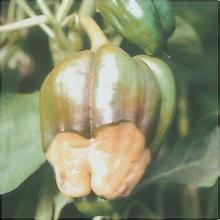
How do you prevent sunscald and blossom-end rot when growing sweet peppers in summer? Here are the methods.
Sweet peppers in greenhouses often develop rotten fruit, and the main causes are sunscald and blossom-end rot.
Sunscald is mainly caused by direct sunlight on the fruit surface, or by dew droplets forming in the morning on the greenhouse film or the fruit; when the sun shines on them, the light concentrates and generates heat, burning the skin cells. Blossom-end rot is mainly a physiological nutrient deficiency caused by high temperature and drought, which reduces the mobility of calcium in the soil and lowers the root system's ability to absorb calcium, resulting in a temporary calcium deficiency in the fruit; the disease appears in the fruit in batches.
In general, in the early stage of sunscald, the affected part appears dark brown, gradually turns brown, and finally white; the skin becomes thin, the tissue necroses, and after drying it is easily infected by fungi, with black mold growing saprophytically on it. With blossom-end rot, the affected part initially shows dark green water-soaked spots, which then enlarge, shrivel, and become sunken, often turning black or rotting due to infection by other pathogens. Sunscald generally appears on the sun-facing side of the fruit, while blossom-end rot mostly occurs at the blossom end of the fruit.
To prevent sunscald, first install shade nets on the greenhouse, remove reflective screens and plastic mulch early to reduce light reflection. Second, water frequently with small amounts of water to lower the temperature inside the greenhouse. In addition, plant at a reasonable density so that stems and leaves shade one another and the fruit is protected from direct sunlight. Also promptly supplement medium and trace elements such as calcium, magnesium, boron, zinc, manganese, iron, and molybdenum to improve plant resistance.
To prevent blossom-end rot, avoid excessive drought inside the greenhouse and water frequently with small amounts of water to promote the root system's normal absorption of calcium from the soil. Also, during fruit set and fruit enlargement, supplementing calcium through the leaves can effectively alleviate the condition.
Click to get more sweet pepper growing techniques
Click to get more vegetable growing techniques