Spring lodging prevention in wheat: these management techniques you need to master
Water and fertilize well at the standing-up and jointing stages. Applying nitrogen fertilizer during the standing-up and jointing stages of wheat can both significantly increase protein content and is a key period for raising wheat yield. Therefore, the standing-up and jointing fertilizer and water should be applied according to local conditions. Wheat grain yield and protein content depend to a large extent on the nitrogen supply level during the development period. At every 66...
⟧3⟧ 1. Spraying paclobutrazol: At the standing-up stage of wheat, spray 30 kg of 200 ppm paclobutrazol solution per mu. This can dwarf the plants, enhance lodging resistance, and also control wheat powdery mildew and improve the plant's absorption and utilization rate of nitrogen.
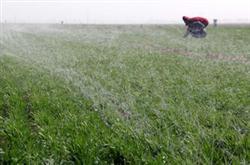 1. Spraying paclobutrazol: at the wheat stem elongation stage, spray 30 kg of 200 ppm paclobutrazol solution per mu. This can dwarf the plants, enhance lodging resistance, and also control wheat powdery mildew and improve the plant's absorption and utilization rate of nitrogen.
2. Applying uniconazole: Uniconazole is a new type of high-efficiency plant growth regulator, with biological activity 6-10 times higher than paclobutrazol. When applied to wheat, it can prevent lodging of plants under conditions of high density and high fertilizer and water levels, and reduce infertile spikelets; when no wind is encountered and no lodging occurs, wheat treated with uniconazole increases yield by an average of 15.4% compared with the control. Application method: within one week before wheat jointing, spray 50 kg of 30-40 ppm uniconazole solution per mu.
3. Spraying chlormequat chloride: For wheat fields with large populations and vigorous growth, spray 50-75 kg of 0.15%-0.3% chlormequat chloride solution per mu at the early jointing stage. This can inhibit internode elongation, dwarf the plants, make the stem base thick and hard, and prevent lodging; if mixed with 2,4-D butyl ester, it can also control broadleaf weeds in wheat fields.
4. Spraying mepiquat chloride: At the jointing stage of wheat, use 15-20 ml of mepiquat chloride per mu, dilute with 50-60 kg of water, and spray on the leaves. This can inhibit internode elongation, prevent lodging later, and increase yield by 10%-20%.