-

Post-Bloom Management Methods and Care Tips for Azaleas
The warm spring has arrived, and most of the Chinese New Year flowers placed in your home have finished blooming. Are you worrying about how to deal with these flowers that no longer look their best? Are you asking around for advice on how to care for them? If you hope they will bloom beautifully again next year, then please pay attention here. Starting with this issue, we have carefully prepared a series of articles on "Post-Bloom Management of Chinese New Year Flowers" for you, and we hope they will be helpful. If you have care experience in this area, please also write to us and share it with flower lovers everywhere! 1. Pruning and shaping
-
Detailed Explanation of Key Post-Harvest Handling Techniques for Dendrobium Orchids
1. Scientific name: Dendrobium spp. 2. Main characteristics of cut flowers: Very sensitive to ethylene; pollination of the flowers should be avoided, as it stimulates the production of large amounts of ethylene. 3. Harvest maturity stage: Cut when most of the flowers on the inflorescence have opened, with only a small number of flowers at the top of the inflorescence still in the bud stage. 4. Vase life: The vase life in water is about 14 days, and longer in preservative solution. The vase life of Dendrobium varies with the season. 5. Preservative treatment method: Use a preservative
-
Detailed Explanation of Key Post-Season Management Techniques for High-Quality Wheat
After wheat turns green, sustained high temperatures and drought have caused the jointing, stem elongation, and flag leaf stages to occur 5-7 days earlier than usual. Currently, the wheat seedling condition is close to normal, but growth varies between plots. Therefore, it is recommended to strengthen the late-stage management of high-quality wheat: 1. Carry out booting and heading fertilization and irrigation management as soon as possible: this fertilization and irrigation can not only promote floret development, increase floret fertility rate and increase grain number per spike, but also promote nitrogen uptake and conversion in the later stage of wheat, making it one of the very important measures to increase wheat yield, protein content and wet gluten content (mandatory indicators for national standard strong-gluten wheat
-
A Detailed Guide to Post-Harvest Handling and Processing Methods for Wine Cap Mushroom
Wine cap mushroom, also known as King Stropharia, is a domesticated wild mushroom species, and in recent years there has been a trend of gradual expansion. Its mushrooms have a delicate fragrance, crisp and tender flesh, good palatability, high yield, high selling price, and very considerable economic benefits. However, its fresh products have a short storage time and are not easy to preserve. If not sold fresh in time, huge losses will be caused. In order to ensure that economic benefits are not lost, the salting processing and dried product processing techniques for wine cap mushroom are now introduced. 1. Salting processing of wine cap mushroom. 1. Harvesting. The mushroom bodies of wine cap mushroom used for salted export should be at 6-7
-
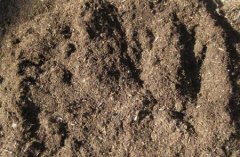
The principles of kitchen waste composting and how to make a compost bin, eco-friendly and practical
Nowadays, we all want a good ecological environment, and many people are making compost, which is both eco-friendly and practically useful. So how do you make compost? Do you know? Let's take a look together. For composting to succeed, you must provide the right amount of water, air,
-

What does microbial composting do? Understanding microbially enhanced composting in one article
Microbial oil cake compost: Organic farming places special emphasis on cultivating the soil so that it can maintain the highest productive capacity, and one of the best ways to improve the soil is to apply organic fertilizers such as microbial oil cake fertilizer and oil cake liquid fertilizer. This not only significantly shortens the production time of organic fertilizer, but the method is also very simple, clean and hygienic, and crop yield and quality are markedly improved.
-
The Benefits and Uses of Compost Explained in Detail
What benefits does applying compost have? Do you know? The nutrient source for organic crops, under the principle that chemical fertilizers must not be used, depends entirely on the use of compost. As for the nutrient content of compost, aside from itself containing a small amount of readily available inorganic nutrients, most
-
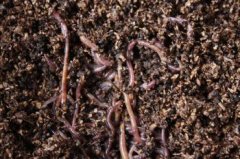
Vermicomposting: Turning Kitchen Waste into Fertilizer
Research and development of vermicomposting: How do you handle your household kitchen waste? If you always throw it away, that is actually a waste. Below we will teach you how to use kitchen waste to make valuable fertilizer. Kitchen waste is produced by every household every day
-
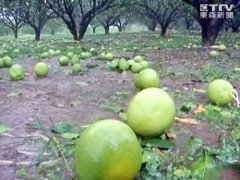
How to Make Compost from Fallen Pomelo Fruit? A Detailed Guide to Production and Use
Production and Use of Compost from Fallen Pomelo Fruit. In the Hualien area, the transition between summer and autumn is often hit by typhoons, and July and August coincide with the ripening period of pomelo fruit, which frequently causes enormous losses for fruit growers. Large quantities of fallen pomelo fruit have a huge impact on the environmental hygiene of orchards; they not only
-
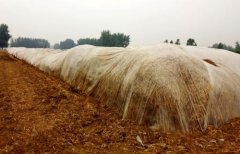
Want to make your own organic fertilizer? First, understand what compost is and its benefits
Organic compost. Composting is an ancient technique that requires no precise calculations or advanced skills. With just a little effort, you can both solve the environmental problem of waste and improve soil fertility, making it well worth adopting. Let's take a look together below. Farm compost
条件筛选