Want to make your own organic fertilizer? First, understand what compost is and its benefits
Organic compost. Composting is an ancient technique that requires no precise calculations or advanced skills. With just a little effort, you can both solve the environmental problem of waste and improve soil fertility, making it well worth adopting. Let's take a look together below.
Farm composting methods
· What is compost
Compost is the matured product obtained after biological residues and animal excreta (sometimes with a small amount of minerals or chemical fertilizers added) are adjusted for carbon-to-nitrogen ratio, moisture and aeration, then piled for a period of time, during which microorganisms carry out the composting reaction (fermentation).
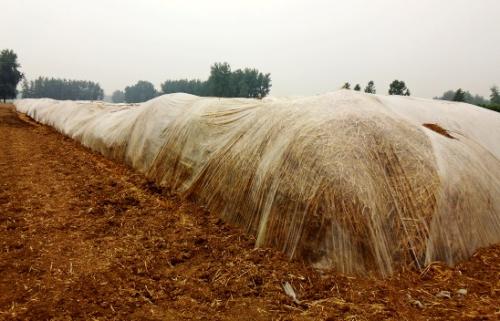
· Why make compost
The large amounts of agricultural and livestock waste produced, if not properly handled, not only take up space but also affect environmental sanitation and lower the quality of life; if left abandoned or disposed of by burning, they may cause secondary pollution of water, soil and air. Composting these wastes, which still contain valuable organic materials, and returning them to farmland soil can both solve the waste problem and improve soil fertility.
During the composting process, organic carbon is respired and metabolized by microorganisms, thereby lowering the carbon-to-nitrogen ratio, and the heat produced can raise the compost temperature to above 70 degrees Celsius, killing pathogens, insect eggs and weed seeds. If most organic materials are applied directly to the soil, toxic substances are produced during decomposition and oxygen is consumed, creating a reduced soil state; if composting materials with a high carbon-to-nitrogen ratio are applied directly to the soil, the availability of certain nutrients in the soil temporarily declines in the early stage of decomposition, with nitrogen being affected the most; applying these materials after they have matured can reduce harmful factors and avoid inhibiting crop growth. On the other hand, some composting materials have tough, strong fibers, and after piling they become softer and easier to spread; some have a strong odor, but after being made into compost they not only have no odor but also carry an earthy fragrance.
· How to make compost
The composting process is a series of microbial reactions. The composting materials are like a culture medium, and the pile is like a fermentation tank, so any factor that affects microbial activity is related to composting. Below, the methods for controlling or judging carbon-to-nitrogen ratio, moisture and air, temperature, pH, microbial strains and maturity during piling are explained separately.
Carbon-to-nitrogen ratio:
Microorganisms need carbon as an energy source and nitrogen for metabolism. The initial carbon-to-nitrogen ratio for piling is about 30 or above, and after piling and fermentation the carbon-to-nitrogen ratio gradually decreases to below 20. An accurate carbon-to-nitrogen ratio requires chemical analysis and calculation, while a rough estimate can refer to the composition of commonly used composting materials listed on the next page. If weight is used as the basis, it is still inconvenient in practice; a simpler method is to divide the materials into three categories: Category A includes sawdust, rice husks, straw and peanut shells, which provide a carbon source, form the main body of the compost and determine its physical properties; Category B includes chicken manure, pig manure, rice bran, soybean meal and meat-and-bone meal, whose main role is to provide a nitrogen source to facilitate microbial activity; Category C is cow manure, which can be applied directly in large amounts without composting. If estimated by volume ratio, it is roughly appropriate for Category B materials to account for one-tenth to one-third of Category A. In addition, if there is a higher demand for phosphorus or potassium fertilizer, materials with a lower nitrogen-to-phosphorus ratio or nitrogen-to-potassium ratio can be selected, making it possible to produce compost with higher phosphorus or potassium fertilizer efficiency.
Moisture and air:
These two occupy the same space, so they trade off against each other: more water means less air. Moisture is essential for living organisms, and in compost no reaction can occur when it is below about 10%; also, because aerobic reactions are faster and more complete than anaerobic reactions and produce fewer harmful substances, a moisture content above 90% is unfavorable for the reaction. Test results show that a moisture content of about 60% is most favorable for the composting reaction. In practice, you can squeeze the compost in your hand until water is about to drip out. Air is mainly supplied by forced aeration and pile turning. If aeration equipment is available, it can effectively shorten the composting time, and an aeration rate of 1/50 of the volume per hour is appropriate; for pile turning, to avoid the loss of moisture, nitrogen and odor in the beginning, turn the pile once every one to two weeks, and later the turning frequency can be slightly increased. To keep the compost well aerated, additives such as bark, sawdust and rice husks need to be included in the materials to make them suitable for aeration.
Temperature:
The heat produced by microbial metabolism continuously accumulates, and under normal conditions it can rise to 60 degrees Celsius within a few days, even to above 70 degrees Celsius. This high temperature can be maintained for a period of time, not only promoting microbial reactions and shortening the maturation time, but also killing pathogens, insect eggs, weed seeds and so on. Unless the piling fails, high temperature is a normal phenomenon during composting. Because temperature is hard to control, it is recommended to only monitor and observe the temperature rather than manage it specially.
pH:
Different microbial communities exist in different pH ranges and can decompose different types of organic matter. Although their range of adaptation to pH is quite broad, neutral is still best. Therefore, unless the materials contain extremely acidic or extremely alkaline substances, pH generally does not need to be controlled. After composting is complete, the compost is often neutral or slightly alkaline.
Microbial strains:
There are already many microbial communities in the natural environment, and it is only necessary to maintain the conditions under which microorganisms can grow, so there is no need to deliberately add microbial inoculants. However, if the materials contain a large amount of substances that are difficult to decompose, strains specialized in decomposing those substances can be added to shorten the maturation time.
Maturity:
Applying immature compost to the soil may cause the aforementioned unfavorable problems. There are many methods to determine compost maturity, but most require the results of chemical analysis as a basis. The methods generally more feasible for judging on your own are the seed germination method and changes in the appearance of the compost. Choose relatively sensitive vegetable seeds such as cabbage, lettuce or radish, moisten them with a hot-water extract of the compost, and if the germination rate reaches above 60%, the compost can be judged not to seriously inhibit crop growth. In addition, matured compost has a loose structure, is dark brown or black, has no pungent odor and gives off an earthy fragrance.