How to Make Compost from Fallen Pomelo Fruit? A Detailed Guide to Production and Use
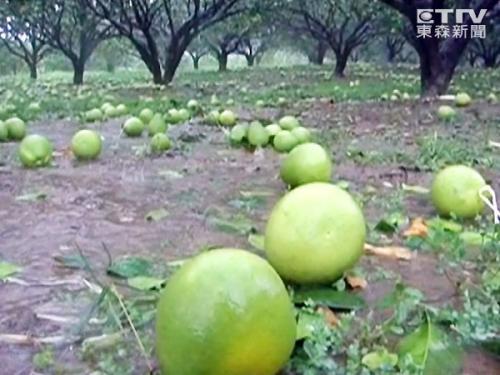
Production and Use of Compost from Fallen Pomelo Fruit. In the Hualien area, the transition between summer and autumn is often hit by typhoons, and July and August coincide with the ripening period of pomelo fruit, which frequently causes enormous losses for fruit growers. Large quantities of fallen pomelo fruit have a huge impact on the environmental hygiene of orchards; they not only
Production and Use of Compost from Fallen Pomelo Fruit
In the Hualien area, the transition between summer and autumn is often hit by typhoons, and July and August coincide with the ripening period of pomelo fruit, which frequently causes enormous losses for fruit growers. Large quantities of fallen pomelo fruit have a huge impact on the environmental hygiene of orchards; they not only produce waves of foul odor from rotting and fermentation, but also breed mosquitoes and flies, and may even become a vehicle for the spread of pests and diseases of fruit trees. Experimental research has already produced results: that is, after adding rice husks and a small amount of rice bran to fallen pomelo fruit and carrying out composting in the orchard, not only can the fallen pomelo fruit be dealt with on site, but the finished product can also be applied directly to increase soil fertility, making it an effective method that saves manpower and material resources.
Composition of Fallen Pomelo Fruit
Pomelo (Citrus grandis L. Osbeck) belongs to the Rutaceae family. Its fruit is a special type of berry, composed of stalked spindle-shaped pulp vesicles, surrounded on the outside by a white spongy endocarp and a rind containing many oil glands. When the fruit is ripe, its moisture content can reach more than 80%. The contents of various nutrient elements in the pulp and rind of the fallen fruit in this study are shown in Table 1. As for the pH value, all are around 5.0, belonging to the acidic range. Because pomelo has a high moisture content and lacks a physically supportive framework, and the rind contains wax and oil glands that make it difficult to rot, it is not suitable for making compost alone. Dry, loose materials must be added to support the compost structure, and if high-nitrogen materials can also be added, decomposition can be accelerated even more.
Production of Compost from Fallen Pomelo Fruit
First, crush and break up all the fallen pomelo fruit with a wheel or machinery, add twice the volume of unpulverized rice husks and a small amount of rice bran (or soybean meal and poultry or livestock manure, etc., which should account for about one-sixth of the total volume), mix thoroughly and evenly, then pile it in a corner of the orchard at a height of about 1 to 1.5 m. If the weather is dry, replenish water to about 60%, and turn the pile about once every month. By February of the following year, it can be used as spring fertilizer. In this treatment, the unpulverized rice husks are a material that is not easily completely decomposed; their function is to support the structure of the compost, maintain its aeration, and provide space and a carbon source for microbial growth, while rice bran is the main source of nutrient elements such as nitrogen, phosphorus and potassium. The constituents of the finished compost are a mixture of undecomposed materials, residual microbial hyphae and their metabolites. The percentage content of nitrogen-phosphoric anhydride-potassium oxide is 1.5-2.0-1.0, as shown in Table 2.
Points to Note During the Production Process
1.
The outer skin of pomelo contains wax and oil glands, which have the effect of inhibiting microbial growth, so it is not easily decomposed. In this experiment, fallen pomelo fruit that had not undergone crushing treatment still retained a complete fruit shape even after six months in the compost, because microorganisms could not penetrate its outer skin to enter the interior. Therefore, crushing the fallen fruit is a necessary step.
⟦NL>⟧ 2.
When making compost, attention must be paid to regulating aeration. Although unpulverized rice husks are the main material supporting the compost and already have the property of maintaining air permeability, the pile should still be turned appropriately. Turning the pile about once a month can not only mix the inner and outer layers of the compost evenly, but also accelerate composting and improve compost quality.
3.
Water management is also an important factor in the success or failure of composting. To save costs, the compost is piled in the open air, but humidity control should still be attended to. Especially under strong sunlight and continuous rainfall, appropriately covering it with an impermeable cloth can prevent excessive drying from affecting the composting process or nutrients being lost with water.
4.
The degree of compost maturity can be judged from changes in temperature, color and odor. After the materials are mixed evenly and piled, if the moisture is appropriate, heat should begin to be generated within one or two days, and the internal maximum temperature can even reach 70°C, after which it gradually declines. After each turning of the pile, the temperature rises again, until the temperature changes moderate, which means the compost materials have already matured. When the compost changes from bright yellow to a dull dark brown, and if the fallen pomelo fruit has completely decomposed so that no fallen pomelo fruit with a visible shape can be seen, and it presents an earthy smell rather than the sour, foul odor of fermentation, it can be regarded as fully matured.
Application of Compost from Fallen Pomelo Fruit
The compost made from fallen pomelo fruit has a composition similar to rice husk compost made from materials such as chicken manure, rice bran and soybean meal. However, because pomelo itself has a relatively low content of nutritional components, the nutrient element content of the compost made from it is also lower than that of other rice husk composts. According to reports, rice husk compost can effectively make soil pH approach neutrality and increase the available phosphorus, potassium, calcium and magnesium and other nutrients needed for growth in the soil. Therefore, applying large amounts of this type of compost as spring or summer fertilizer in the following year will not affect flower bud differentiation or fruit quality due to excessive nitrogen, making it an organic fertilizer worth recommending.
The cultivated area of pomelo in the Hualien area has already exceeded 2,500 hectares, and its fruiting period is also the period when typhoons occur most frequently. To reduce losses, in addition to doing good typhoon prevention work such as pruning and strengthening supports, the losses caused by typhoons are unavoidable. However, after a disaster occurs, the fastest and most economical way to reduce losses and quickly restore the orchard environment is to collect the fallen fruit and make it into compost. In addition to reducing the proliferation of pests and diseases, reusing waste and discarded materials and reducing disposal costs are also the purposes of making pomelo compost.