The principles of kitchen waste composting and how to make a compost bin, eco-friendly and practical
Nowadays, we all want a good ecological environment, and many people are making compost, which is both eco-friendly and practically useful. So how do you make compost? Do you know? Let's take a look together.
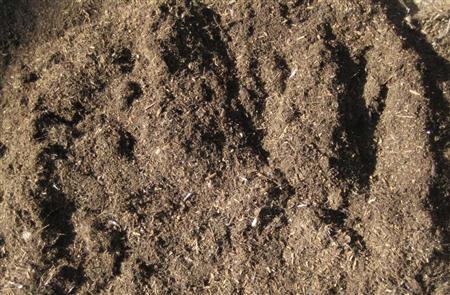
For composting to succeed, you must provide the right amount of water, air, heat energy and nutrients for growth in the soil. To ensure good aeration, choose coarse materials or a container with ventilation and drainage, and the compost pile should not exceed 1.5 m in height or 2.0 m in width. When moisture and aeration are both appropriate, microbial activity can reach its peak, with temperatures reaching 40-60°C. At this point high-temperature microbial activity reaches its highest level, and these conditions can kill pathogenic bacteria.
The more composting materials the better; they can be stacked layer by layer or fully mixed to facilitate ventilation. But never place leaves or grass stalks directly on top of the compost, lest air be unable to circulate. If there are not enough types of materials, you can cut the raw materials into different coarsenesses and then mix them. Additives can include catalysts such as microbial inoculants, limestone, nitrogen sources and mineral soil. You can also mix coarse and fine or soft and hard materials and add already-decomposed old compost or dry garden soil to speed up composting. Generally, using old compost is enough as a source of microorganisms, and there is no need to buy additional microbial inoculants; but if after a few days no temperature is observed in the pile, then you can add microbial inoculants. Generally, microorganisms are active and reproduce strongly in a weakly acidic environment, so it is usually unnecessary to add limestone, and adding it may instead inhibit microbial action. If necessary, add 1 kg per 100 kg of composting material.
Microbial growth requires absorbing various nutrients, such as a carbon-to-nitrogen ratio of 30 : 1. If the proportion of biomass materials such as grass, leaves, trees and shrubs is too high, then supplement with nitrogen-containing organic fertilizers such as manure, household feces, bone meal, chitin, and crab and shrimp shell meal to promote fermentation, adding 0.75 - 1 kg per 100 kg of composting material. For composting, choose a suitable site with good ventilation, good drainage and shade. You can design your own compost rack, compost bin or compost shed with a lid or plastic sheeting as shown in the figure, or you can replace it with discarded household box-shaped items of similar appearance. The compost bin is about 2 x 2 x 1.5 m in length, width and height, and the stacking method is as follows:
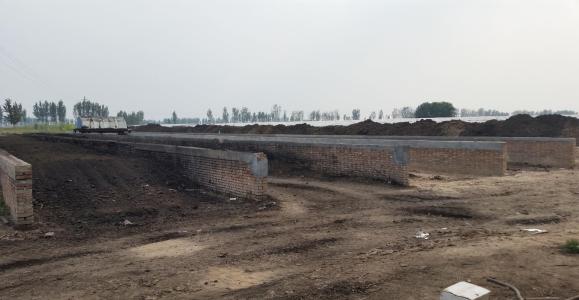
1. Lay coarse materials such as tree trunks, branches, flowers and shrubs at the bottom as a base, about 20 cm high; do not press them tight, to facilitate drainage and aeration.
2. Next lay evenly mixed materials such as leaves and harvested grasses, adding the above-mentioned additives if necessary, then cover with a thin layer of old compost or soil.
3. Repeat step two until reaching a height of 1.5 m.
4. The surface layer can be covered with grass, reeds, old paper bags or leaves.
5. Keep the compost at appropriate moisture and water it at the right times.
Use a self-designed compost rack, compost bin or compost shed with a lid or plastic sheeting; the material is generally wood, sheet iron, wire mesh or concrete, made into a round or square storage bin. Leave gaps or small holes around it to facilitate ventilation. The composting method is as in the previous steps, and during composting the pile needs to be turned and watered. The composting time is as fast as one or two months, or as slow as three or four months; in winter the time is suitably extended. If the time is too long, the humus decomposes rapidly into over-mature compost. Other composting methods include using earthworms to decompose organic matter to produce worm castings, manure composting, and pile composting, etc. Because they require more space, time or more special treatment techniques, they are not recommended here for ordinary people to try. The importance of compost for plants' survival and for soil ecology will not be repeated here. To let plants grow smoothly, the soil should be able to provide a balanced nutrient source for them to absorb and use, and reasonable fertilizer formulation for different cultivated plants is still a necessary step!